Department of Biochemistry and Molecular Biophysics, University of Pennsylvania, Philadelphia, PA, USA.
Graduate Group in Biochemistry and Molecular Biophysics, University of Pennsylvania, Philadelphia, PA, USA.
Aging Cell. 2020 Jan;19(1):e13061. doi: 10.1111/acel.13061. Epub 2019 Nov 19.
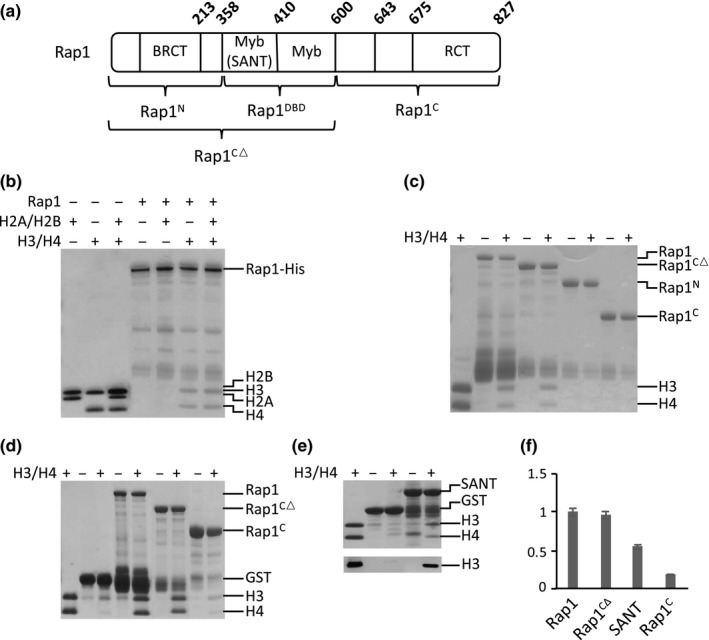
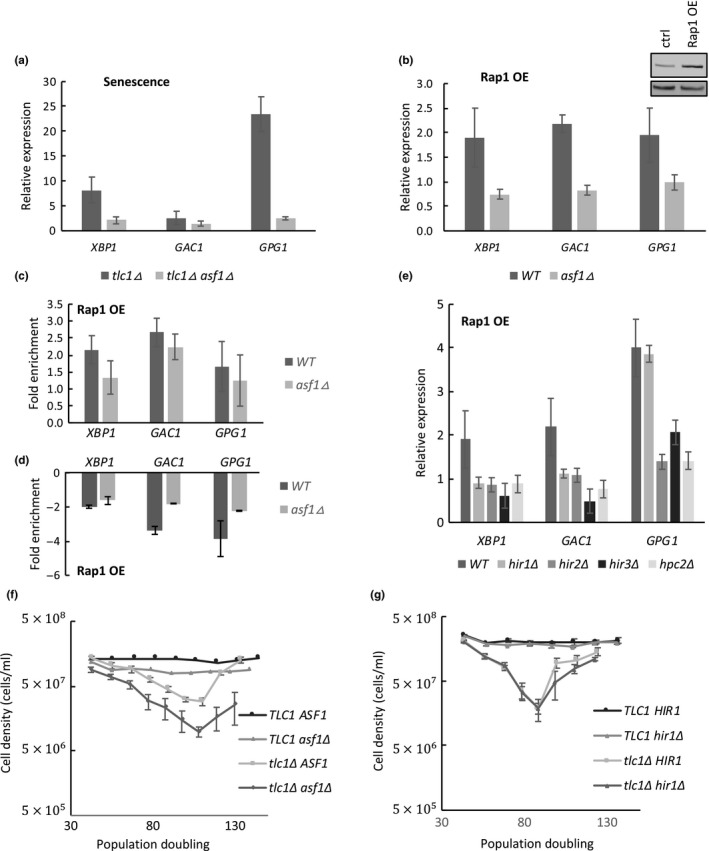
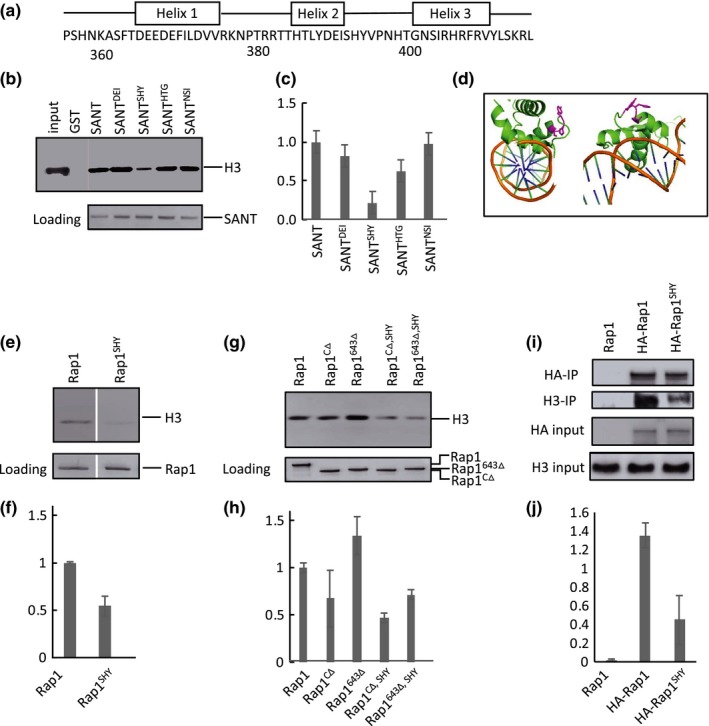
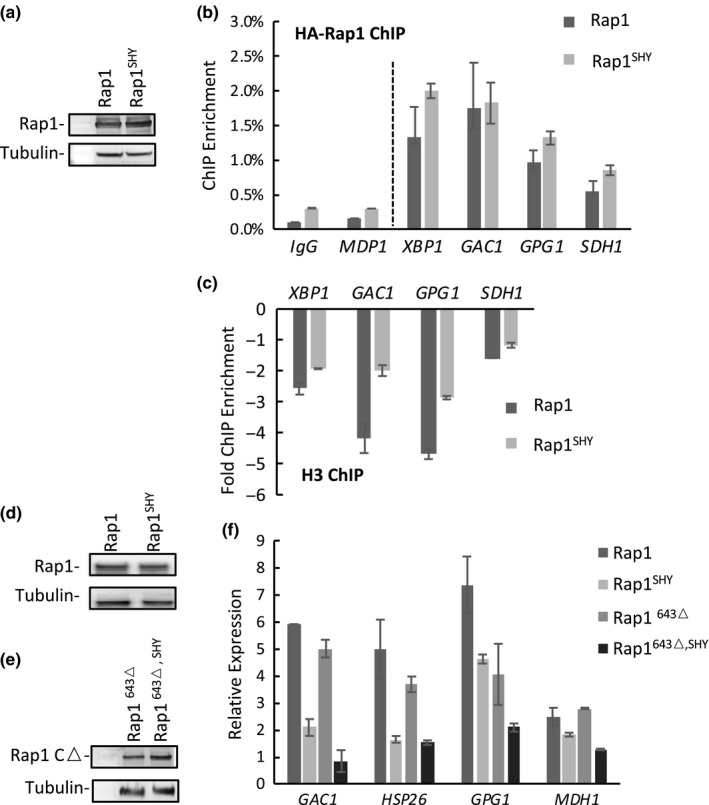
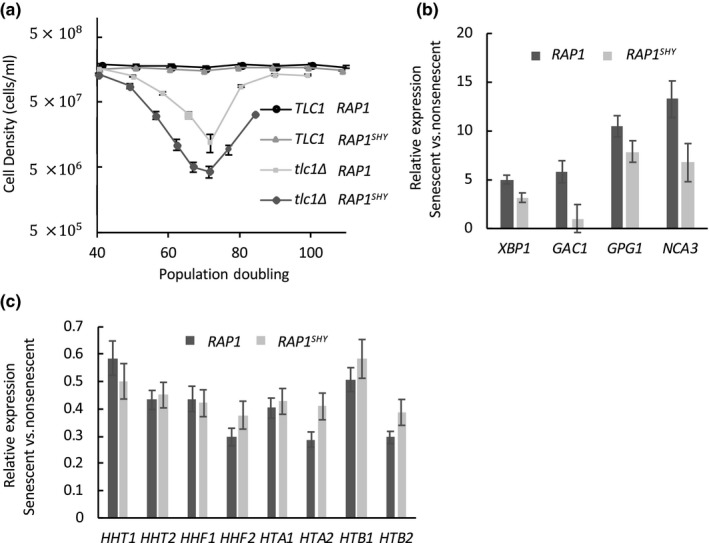
Cell senescence is accompanied, and in part mediated, by changes in chromatin, including histone losses, but underlying mechanisms are not well understood. We reported previously that during yeast cell senescence driven by telomere shortening, the telomeric protein Rap1 plays a major role in reprogramming gene expression by relocalizing hundreds of new target genes (called NRTS, for new Rap1 targets at senescence) to the promoters. This leads to two types of histone loss: Rap1 lowers histone level globally by repressing histone gene expression, and it also causes local nucleosome displacement at the promoters of upregulated NRTS. Here, we present evidence of direct binding between Rap1 and histone H3/H4 heterotetramers, and map amino acids involved in the interaction within the Rap1 SANT domain to amino acids 392-394 (SHY). Introduction of a point mutation within the native RAP1 locus that converts these residues to alanines (RAP1 ), and thus disrupts Rap1-H3/H4 interaction, does not interfere with Rap1 relocalization to NRTS at senescence, but prevents full nucleosome displacement and gene upregulation, indicating direct Rap1-H3/H4 contacts are involved in nucleosome displacement. Consistent with this, the histone H3/H4 chaperone Asf1 is similarly unnecessary for Rap1 localization to NRTS but is required for full Rap1-mediated nucleosome displacement and gene activation. Remarkably, RAP1 does not affect the pace of senescence-related cell cycle arrest, indicating that some changes in gene expression at senescence are not coupled to this arrest.
细胞衰老伴随着染色质的变化,包括组蛋白的丢失,但潜在的机制尚不清楚。我们之前报道过,在端粒缩短驱动的酵母细胞衰老过程中,端粒蛋白 Rap1 通过将数百个新的靶基因(称为 NRTS,即衰老时新的 Rap1 靶基因)重新定位到启动子,在重编程基因表达方面发挥主要作用。这导致两种类型的组蛋白丢失:Rap1 通过抑制组蛋白基因表达来降低组蛋白水平,并且还导致上调的 NRTS 启动子处局部核小体位移。在这里,我们提供了 Rap1 与组蛋白 H3/H4 异四聚体之间直接结合的证据,并在 Rap1 SANT 结构域内映射了参与相互作用的氨基酸到氨基酸 392-394(SHY)。在天然 RAP1 基因座内引入点突变,将这些残基突变为丙氨酸(RAP1),从而破坏 Rap1-H3/H4 相互作用,不会干扰 Rap1 在衰老时向 NRTS 的重新定位,但会阻止完全核小体位移和基因上调,表明直接的 Rap1-H3/H4 接触参与核小体位移。与此一致的是,组蛋白 H3/H4 伴侣 Asf1 对于 Rap1 向 NRTS 的定位同样不是必需的,但对于完全的 Rap1 介导的核小体位移和基因激活是必需的。值得注意的是,RAP1 不影响与衰老相关的细胞周期停滞的速度,表明衰老时某些基因表达的变化与这种停滞无关。