Paththinige C S, Sirisena N D, Dissanayake Vhw
Human Genetics Unit, Faculty of Medicine, University of Colombo, Kynsey Road, Colombo, 00800, Sri Lanka.
Lipids Health Dis. 2017 Jun 2;16(1):103. doi: 10.1186/s12944-017-0488-4.
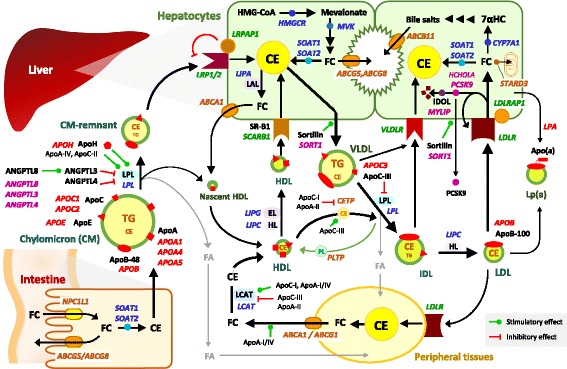
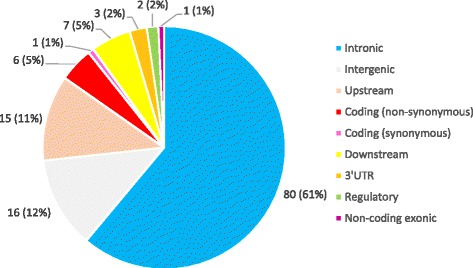
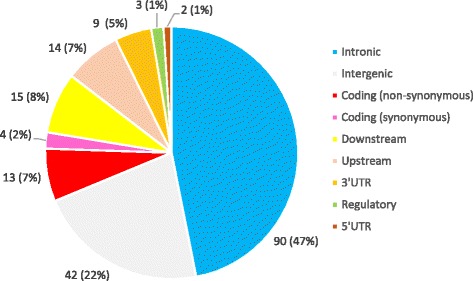
Hypercholesterolemia is a strong determinant of mortality and morbidity associated with cardiovascular diseases and a major contributor to the global disease burden. Mutations in four genes (LDLR, APOB, PCSK9 and LDLRAP1) account for the majority of cases with familial hypercholesterolemia. However, a substantial proportion of adults with hypercholesterolemia do not have a mutation in any of these four genes. This indicates the probability of having other genes with a causative or contributory role in the pathogenesis of hypercholesterolemia and suggests a polygenic inheritance of this condition. Here in, we review the recent evidence of association of the genetic variants with hypercholesterolemia and the three lipid traits; total cholesterol (TC), HDL-cholesterol (HDL-C) and LDL-cholesterol (LDL-C), their biological pathways and the associated pathogenetic mechanisms. Nearly 80 genes involved in lipid metabolism (encoding structural components of lipoproteins, lipoprotein receptors and related proteins, enzymes, lipid transporters, lipid transfer proteins, and activators or inhibitors of protein function and gene transcription) with single nucleotide variants (SNVs) that are recognized to be associated with hypercholesterolemia and serum lipid traits in genome-wide association studies and candidate gene studies were identified. In addition, genome-wide association studies in different populations have identified SNVs associated with TC, HDL-C and LDL-C in nearly 120 genes within or in the vicinity of the genes that are not known to be involved in lipid metabolism. Over 90% of the SNVs in both these groups are located outside the coding regions of the genes. These findings indicates that there might be a considerable number of unrecognized processes and mechanisms of lipid homeostasis, which when disrupted, would lead to hypercholesterolemia. Knowledge of these molecular pathways will enable the discovery of novel treatment and preventive methods as well as identify the biochemical and molecular markers for the risk prediction and early detection of this common, yet potentially debilitating condition.
高胆固醇血症是心血管疾病相关死亡率和发病率的重要决定因素,也是全球疾病负担的主要促成因素。四个基因(低密度脂蛋白受体基因LDLR、载脂蛋白B基因APOB、前蛋白转化酶枯草溶菌素9基因PCSK9和低密度脂蛋白受体衔接蛋白1基因LDLRAP1)的突变是家族性高胆固醇血症大多数病例的病因。然而,相当一部分高胆固醇血症成人在这四个基因中均无突变。这表明存在其他在高胆固醇血症发病机制中起致病或促成作用的基因,提示该病具有多基因遗传特征。在此,我们综述了基因变异与高胆固醇血症及三种血脂特征(总胆固醇(TC)、高密度脂蛋白胆固醇(HDL-C)和低密度脂蛋白胆固醇(LDL-C))的关联、它们的生物学途径及相关发病机制的最新证据。在全基因组关联研究和候选基因研究中,已鉴定出近80个参与脂质代谢的基因(编码脂蛋白的结构成分、脂蛋白受体及相关蛋白、酶、脂质转运蛋白、脂质转移蛋白以及蛋白质功能和基因转录的激活剂或抑制剂)中的单核苷酸变异(SNV)与高胆固醇血症和血清脂质特征相关。此外,不同人群的全基因组关联研究已在近120个未知参与脂质代谢的基因内部或附近鉴定出与TC、HDL-C和LDL-C相关的SNV。这两组中超过90%的SNV位于基因的编码区之外。这些发现表明可能存在大量未被认识的脂质稳态过程和机制,一旦这些过程和机制被破坏,就会导致高胆固醇血症。了解这些分子途径将有助于发现新的治疗和预防方法,以及识别用于风险预测和早期检测这种常见但可能使人衰弱的疾病的生化和分子标志物。