Loxton Deborah, Dolja-Gore Xenia, Anderson Amy E, Townsend Natalie
Research Centre for Generational Health and Ageing, School of Medicine and Public Health, University of Newcastle, Callaghan, New South Wales, Australia.
PLoS One. 2017 Jun 5;12(6):e0178138. doi: 10.1371/journal.pone.0178138. eCollection 2017.
To determine the impact of intimate partner violence on women's mental and physical health over a 16 year period and across three generations.
Participants were from the Australian Longitudinal study on Women's Health, a broadly representative national sample of women comprised of three birth cohorts 1973-78, 1946-51 and 1921-26 who were randomly selected from the Australian Medicare (i.e. national health insurer) database in 1996 to participate in the longitudinal health and wellbeing survey. Since baseline, six waves of survey data have been collected. Women from each cohort who had returned all six surveys and had a baseline measure (Survey 1) for intimate partner violence were eligible for the current study.
The main outcome of interest was women's physical and mental health, measured using the Medical Outcome Study Short-Form (SF-36). The experience of intimate partner violence was measured using the survey item 'Have you ever been in a violent relationship with a partner/spouse?' Sociodemographic information was also collected.
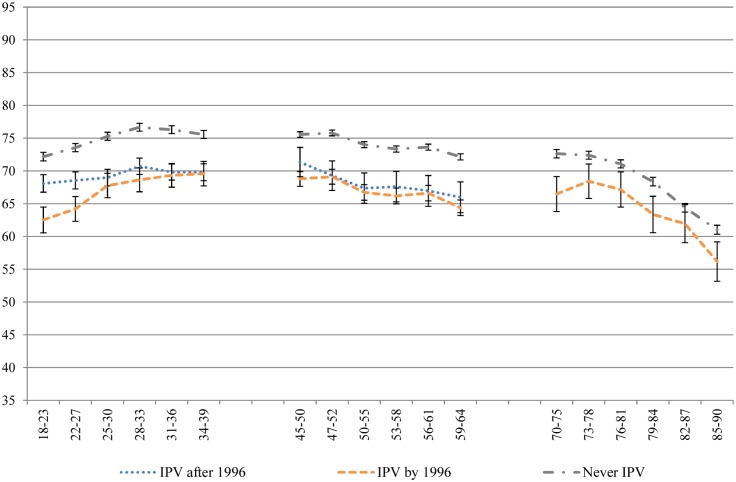
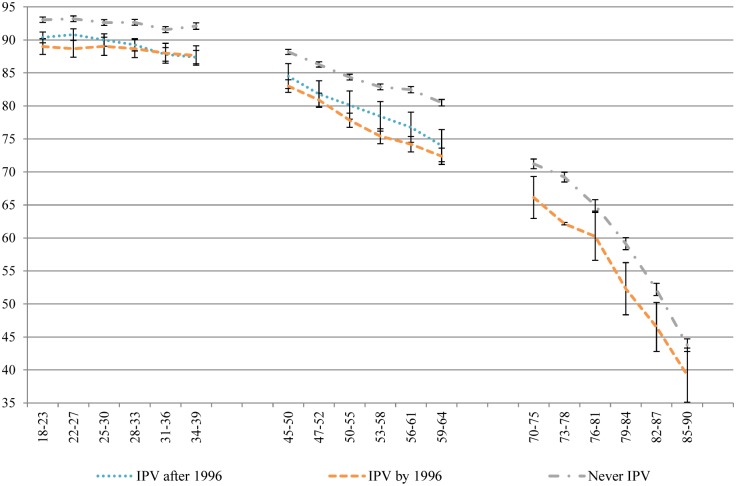
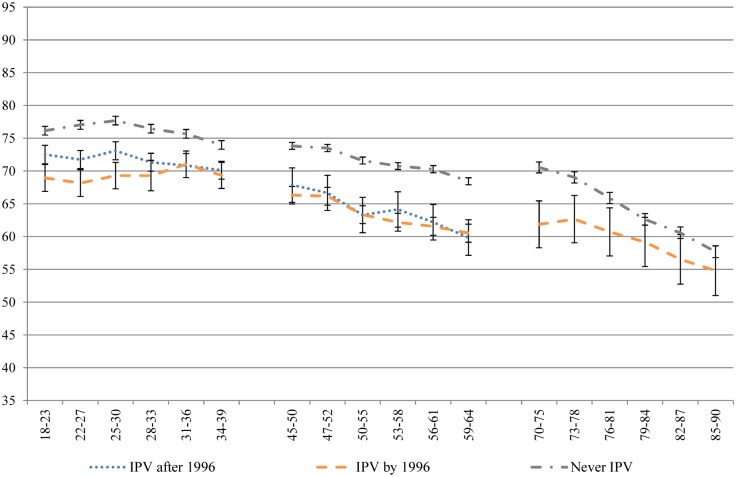
For all cohorts, women who had lived with intimate partner violence were more likely to report poorer mental health, physical function and general health, and higher levels of bodily pain. Some generational differences existed. Younger women showed a reduction in health associated with the onset of intimate partner violence, which was not apparent for women in the older two groups. In addition, the physical health differences between women born 1921-26 who had and had not experienced intimate partner violence tapered off overtime, whereas these differences remained constant for women born 1973-78 and 1946-51.
Despite generational differences, intimate partner violence adversely impacted on mental and physical health over the 16 year study period and across generations.
确定亲密伴侣暴力在16年期间及三代人中对女性身心健康的影响。
参与者来自澳大利亚妇女健康纵向研究,这是一个具有广泛代表性的全国性女性样本,由1973 - 1978年、1946 - 1951年和1921 - 1926年三个出生队列组成,她们于1996年从澳大利亚医疗保险(即国家健康保险公司)数据库中随机抽取,参与纵向健康与幸福调查。自基线期以来,已收集了六波调查数据。每个队列中返回了所有六项调查且有亲密伴侣暴力基线测量值(调查1)的女性符合本研究条件。
主要关注的结局是女性的身心健康,使用医学结局研究简表(SF - 36)进行测量。亲密伴侣暴力经历通过调查项目“你是否曾与伴侣/配偶处于暴力关系中?”进行测量。还收集了社会人口统计学信息。
对于所有队列,曾经历亲密伴侣暴力的女性更有可能报告心理健康状况较差、身体功能和总体健康状况较差,以及身体疼痛程度较高。存在一些代际差异。年轻女性因亲密伴侣暴力的发生而出现健康状况下降,而在年龄较大的两组女性中并不明显。此外,1921 - 1926年出生的经历过和未经历过亲密伴侣暴力的女性之间的身体健康差异随时间逐渐减小,而对于1973 - 1978年和1946 - 1951年出生的女性,这些差异保持不变。
尽管存在代际差异,但在16年的研究期间及各代人中,亲密伴侣暴力对身心健康均产生了不利影响。