Yin Su-Na, Liu Yuanyuan, Zhou Chen, Yang Shengyang
College of Chemistry & Chemical Engineering, Yangzhou University, Yangzhou 225002, China.
School of Environmental, Physical and Applied Sciences, University of Central Missouri, Warrensburg, MO 64093, USA.
Nanomaterials (Basel). 2017 Jun 1;7(6):132. doi: 10.3390/nano7060132.
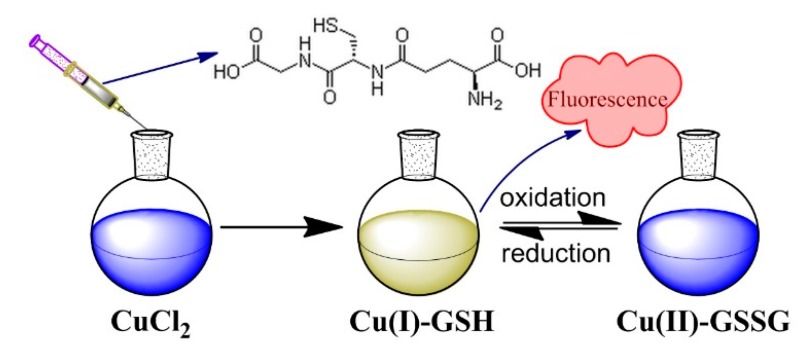
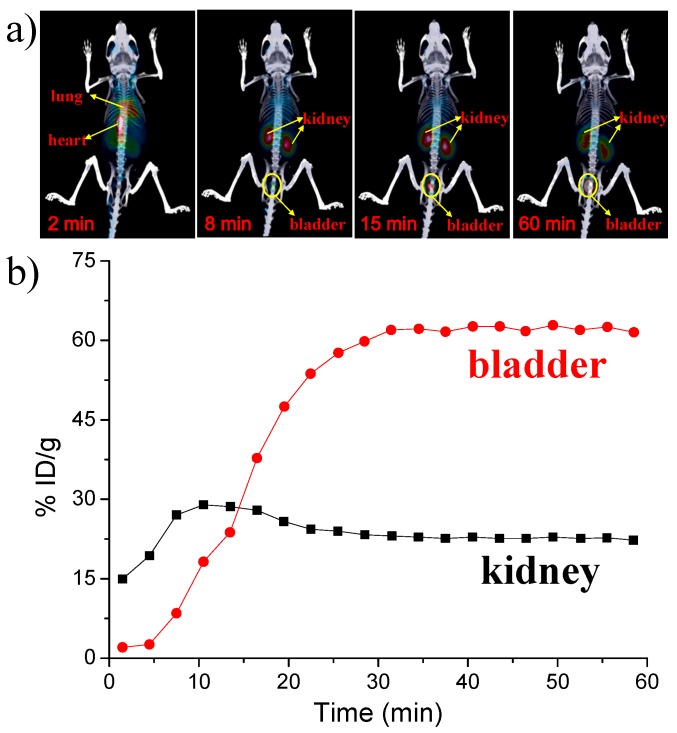
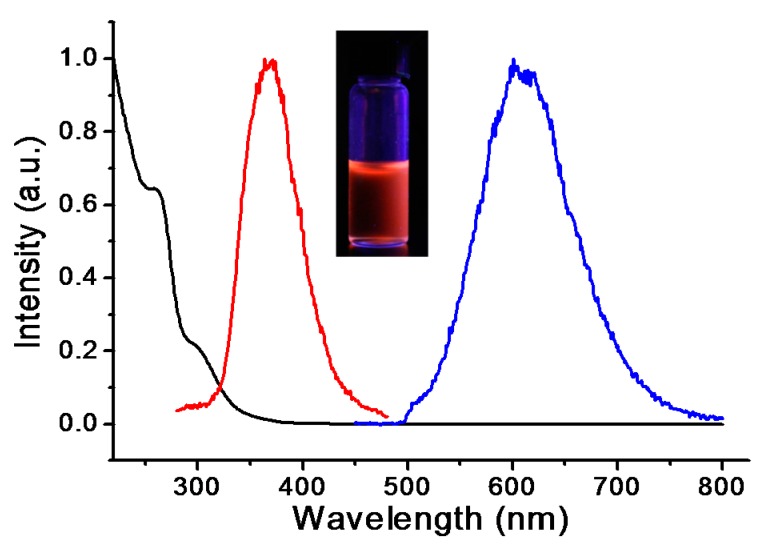
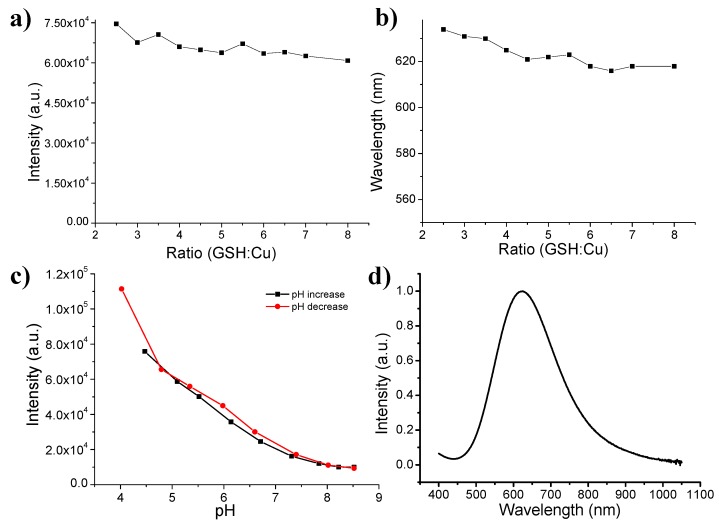
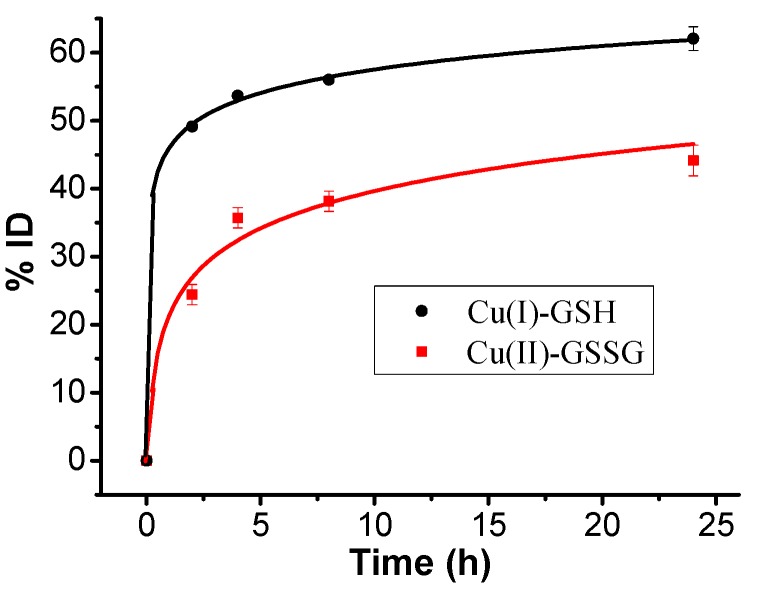
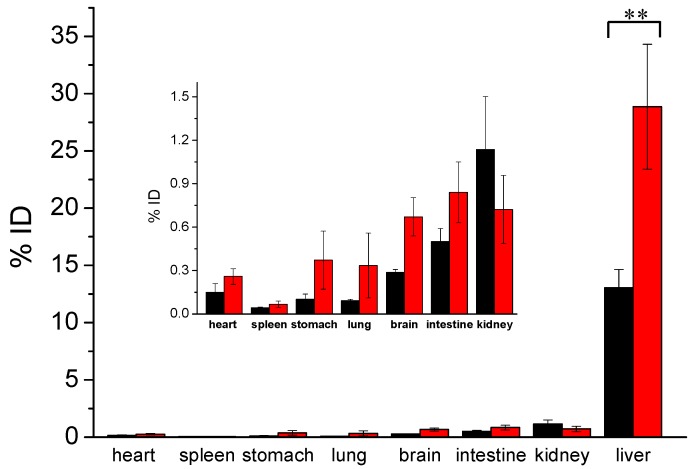
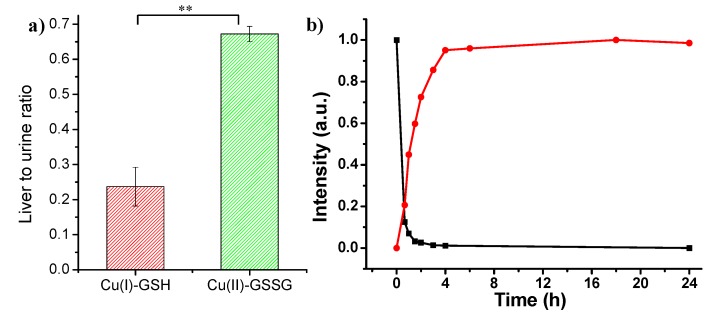
Contrast imaging agents need to be cleared in a reasonable time (less than 72 h), so it is quite urgent to understand the structure, biocompatibility, and metabolism features of imaging agents. In this work, luminescent Cu(I)-GSH complex and their derivative oxidized Cu(II)-GSSG complex have been easily synthesized. Through systematically probing the renal clearance and biodistribution of the as-prepared copper complexes, we found that Cu(I)-GSH complex revealed much more efficient renal clearance and remarkably lower liver accumulation than that of their oxidation states, which could be due to strong protein binding of partial forms of Cu(II)-GSSG complex. Besides, we also attempted to incorporate radioactive copper-64 into Cu(I)-GSH complex for the synthesis of radioactive contrast agent. Indeed, the as-prepared radioactive Cu(I)-GSH complex also showed consistent high efficiency renal excretion, allowing them to be potential PET imaging agents in clinical translation.
造影剂需要在合理的时间内(少于72小时)被清除,因此了解造影剂的结构、生物相容性和代谢特征相当紧迫。在这项工作中,发光的Cu(I)-谷胱甘肽复合物及其衍生物氧化态的Cu(II)-谷胱甘肽二硫化物复合物已被轻松合成。通过系统地探究所制备的铜复合物的肾脏清除率和生物分布,我们发现Cu(I)-谷胱甘肽复合物显示出比其氧化态更高效的肾脏清除率以及显著更低的肝脏蓄积,这可能是由于部分形式的Cu(II)-谷胱甘肽二硫化物复合物与蛋白质的强结合。此外,我们还尝试将放射性铜-64掺入Cu(I)-谷胱甘肽复合物中以合成放射性造影剂。实际上,所制备的放射性Cu(I)-谷胱甘肽复合物也显示出一致的高效肾脏排泄,使其成为临床转化中潜在的正电子发射断层显像(PET)成像剂。