• 文献检索
  • 文档翻译
  • 深度研究
  • 学术资讯
  • Suppr Zotero 插件Zotero 插件
  • 邀请有礼
  • 套餐&价格
  • 历史记录
应用&插件
Suppr Zotero 插件Zotero 插件浏览器插件Mac 客户端Windows 客户端微信小程序
定价
高级版会员购买积分包购买API积分包
服务
文献检索文档翻译深度研究API 文档MCP 服务
关于我们
关于 Suppr公司介绍联系我们用户协议隐私条款
关注我们

Suppr 超能文献

核心技术专利:CN118964589B侵权必究
粤ICP备2023148730 号-1Suppr @ 2026

文献检索

告别复杂PubMed语法,用中文像聊天一样搜索,搜遍4000万医学文献。AI智能推荐,让科研检索更轻松。

立即免费搜索

文件翻译

保留排版,准确专业,支持PDF/Word/PPT等文件格式,支持 12+语言互译。

免费翻译文档

深度研究

AI帮你快速写综述,25分钟生成高质量综述,智能提取关键信息,辅助科研写作。

立即免费体验

一种用于改变表观遗传格局的Tox21方法:评估导致体外基因表达改变和致癌转化的表观遗传毒性途径。

A Tox21 Approach to Altered Epigenetic Landscapes: Assessing Epigenetic Toxicity Pathways Leading to Altered Gene Expression and Oncogenic Transformation In Vitro.

作者信息

Parfett Craig L, Desaulniers Daniel

机构信息

Mechanistic Studies Division, Environmental Health Science and Research Bureau,HealthyEnvironments and Consumer Safety Branch, Health Canada, 50 Columbine Driveway,Tunney's Pasture, Ottawa, ON K1A 0K9, Canada.

Hazard Identification Division, Environmental Health Science and Research Bureau,HealthyEnvironments and Consumer Safety Branch, Health Canada, 50 Columbine Driveway,Tunney's Pasture, Ottawa, ON K1A 0K9, Canada.

出版信息

Int J Mol Sci. 2017 Jun 1;18(6):1179. doi: 10.3390/ijms18061179.

DOI:10.3390/ijms18061179
PMID:28587163
原文链接:https://pmc.ncbi.nlm.nih.gov/articles/PMC5486002/
Abstract

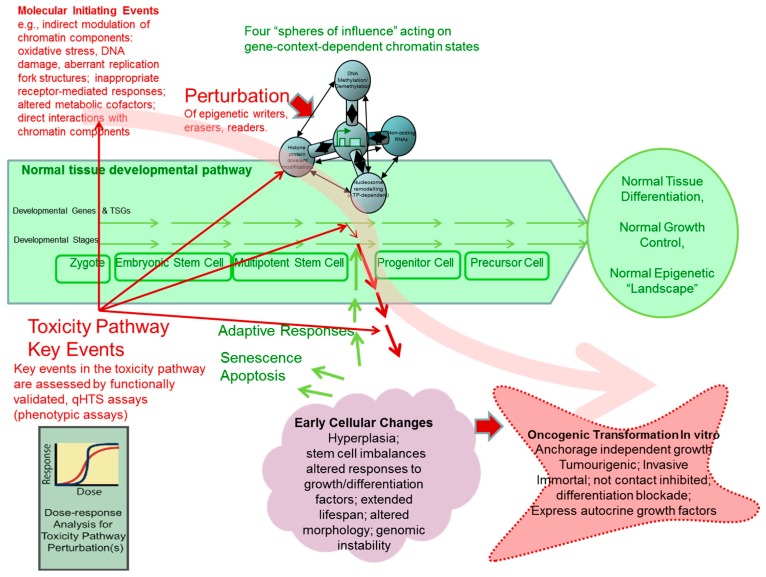
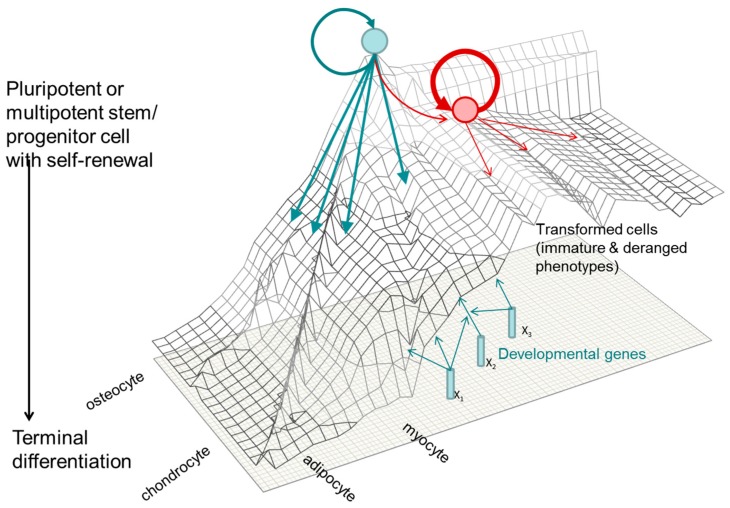
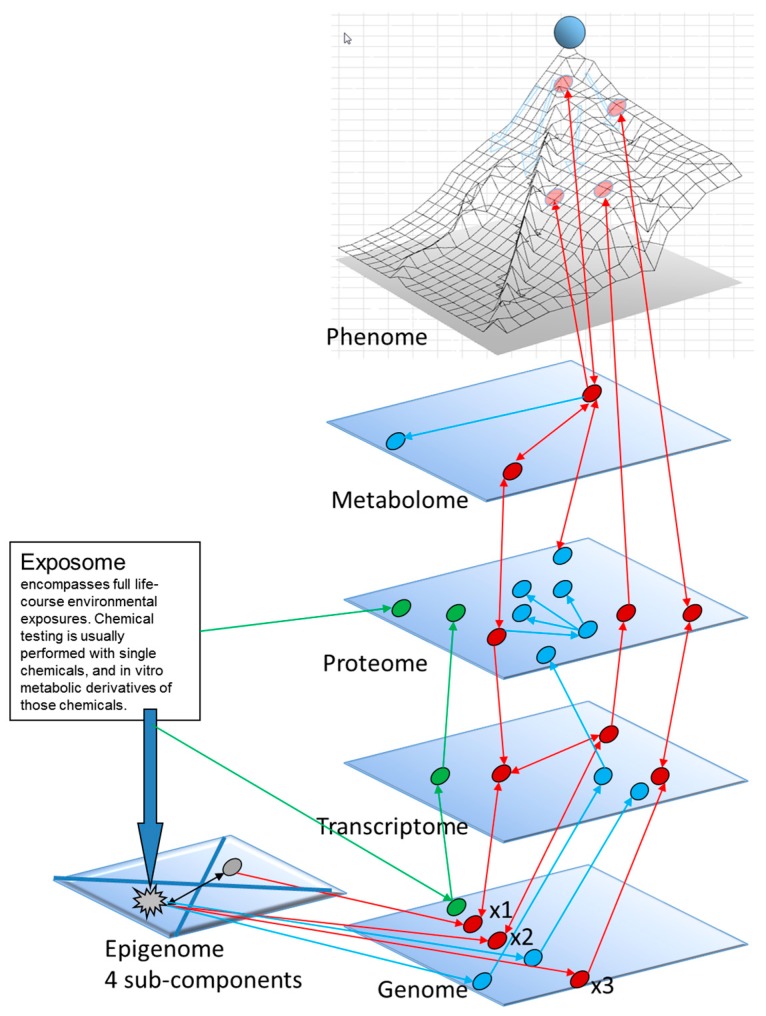
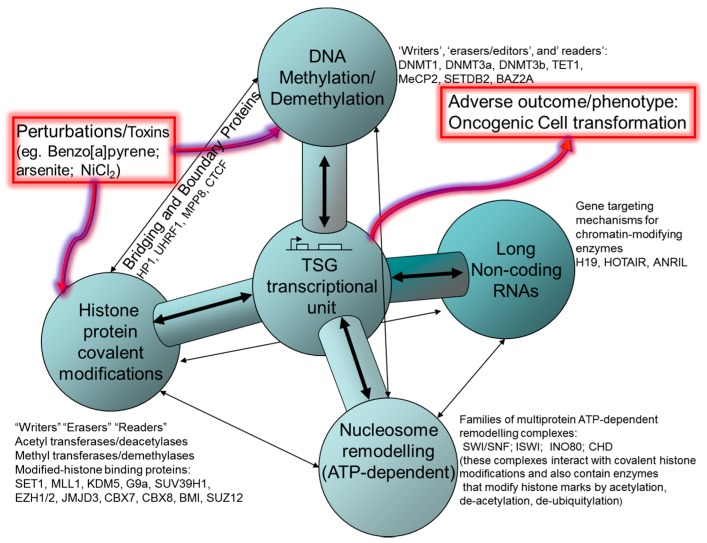
An emerging vision for toxicity testing in the 21st century foresees in vitro assays assuming the leading role in testing for chemical hazards, including testing for carcinogenicity. Toxicity will be determined by monitoring key steps in functionally validated molecular pathways, using tests designed to reveal chemically-induced perturbations that lead to adverse phenotypic endpoints in cultured human cells. Risk assessments would subsequently be derived from the causal in vitro endpoints and concentration vs. effect data extrapolated to human in vivo concentrations. Much direct experimental evidence now shows that disruption of epigenetic processes by chemicals is a carcinogenic mode of action that leads to altered gene functions playing causal roles in cancer initiation and progression. In assessing chemical safety, it would therefore be advantageous to consider an emerging class of carcinogens, the epigenotoxicants, with the ability to change chromatin and/or DNA marks by direct or indirect effects on the activities of enzymes (writers, erasers/editors, remodelers and readers) that convey the epigenetic information. Evidence is reviewed supporting a strategy for in vitro hazard identification of carcinogens that induce toxicity through disturbance of functional epigenetic pathways in human somatic cells, leading to inactivated tumour suppressor genes and carcinogenesis. In the context of human cell transformation models, these in vitro pathway measurements ensure high biological relevance to the apical endpoint of cancer. Four causal mechanisms participating in pathways to persistent epigenetic gene silencing were considered: covalent histone modification, nucleosome remodeling, non-coding RNA interaction and DNA methylation. Within these four interacting mechanisms, 25 epigenetic toxicity pathway components (SET1, MLL1, KDM5, G9A, SUV39H1, SETDB1, EZH2, JMJD3, CBX7, CBX8, BMI, SUZ12, HP1, MPP8, DNMT1, DNMT3A, DNMT3B, TET1, MeCP2, SETDB2, BAZ2A, UHRF1, CTCF, HOTAIR and ANRIL) were found to have experimental evidence showing that functional perturbations played "driver" roles in human cellular transformation. Measurement of epigenotoxicants presents challenges for short-term carcinogenicity testing, especially in the high-throughput modes emphasized in the Tox21 chemicals testing approach. There is need to develop and validate in vitro tests to detect both, locus-specific, and genome-wide, epigenetic alterations with causal links to oncogenic cellular phenotypes. Some recent examples of cell-based high throughput chemical screening assays are presented that have been applied or have shown potential for application to epigenetic endpoints.

摘要

21世纪毒性测试的一个新愿景预计,体外试验将在化学危害测试(包括致癌性测试)中发挥主导作用。毒性将通过监测功能验证的分子途径中的关键步骤来确定,使用旨在揭示化学诱导的扰动的测试,这些扰动会导致培养的人类细胞中出现不良表型终点。随后的风险评估将来自因果性的体外终点以及外推至人体体内浓度的浓度与效应数据。现在有许多直接实验证据表明,化学物质对表观遗传过程的破坏是一种致癌作用模式,会导致在癌症发生和发展中起因果作用的基因功能改变。因此,在评估化学安全性时,考虑一类新兴的致癌物——表观遗传毒性物质是有利的,这类物质能够通过直接或间接影响传递表观遗传信息的酶(写入者、擦除者/编辑者、重塑者和读取者)的活性来改变染色质和/或DNA标记。本文综述了相关证据,支持一种在体外识别通过干扰人类体细胞中功能性表观遗传途径诱导毒性从而导致肿瘤抑制基因失活和致癌的致癌物的策略。在人类细胞转化模型的背景下,这些体外途径测量确保了与癌症顶端终点具有高度生物学相关性。研究考虑了参与持续性表观遗传基因沉默途径的四种因果机制:共价组蛋白修饰、核小体重塑、非编码RNA相互作用和DNA甲基化。在这四种相互作用机制中,发现有25种表观遗传毒性途径成分(SET1、MLL1、KDM5、G9A、SUV39H1、SETDB1、EZH2、JMJD3、CBX7、CBX8、BMI、SUZ12、HP1、MPP8 DNMT1、DNMT3A、DNMT3B、TET1、MeCP2、SETDB2、BAZ2A、UHRF1、CTCF、HOTAIR和ANRIL)有实验证据表明其功能扰动在人类细胞转化中起“驱动”作用。表观遗传毒性物质的测量对短期致癌性测试提出了挑战尤其是在Tox21化学物质测试方法所强调的高通量模式下。需要开发和验证体外试验,以检测与致癌细胞表型有因果联系的位点特异性和全基因组表观遗传改变。本文介绍了一些基于细胞的高通量化学筛选试验的最新例子,这些试验已应用于或显示出应用于表观遗传终点的潜力。
https://cdn.ncbi.nlm.nih.gov/pmc/blobs/856f/5486002/83f8cd8aa52f/ijms-18-01179-g007.jpg
https://cdn.ncbi.nlm.nih.gov/pmc/blobs/856f/5486002/218960cc1094/ijms-18-01179-g001.jpg
https://cdn.ncbi.nlm.nih.gov/pmc/blobs/856f/5486002/86c0174dbdfc/ijms-18-01179-g002.jpg
https://cdn.ncbi.nlm.nih.gov/pmc/blobs/856f/5486002/a9bf67f7c87d/ijms-18-01179-g003.jpg
https://cdn.ncbi.nlm.nih.gov/pmc/blobs/856f/5486002/4dc120819594/ijms-18-01179-g004.jpg
https://cdn.ncbi.nlm.nih.gov/pmc/blobs/856f/5486002/edc6f712ca70/ijms-18-01179-g005.jpg
https://cdn.ncbi.nlm.nih.gov/pmc/blobs/856f/5486002/b314e9887de9/ijms-18-01179-g006.jpg
https://cdn.ncbi.nlm.nih.gov/pmc/blobs/856f/5486002/83f8cd8aa52f/ijms-18-01179-g007.jpg
https://cdn.ncbi.nlm.nih.gov/pmc/blobs/856f/5486002/218960cc1094/ijms-18-01179-g001.jpg
https://cdn.ncbi.nlm.nih.gov/pmc/blobs/856f/5486002/86c0174dbdfc/ijms-18-01179-g002.jpg
https://cdn.ncbi.nlm.nih.gov/pmc/blobs/856f/5486002/a9bf67f7c87d/ijms-18-01179-g003.jpg
https://cdn.ncbi.nlm.nih.gov/pmc/blobs/856f/5486002/4dc120819594/ijms-18-01179-g004.jpg
https://cdn.ncbi.nlm.nih.gov/pmc/blobs/856f/5486002/edc6f712ca70/ijms-18-01179-g005.jpg
https://cdn.ncbi.nlm.nih.gov/pmc/blobs/856f/5486002/b314e9887de9/ijms-18-01179-g006.jpg
https://cdn.ncbi.nlm.nih.gov/pmc/blobs/856f/5486002/83f8cd8aa52f/ijms-18-01179-g007.jpg

相似文献

1
A Tox21 Approach to Altered Epigenetic Landscapes: Assessing Epigenetic Toxicity Pathways Leading to Altered Gene Expression and Oncogenic Transformation In Vitro.一种用于改变表观遗传格局的Tox21方法:评估导致体外基因表达改变和致癌转化的表观遗传毒性途径。
Int J Mol Sci. 2017 Jun 1;18(6):1179. doi: 10.3390/ijms18061179.
2
Epigenetic regulation in human melanoma: past and future.人类黑色素瘤中的表观遗传调控:过去与未来
Epigenetics. 2015;10(2):103-21. doi: 10.1080/15592294.2014.1003746.
3
Gene methylation in gastric cancer.胃癌中的基因甲基化。
Clin Chim Acta. 2013 Sep 23;424:53-65. doi: 10.1016/j.cca.2013.05.002. Epub 2013 May 10.
4
Epigenetic boundaries of tumour suppressor gene promoters: the CTCF connection and its role in carcinogenesis.肿瘤抑制基因启动子的表观遗传边界:CTCF连接及其在致癌作用中的作用。
J Cell Mol Med. 2006 Jul-Sep;10(3):554-68. doi: 10.1111/j.1582-4934.2006.tb00420.x.
5
Guidelines for the evaluation of chemicals for carcinogenicity. Committee on Carcinogenicity of Chemicals in Food, Consumer Products and the Environment.食品、消费品及环境中化学物质致癌性评估指南。食品、消费品及环境中化学物质致癌性委员会。
Rep Health Soc Subj (Lond). 1991;42:1-80.
6
Epigenetic drugs as pleiotropic agents in cancer treatment: biomolecular aspects and clinical applications.表观遗传药物作为癌症治疗中的多效性药物:生物分子方面及临床应用
J Cell Physiol. 2007 Aug;212(2):330-44. doi: 10.1002/jcp.21066.
7
Implementing Toxicity Testing in the 21st Century (TT21C): Making safety decisions using toxicity pathways, and progress in a prototype risk assessment.实施21世纪毒性测试(TT21C):利用毒性途径做出安全决策及原型风险评估进展
Toxicology. 2015 Jun 5;332:102-11. doi: 10.1016/j.tox.2014.02.007. Epub 2014 Feb 25.
8
Epigenetic blockade of neoplastic transformation by bromodomain and extra-terminal (BET) domain protein inhibitor JQ-1.含溴结构域和额外末端(BET)结构域蛋白抑制剂JQ-1对肿瘤转化的表观遗传阻断作用
Biochem Pharmacol. 2016 Oct 1;117:35-45. doi: 10.1016/j.bcp.2016.08.009. Epub 2016 Aug 9.
9
Epigenetic alterations in cancer.癌症中的表观遗传改变。
Front Biosci (Landmark Ed). 2020 Mar 1;25(6):1058-1109. doi: 10.2741/4847.
10
Epigenetic alterations induced by genotoxic occupational and environmental human chemical carcinogens: A systematic literature review.遗传毒性职业和环境人类化学致癌物诱导的表观遗传改变:系统文献综述。
Mutat Res Rev Mutat Res. 2016 Apr-Jun;768:27-45. doi: 10.1016/j.mrrev.2016.03.004. Epub 2016 Mar 31.

引用本文的文献

1
Distinct functions of EHMT1 and EHMT2 in cancer chemotherapy and immunotherapy.EHMT1和EHMT2在癌症化疗和免疫治疗中的不同功能。
bioRxiv. 2023 Oct 4:2023.10.03.560719. doi: 10.1101/2023.10.03.560719.
2
In Vitro Cell Transformation Assays: A Valuable Approach for Carcinogenic Potentiality Assessment of Nanomaterials.体外细胞转化试验:评估纳米材料致癌潜能的有效方法。
Int J Mol Sci. 2023 May 4;24(9):8219. doi: 10.3390/ijms24098219.
3
Toxicoepigenetics for Risk Assessment: Bridging the Gap Between Basic and Regulatory Science.

本文引用的文献

1
Mechanisms Regulating PRC2 Recruitment and Enzymatic Activity.调控 PRC2 招募和酶活性的机制。
Trends Biochem Sci. 2017 Jul;42(7):531-542. doi: 10.1016/j.tibs.2017.04.003. Epub 2017 May 5.
2
Structural basis of molecular recognition of helical histone H3 tail by PHD finger domains.PHD指结构域对螺旋状组蛋白H3尾部进行分子识别的结构基础。
Biochem J. 2017 May 4;474(10):1633-1651. doi: 10.1042/BCJ20161053.
3
Elevated UHRF1 expression contributes to poor prognosis by promoting cell proliferation and metastasis in hepatocellular carcinoma.
用于风险评估的毒理表观遗传学:弥合基础科学与监管科学之间的差距
Epigenet Insights. 2022 Jul 15;15:25168657221113149. doi: 10.1177/25168657221113149. eCollection 2022.
4
Approaches In Carcinogenicity Hazard Assessment: Current Status and Future Needs.致癌性危害评估方法:现状与未来需求
Comput Toxicol. 2021 Nov;20. doi: 10.1016/j.comtox.2021.100191. Epub 2021 Sep 23.
5
Integration of Epigenetic Mechanisms into Non-Genotoxic Carcinogenicity Hazard Assessment: Focus on DNA Methylation and Histone Modifications.将表观遗传机制纳入非遗传毒性致癌性危害评估中:重点关注 DNA 甲基化和组蛋白修饰。
Int J Mol Sci. 2021 Oct 11;22(20):10969. doi: 10.3390/ijms222010969.
6
Differential expression of long non-coding RNAs as diagnostic markers for lung cancer and other malignant tumors.长非编码 RNA 作为肺癌和其他恶性肿瘤诊断标志物的差异表达。
Aging (Albany NY). 2021 Oct 20;13(20):23842-23867. doi: 10.18632/aging.203523.
7
Ascorbate: antioxidant and biochemical activities and their importance for in vitro models.抗坏血酸:抗氧化和生化活性及其对体外模型的重要性。
Arch Toxicol. 2021 Dec;95(12):3623-3631. doi: 10.1007/s00204-021-03167-0. Epub 2021 Oct 1.
8
HeLa TI cell-based assay as a new approach to screen for chemicals able to reactivate the expression of epigenetically silenced genes.基于 HeLa TI 细胞的检测方法作为一种新的手段,用于筛选能够重新激活表观遗传沉默基因表达的化学物质。
PLoS One. 2021 Jun 11;16(6):e0252504. doi: 10.1371/journal.pone.0252504. eCollection 2021.
9
The Key Characteristics of Carcinogens: Relationship to the Hallmarks of Cancer, Relevant Biomarkers, and Assays to Measure Them.致癌物的关键特征:与癌症相关的标志物、相关生物标志物及其检测方法的关系。
Cancer Epidemiol Biomarkers Prev. 2020 Oct;29(10):1887-1903. doi: 10.1158/1055-9965.EPI-19-1346. Epub 2020 Mar 9.
10
A Genome Model to Explain Major Features of Neurodevelopmental Disorders in Newborns.一个解释新生儿神经发育障碍主要特征的基因组模型。
Biomed Inform Insights. 2019 Jul 31;11:1178222619863369. doi: 10.1177/1178222619863369. eCollection 2019.
UHRF1表达升高通过促进肝细胞癌的细胞增殖和转移导致预后不良。
Oncotarget. 2017 Feb 7;8(6):10510-10522. doi: 10.18632/oncotarget.14446.
4
A chemical-biological similarity-based grouping of complex substances as a prototype approach for evaluating chemical alternatives.基于化学-生物学相似性对复杂物质进行分组,作为评估化学替代品的一种原型方法。
Green Chem. 2016 Aug 21;18(16):4407-4419. doi: 10.1039/c6gc01147k. Epub 2016 May 16.
5
The effect of exposure to nanoparticles and nanomaterials on the mammalian epigenome.纳米颗粒和纳米材料暴露对哺乳动物表观基因组的影响。
Int J Nanomedicine. 2016 Nov 25;11:6297-6306. doi: 10.2147/IJN.S120104. eCollection 2016.
6
PARP1 orchestrates epigenetic events setting up chromatin domains.PARP1 调控组蛋白事件,建立染色质结构域。
Semin Cell Dev Biol. 2017 Mar;63:123-134. doi: 10.1016/j.semcdb.2016.11.010. Epub 2016 Nov 28.
7
Insulated Neighborhoods: Structural and Functional Units of Mammalian Gene Control.绝缘邻域:哺乳动物基因调控的结构和功能单位
Cell. 2016 Nov 17;167(5):1188-1200. doi: 10.1016/j.cell.2016.10.024.
8
Utility of the adverse outcome pathway concept in drug development.不良结局途径概念在药物研发中的应用
Expert Opin Drug Metab Toxicol. 2017 Jan;13(1):1-3. doi: 10.1080/17425255.2017.1246535. Epub 2016 Oct 21.
9
Methyl-CpG-binding protein MBD2 plays a key role in maintenance and spread of DNA methylation at CpG islands and shores in cancer.甲基化CpG结合蛋白MBD2在癌症中CpG岛和海岸区域DNA甲基化的维持与扩散过程中发挥关键作用。
Oncogene. 2017 Mar;36(10):1328-1338. doi: 10.1038/onc.2016.297. Epub 2016 Sep 5.
10
Oncogenic roles of the SETDB2 histone methyltransferase in gastric cancer.SETDB2组蛋白甲基转移酶在胃癌中的致癌作用
Oncotarget. 2016 Oct 11;7(41):67251-67265. doi: 10.18632/oncotarget.11625.