Biotechnology & Breeding Department, Sime Darby Plantation R&D Centre, Selangor, 43400, Malaysia.
Department of Biological Sciences, National University of Singapore, Singapore, 117543, Singapore.
Sci Rep. 2017 Jun 6;7(1):2872. doi: 10.1038/s41598-017-02602-6.
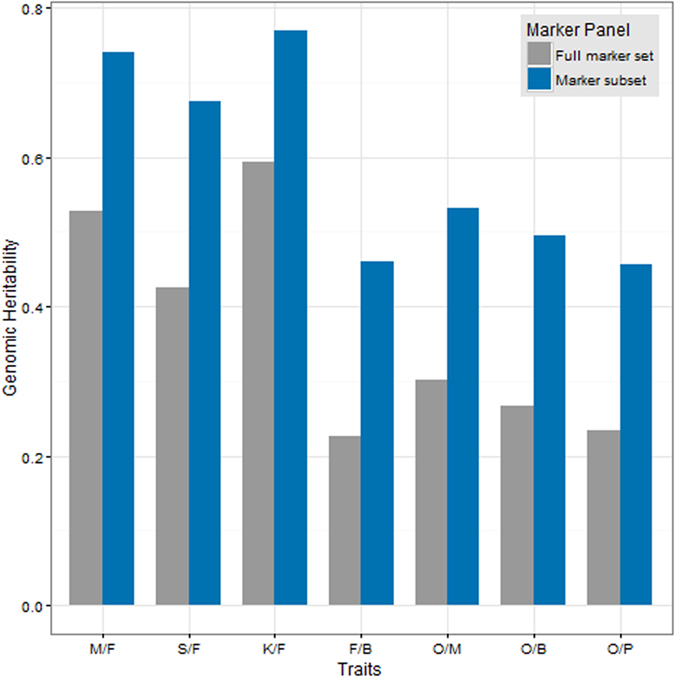
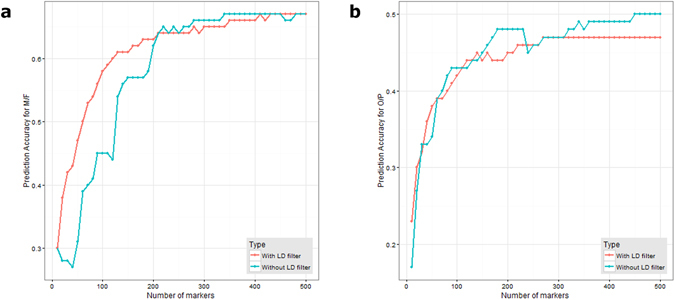
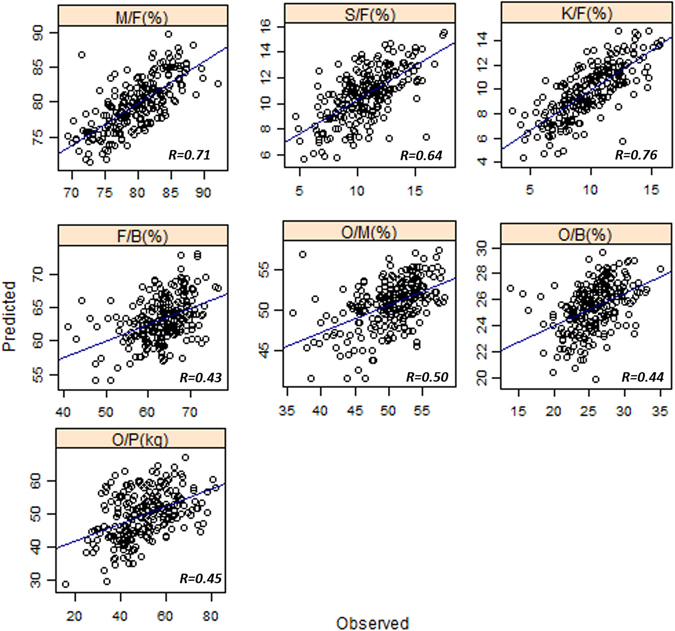
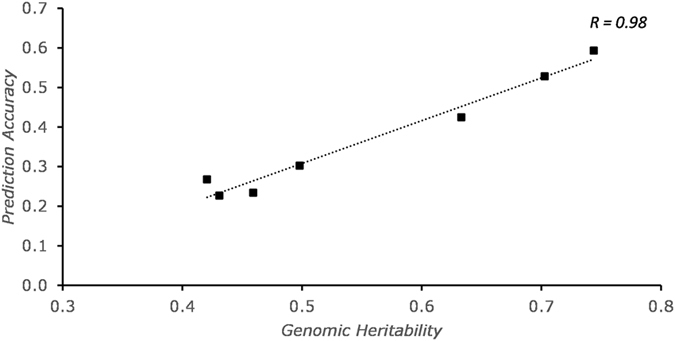
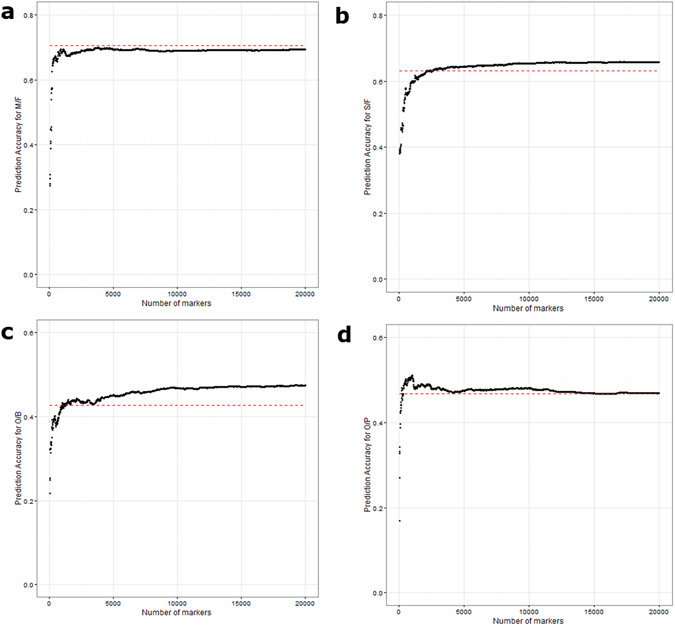
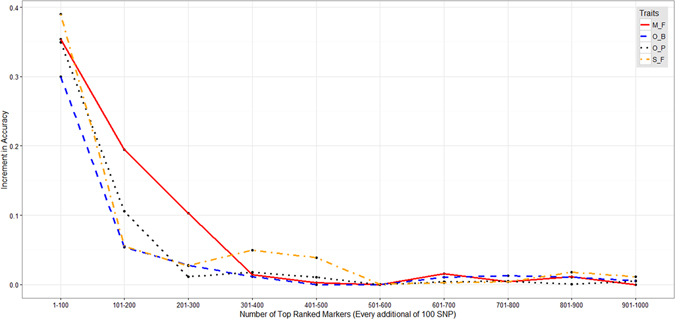
Genomic selection (GS) uses genome-wide markers to select individuals with the desired overall combination of breeding traits. A total of 1,218 individuals from a commercial population of Ulu Remis x AVROS (UR x AVROS) were genotyped using the OP200K array. The traits of interest included: shell-to-fruit ratio (S/F, %), mesocarp-to-fruit ratio (M/F, %), kernel-to-fruit ratio (K/F, %), fruit per bunch (F/B, %), oil per bunch (O/B, %) and oil per palm (O/P, kg/palm/year). Genomic heritabilities of these traits were estimated to be in the range of 0.40 to 0.80. GS methods assessed were RR-BLUP, Bayes A (BA), Cπ (BC), Lasso (BL) and Ridge Regression (BRR). All methods resulted in almost equal prediction accuracy. The accuracy achieved ranged from 0.40 to 0.70, correlating with the heritability of traits. By selecting the most important markers, RR-BLUP B has the potential to outperform other methods. The marker density for certain traits can be further reduced based on the linkage disequilibrium (LD). Together with in silico breeding, GS is now being used in oil palm breeding programs to hasten parental palm selection.
基因组选择 (GS) 使用全基因组标记来选择具有所需综合育种性状的个体。利用 OP200K 数组对来自 Ulu Remis x AVROS (UR x AVROS) 商业群体的 1218 个个体进行了基因型分析。感兴趣的性状包括:壳果比(S/F,%)、中果皮果比(M/F,%)、核果比(K/F,%)、每束果数(F/B,%)、每束油量(O/B,%)和每棕榈油量(O/P,kg/棕榈/年)。这些性状的基因组遗传力估计在 0.40 到 0.80 之间。评估的 GS 方法包括 RR-BLUP、Bayes A (BA)、Cπ (BC)、Lasso (BL) 和 Ridge Regression (BRR)。所有方法的预测准确性几乎相同。所达到的准确性范围从 0.40 到 0.70,与性状的遗传力相关。通过选择最重要的标记,RR-BLUP B 有可能优于其他方法。某些性状的标记密度可以根据连锁不平衡(LD)进一步降低。与计算机辅助育种一起,GS 现在正在油棕育种计划中使用,以加速亲本棕榈的选择。