Department of Chemistry, Princeton University , Princeton, New Jersey 08544, United States.
Department of Molecular Biology, Princeton University , Princeton, New Jersey 08544, United States.
J Am Chem Soc. 2017 Jul 12;139(27):9203-9212. doi: 10.1021/jacs.7b02716. Epub 2017 Jun 29.
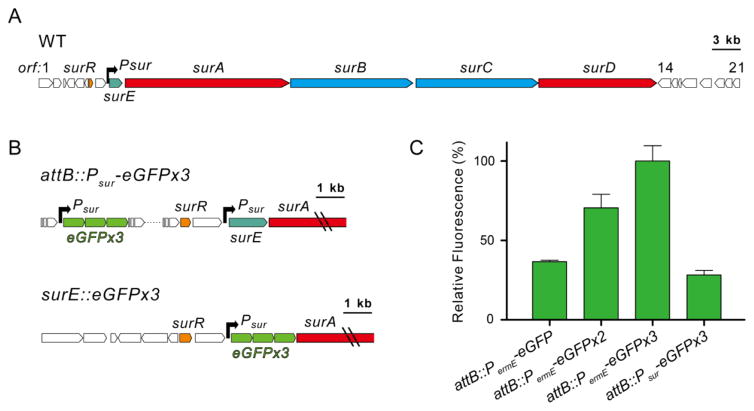
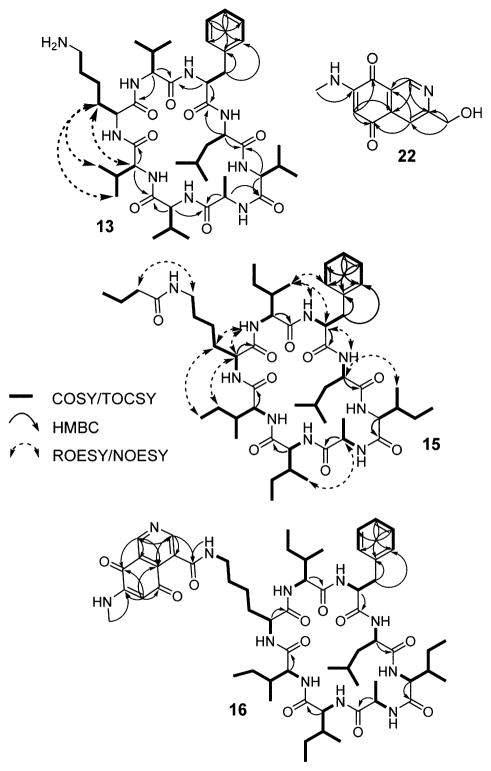
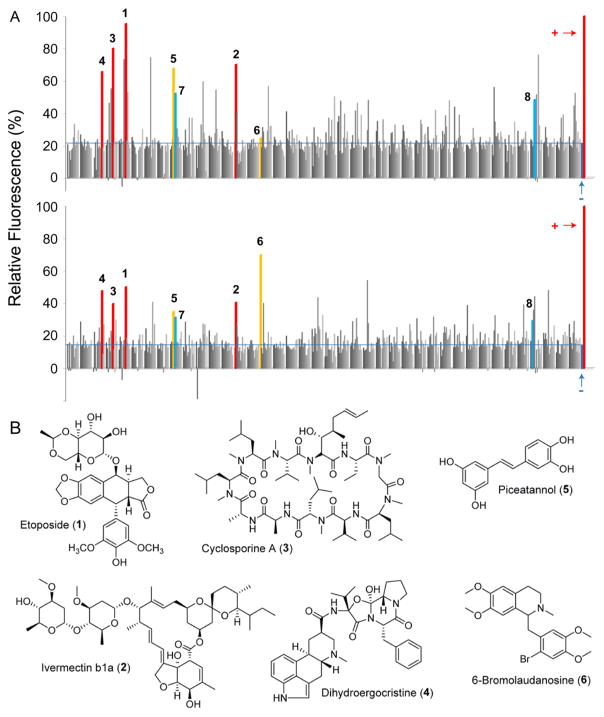
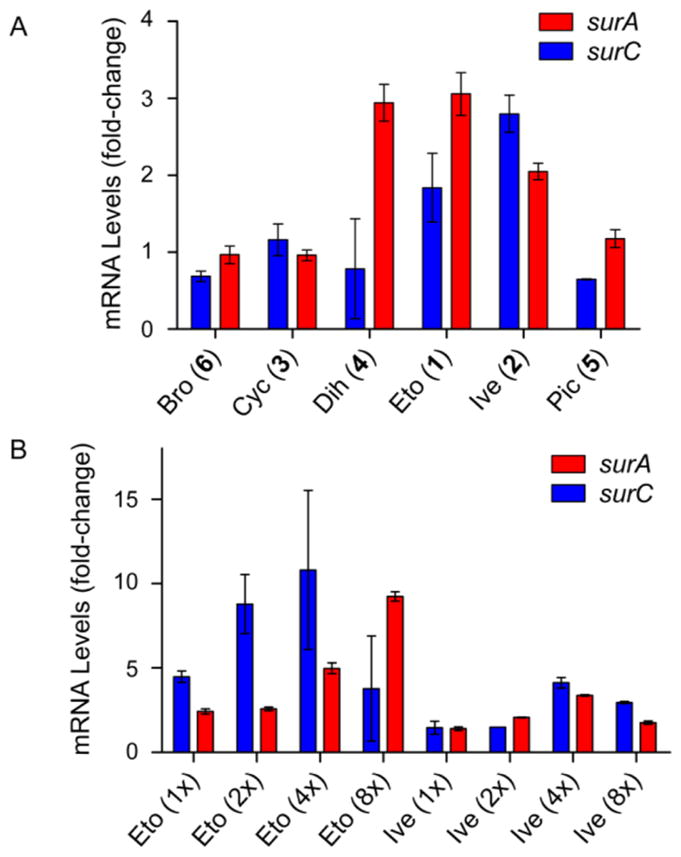
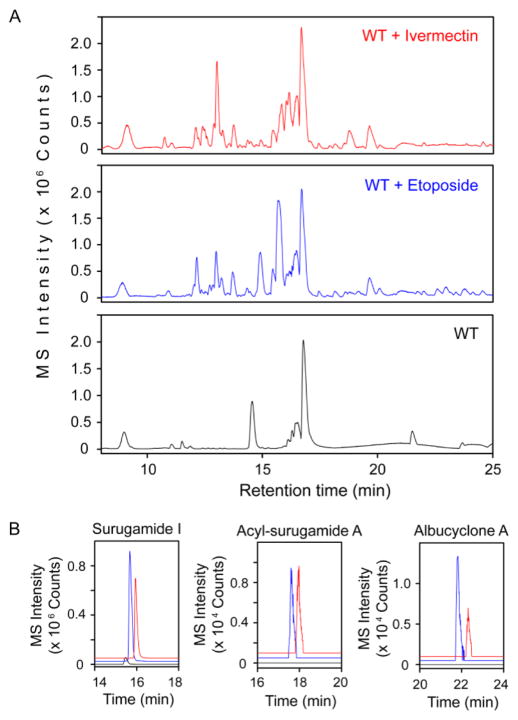
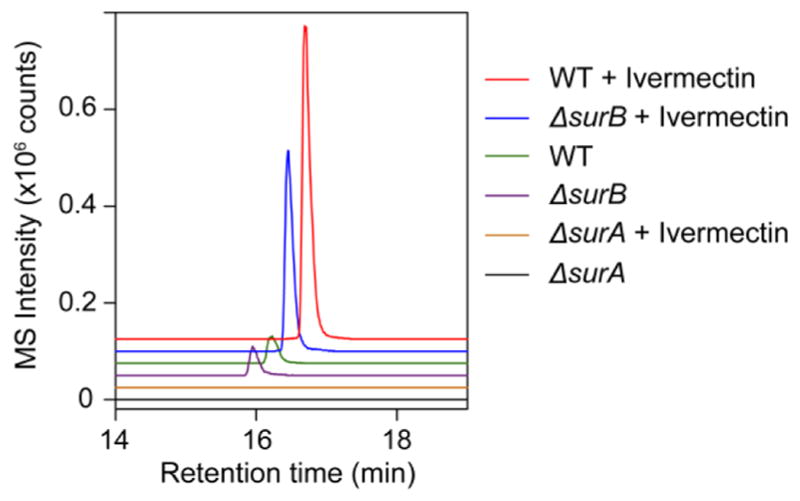
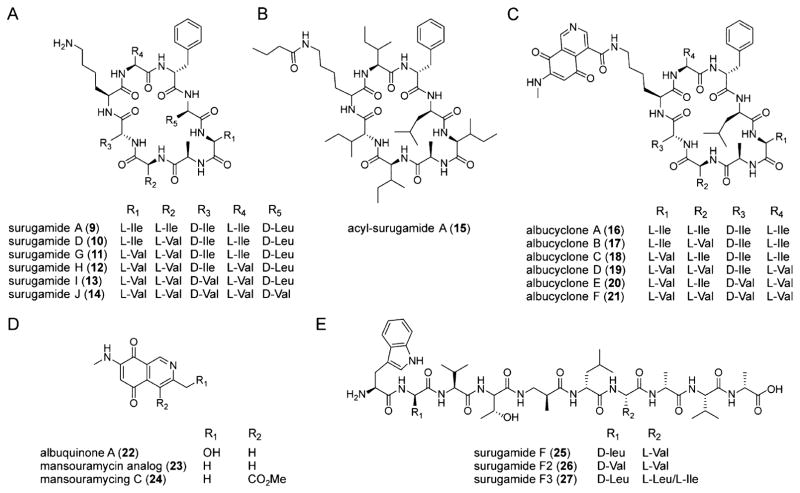
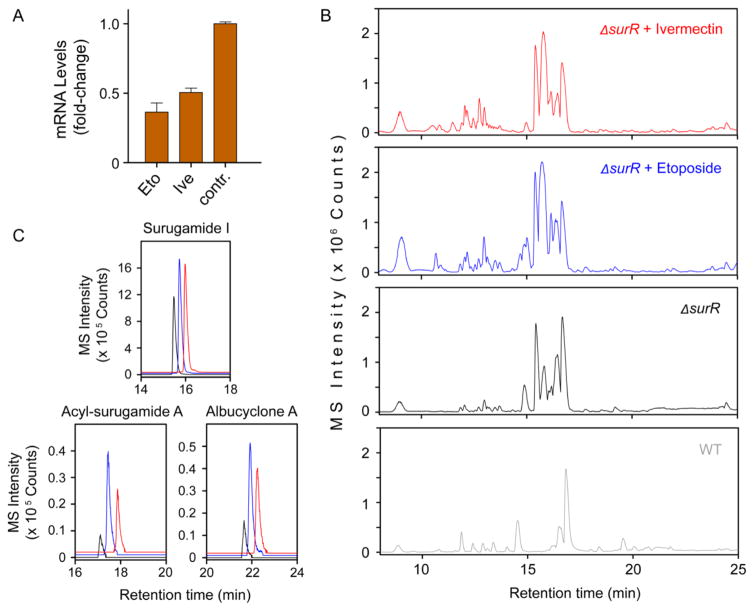
An important unresolved issue in microbial secondary metabolite production is the abundance of biosynthetic gene clusters that are not expressed under typical laboratory growth conditions. These so-called silent or cryptic gene clusters are sources of new natural products, but how they are silenced, and how they may be rationally activated are areas of ongoing investigation. We recently devised a chemogenetic high-throughput screening approach ("HiTES") to discover small molecule elicitors of silent biosynthetic gene clusters. This method was successfully applied to a Gram-negative bacterium; it has yet to be implemented in the prolific antibiotic-producing streptomycetes. Herein we have developed a high-throughput transcriptional assay format in Streptomyces spp. by leveraging eGFP, inserted both at a neutral site and inside the biosynthetic cluster of interest, as a read-out for secondary metabolite synthesis. Using this approach, we successfully used HiTES to activate a silent gene cluster in Streptomyces albus J1074. Our results revealed the cytotoxins etoposide and ivermectin as potent inducers, allowing us to isolate and structurally characterize 14 novel small molecule products of the chosen cluster. One of these molecules is a novel antifungal, while several others inhibit a cysteine protease implicated in cancer. Studies addressing the mechanism of induction by the two elicitors led to the identification of a pathway-specific transcriptional repressor that silences the gene cluster under standard growth conditions. The successful application of HiTES will allow future interrogations of the biological regulation and chemical output of the countless silent gene clusters in Streptomyces spp.
微生物次生代谢产物生产中一个未解决的重要问题是大量生物合成基因簇在典型的实验室生长条件下不表达。这些所谓的沉默或隐匿基因簇是新天然产物的来源,但它们是如何沉默的,以及如何合理地激活它们,这些都是正在研究的领域。我们最近设计了一种化学生物学高通量筛选方法(“HiTES”)来发现沉默生物合成基因簇的小分子诱导剂。该方法已成功应用于革兰氏阴性细菌;它尚未在高产抗生素的链霉菌中实施。本文中,我们通过利用插入到中性位点和感兴趣的生物合成簇内的 eGFP,开发了一种高通量转录测定格式在链霉菌属中。作为次级代谢产物合成的读出,使用这种方法,我们成功地使用 HiTES 激活了白色链霉菌 J1074 中的一个沉默基因簇。我们的结果显示细胞毒素依托泊苷和伊维菌素是有效的诱导剂,使我们能够分离和结构表征所选簇的 14 种新型小分子产物。其中一种分子是一种新型抗真菌剂,而其他几种则抑制一种与癌症有关的半胱氨酸蛋白酶。对两种诱导剂诱导机制的研究导致鉴定出一种途径特异性转录阻遏物,该阻遏物在标准生长条件下沉默基因簇。HiTES 的成功应用将允许未来对链霉菌属中无数沉默基因簇的生物学调控和化学产物进行探究。