Yoon In Ae, Hong Ki Bae, Lee Hoan Jong, Yun Ki Wook, Park Ji Young, Choi Young Hoon, Kim Woo Sun, Lee Hyunju, Eun Byung Wook, Ahn Young Min, Cho Eun Young, Cho Hwa Jin, Choi Eun Hwa
Department of Pediatrics, Seoul National University Children's Hospital, Seoul, South Korea.
Department of Pediatrics, Seoul National University College of Medicine, Seoul, South Korea.
BMC Infect Dis. 2017 Jun 7;17(1):402. doi: 10.1186/s12879-017-2500-z.
With the emergence of macrolide resistance, concerns about the efficacy of macrolides for the treatment of Mycoplasma pneumoniae (MP) pneumonia in children have been raised. This study aimed to determine the effect of macrolide resistance on the outcome of children who were hospitalized with MP pneumonia.
Between 2010 and 2015, we performed culture of MP from nasopharyngeal samples obtained from children who were hospitalized with pneumonia at five hospitals in Korea. Macrolide resistance was determined by the analysis of 23S rRNA gene transition and the minimal inhibitory concentrations of four macrolides. Medical records were reviewed to analyze the clinical response to treatment with macrolides.
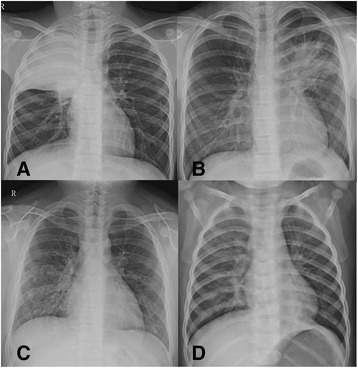
MP was detected in 116 (4.8%) of the 2436 children with pneumonia. MP pneumonia was prevalent in 2011 and 2015. Of the 116 patients with MP pneumonia, 82 (70.7%) were macrolide-resistant. There were no differences in the age distribution, total duration of fever, and chest x-ray patterns between the macrolide-susceptible and macrolide-resistant groups. After macrolide initiation, mean days to defervescence were longer in the macrolide-resistant group than in macrolide-susceptible group (5.7 days vs. 4.1 days, P = 0.021). However, logistic regression analysis revealed that the presence of extrapulmonary signs (P = 0.039), homogeneous lobar consolidation (P = 0.004), or parapneumonic effusion (P < 0.001) were associated with fever duration of ≥7 days after the initiation of macrolides, regardless of macrolide resistance.
This study demonstrated that fever duration in MP pneumonia was determined by the radiologic findings of chest x-ray, not by the presence of macrolide resistance. The results highlight the need for future studies to assess therapeutic benefit from macrolides in the treatment of children with MP pneumonia.
随着大环内酯类耐药性的出现,人们对大环内酯类药物治疗儿童肺炎支原体(MP)肺炎的疗效产生了担忧。本研究旨在确定大环内酯类耐药性对MP肺炎住院儿童治疗结果的影响。
2010年至2015年期间,我们对韩国五家医院因肺炎住院的儿童鼻咽样本进行了MP培养。通过分析23S rRNA基因转换和四种大环内酯类药物的最低抑菌浓度来确定大环内酯类耐药性。回顾病历以分析对大环内酯类药物治疗的临床反应。
在2436例肺炎儿童中,116例(4.8%)检测到MP。MP肺炎在2011年和2015年较为流行。在116例MP肺炎患者中,82例(70.7%)对大环内酯类耐药。大环内酯类敏感组和耐药组在年龄分布、发热总时长和胸部X光片表现方面无差异。开始使用大环内酯类药物后,耐药组的平均退热天数比敏感组更长(5.7天对4.1天,P = 0.021)。然而,逻辑回归分析显示,无论大环内酯类耐药情况如何,肺外体征(P = 0.039)、均匀性肺叶实变(P = 0.004)或胸腔积液(P < 0.001)与开始使用大环内酯类药物后发热持续≥7天相关。
本研究表明,MP肺炎的发热持续时间由胸部X光的影像学表现决定,而非大环内酯类耐药性的存在。结果凸显了未来研究评估大环内酯类药物治疗MP肺炎儿童的治疗益处的必要性。