Gliedt Jordan A, Schneider Michael J, Evans Marion W, King Jeff, Eubanks James E
College of Chiropractic, Logan University, Chesterfield, MO USA.
Department of Physical Therapy, University of Pittsburgh, Pittsburgh, PA USA.
Chiropr Man Therap. 2017 Jun 7;25:16. doi: 10.1186/s12998-017-0147-x. eCollection 2017.
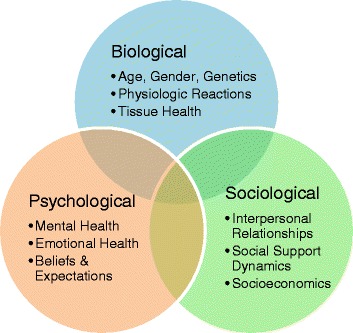
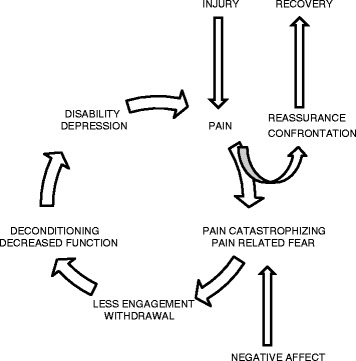
There is an increasing awareness, interest and acceptance of the biopsychosocial (BPS) model by all health care professionals involved with patient care. The areas of spine care and pain medicine are no exception, and in fact, these areas of health care are a major centerpiece of the movement from the traditional biomedical model to a BPS model of patient assessment and delivery of care. The chiropractic approach to health care has a history that is grounded in key aspects of the BPS model. The profession has inherently implemented certain features of the BPS model throughout its history, perhaps without a full understanding or realization. The purpose of this paper is to present an overview of the BPS model, its relationship with spine care and pain management, and to discuss the BPS model, particularly psychosocial aspects, in the context of its historical relationship with chiropractic. We will also provide recommendations for the chiropractic profession as it relates to successful adoption of a full integration of the BPS model.
所有参与患者护理的医疗保健专业人员对生物心理社会(BPS)模型的认识、兴趣和接受度都在不断提高。脊柱护理和疼痛医学领域也不例外,事实上,这些医疗保健领域是从传统生物医学模型向患者评估和护理提供的BPS模型转变的主要核心。整脊疗法的医疗保健方法有着基于BPS模型关键方面的历史。该专业在其整个历史中内在地实施了BPS模型的某些特征,也许并没有完全理解或意识到这一点。本文的目的是概述BPS模型、它与脊柱护理和疼痛管理的关系,并在其与整脊疗法的历史关系背景下讨论BPS模型,特别是心理社会方面。我们还将针对整脊疗法专业成功全面采用BPS模型提供建议。