WestCHEM, School of Chemistry, The University of Glasgow, Glasgow G12 8QQ, UK.
Quantitative Biology Center, RIKEN, 6-2-3 Furuedai, Suita, Osaka 565-0874, Japan.
Nat Commun. 2017 Jun 8;8:15589. doi: 10.1038/ncomms15589.
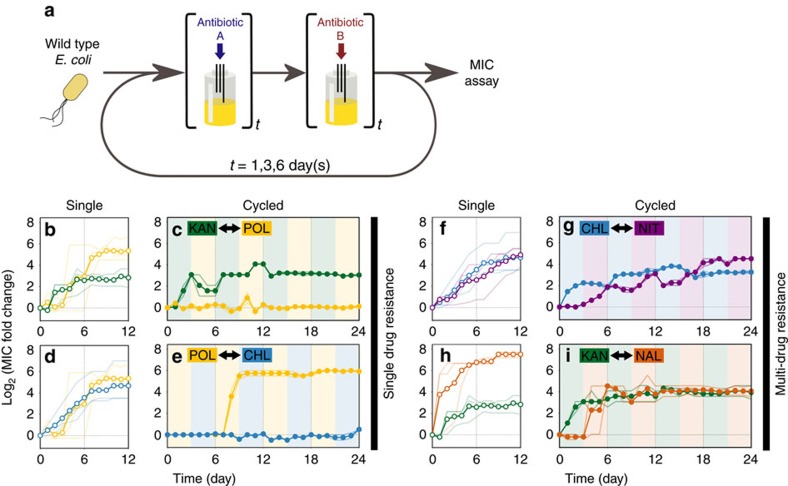
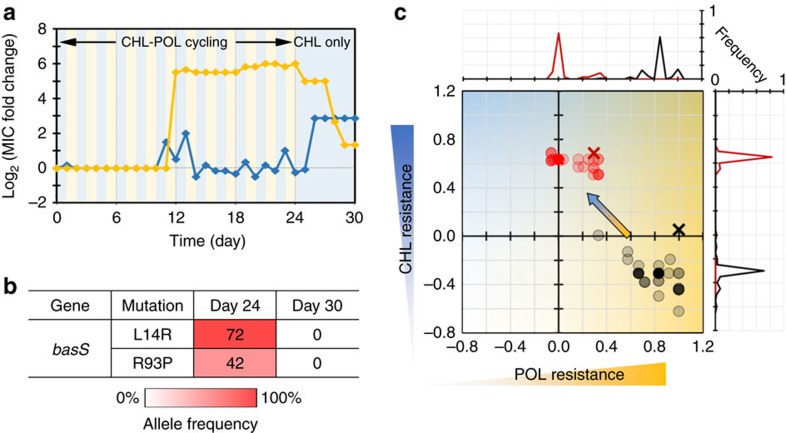
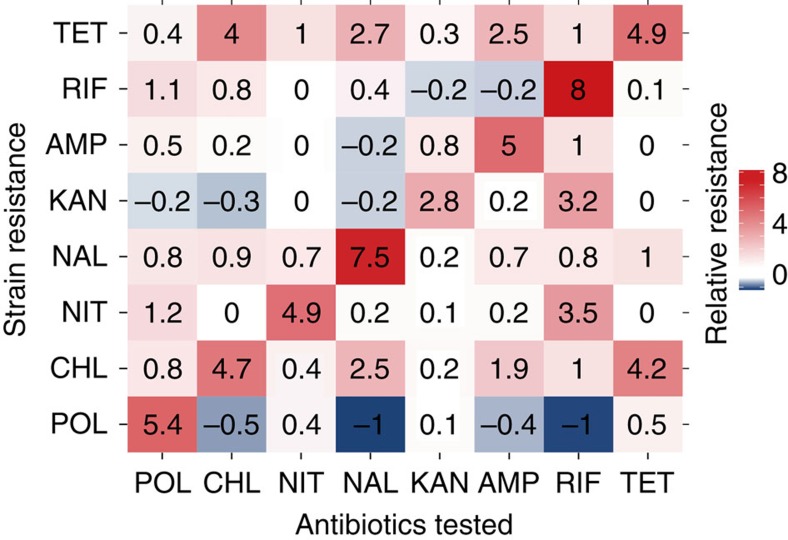
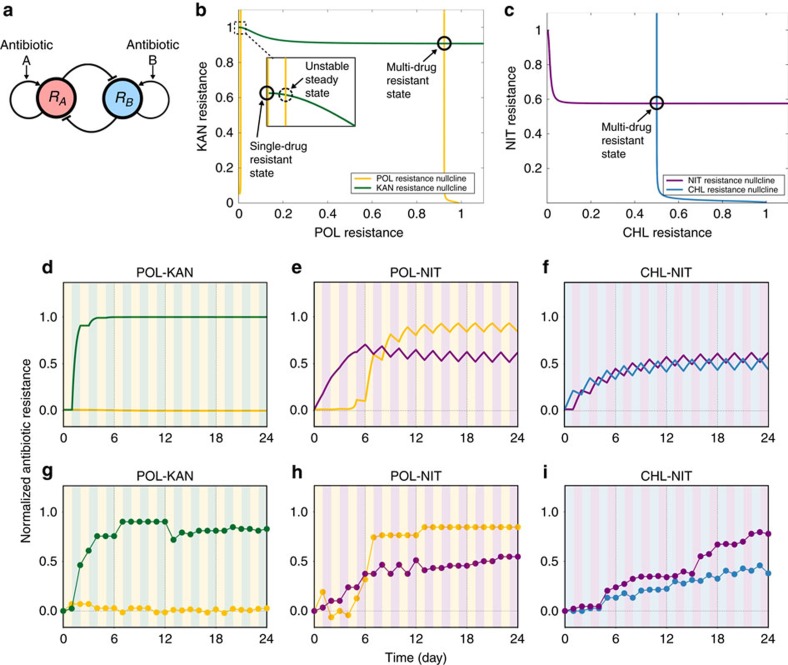
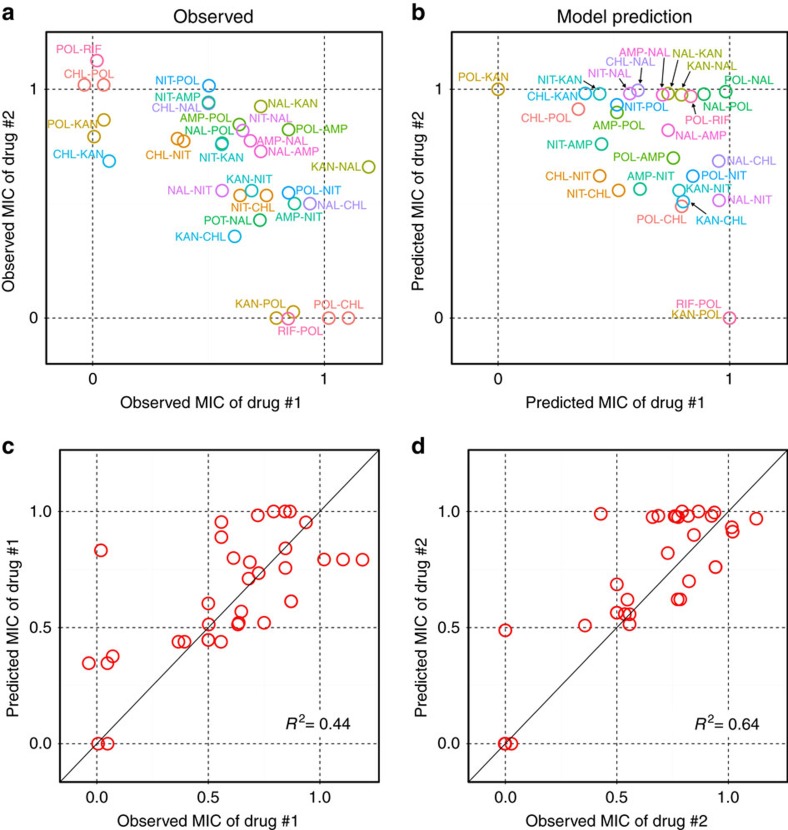
Multi-drug strategies have been attempted to prolong the efficacy of existing antibiotics, but with limited success. Here we show that the evolution of multi-drug-resistant Escherichia coli can be manipulated in vitro by administering pairs of antibiotics and switching between them in ON/OFF manner. Using a multiplexed cell culture system, we find that switching between certain combinations of antibiotics completely suppresses the development of resistance to one of the antibiotics. Using this data, we develop a simple deterministic model, which allows us to predict the fate of multi-drug evolution in this system. Furthermore, we are able to reverse established drug resistance based on the model prediction by modulating antibiotic selection stresses. Our results support the idea that the development of antibiotic resistance may be potentially controlled via continuous switching of drugs.
多药策略已被尝试用于延长现有抗生素的疗效,但收效有限。在这里,我们表明,通过交替使用抗生素对体外多重耐药大肠杆菌的进化可以进行人为控制。我们使用一种多重细胞培养系统发现,在某些抗生素组合之间切换可以完全抑制对其中一种抗生素的耐药性发展。利用这些数据,我们开发了一个简单的确定性模型,该模型使我们能够根据该系统中多药进化的命运进行预测。此外,我们还能够根据模型预测通过调节抗生素选择压力来逆转已建立的耐药性。我们的研究结果支持这样一种观点,即通过持续药物切换,抗生素耐药性的发展可能具有潜在的控制效果。