Stub Trine, Quandt Sara A, Arcury Thomas A, Sandberg Joanne C, Kristoffersen Agnete E
The National Research Center in Complementary and Alternative Medicine (NAFKAM), UiT The Arctic University of Norway, Department of Community Medicine, Tromsø, Norway.
Wake Forest School of Medicine, Department of Epidemiology and Prevention, Division of Public Health Sciences, Winston-Salem, NC, 27157, USA.
BMC Complement Altern Med. 2017 Jun 8;17(1):301. doi: 10.1186/s12906-017-1814-0.
Effective interdisciplinary communication is important to achieve better quality in health care. The aims of this study were to compare conventional and complementary providers' experience of communication about complementary therapies and conventional medicine with their cancer patients, and to investigate how they experience interdisciplinary communication and cooperation.
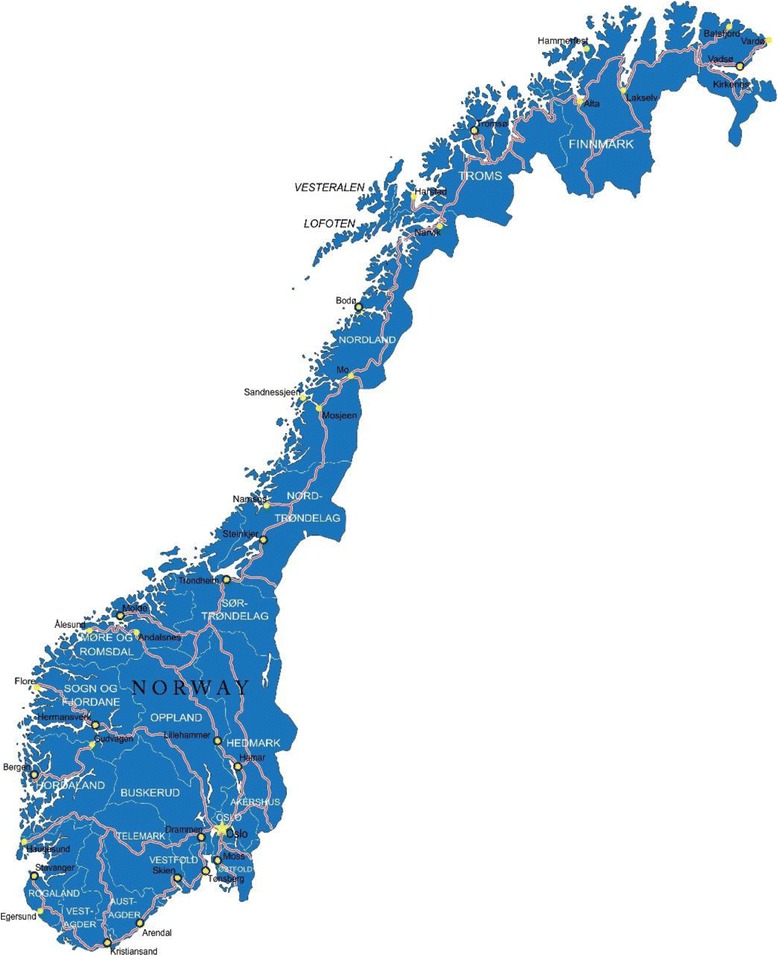
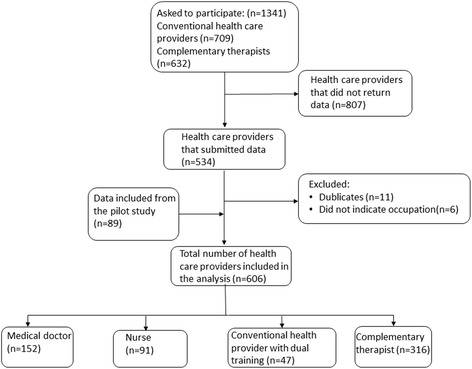
This study analyzed data from a self-administrated questionnaire. A total of 606 different health care providers, from four counties in Norway, completed the questionnaire. The survey was developed to describe aspects of the communication pattern among oncology doctors, nurses, family physicians and complementary therapists (acupuncturists, massage therapists and reflexologists/zone-therapists). Between-group differences were analyzed using chi-square, ANOVA and Fisher's exact tests. Significance level was defined as p < 0.05 without adjustment for multiple comparisons.
Conventional providers and complementary therapists had different patterns of communication with their cancer patients regarding complementary therapies. While complementary therapists advised their patients to apply both complementary and conventional modalities, medical doctors were less supportive of their patients' use of complementary therapies. Of conventional providers, nurses expressed more positive attitudes toward complementary therapies. Opportunities to improve communication between conventional and complementary providers were most strongly supported by complementary providers and nurses; medical doctors were less supportive of such attempts. A number of doctors showed lack of respect for complementary therapists, but asked for more research, guidelines for complementary modalities and training in conventional medicine for complementary therapists.
For better quality of care, greater communication about complementary therapy use is needed between cancer patients and their conventional and complementary providers. In addition, more communication between conventional and complementary providers is needed. Nurses may have a crucial role in facilitating communication, as they are positive toward complementary therapies and they have more direct communication with patients about their treatment preferences.
有效的跨学科沟通对于提高医疗保健质量至关重要。本研究的目的是比较传统医疗提供者和补充替代医疗提供者与癌症患者就补充替代疗法和传统医学进行沟通的经验,并调查他们对跨学科沟通与合作的体验。
本研究分析了一份自填式问卷的数据。来自挪威四个县的总共606名不同的医疗保健提供者完成了问卷。该调查旨在描述肿瘤医生、护士、家庭医生和补充替代疗法治疗师(针灸师、按摩治疗师和反射疗法/区域治疗师)之间的沟通模式。使用卡方检验、方差分析和费舍尔精确检验分析组间差异。显著性水平定义为p < 0.05,未对多重比较进行调整。
在补充替代疗法方面,传统医疗提供者和补充替代疗法治疗师与癌症患者的沟通模式不同。虽然补充替代疗法治疗师建议患者同时采用补充替代疗法和传统疗法,但医生对患者使用补充替代疗法的支持较少。在传统医疗提供者中,护士对补充替代疗法表达了更积极的态度。补充替代疗法治疗师和护士最强烈支持改善传统医疗提供者和补充替代疗法治疗师之间沟通的机会;医生对此类尝试的支持较少。一些医生对补充替代疗法治疗师缺乏尊重,但要求进行更多研究、制定补充替代疗法指南以及为补充替代疗法治疗师提供传统医学培训。
为了提高护理质量,癌症患者与其传统医疗提供者和补充替代疗法治疗师之间需要就补充替代疗法的使用进行更多沟通。此外,传统医疗提供者和补充替代疗法治疗师之间也需要更多沟通。护士可能在促进沟通方面发挥关键作用,因为他们对补充替代疗法持积极态度,并且就患者的治疗偏好与患者有更直接的沟通。