Smith Benjamin E, Hendrick Paul, Smith Toby O, Bateman Marcus, Moffatt Fiona, Rathleff Michael S, Selfe James, Logan Pip
Department of Physiotherapy, Derby Teaching Hospitals NHS Foundation Trust, Derby, UK.
Division of Rehabilitation and Ageing, School of Medicine, University of Nottingham, Nottingham, UK.
Br J Sports Med. 2017 Dec;51(23):1679-1687. doi: 10.1136/bjsports-2016-097383. Epub 2017 Jun 8.
Chronic musculoskeletal disorders are a prevalent and costly global health issue. A new form of exercise therapy focused on loading and resistance programmes that temporarily aggravates a patient's pain has been proposed. The object of this review was to compare the effect of exercises where pain is allowed/encouraged compared with non-painful exercises on pain, function or disability in patients with chronic musculoskeletal pain within randomised controlled trials.
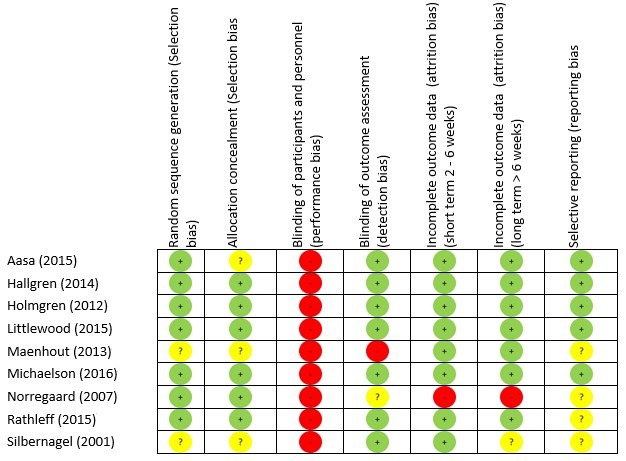
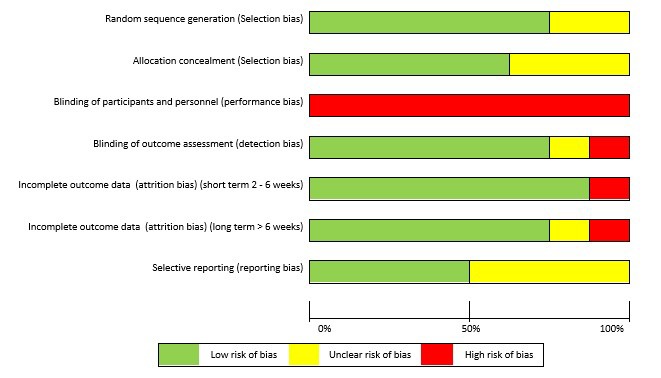
Two authors independently selected studies and appraised risk of bias. Methodological quality was evaluated using the Cochrane risk of bias tool, and the Grading of Recommendations Assessment system was used to evaluate the quality of evidence.
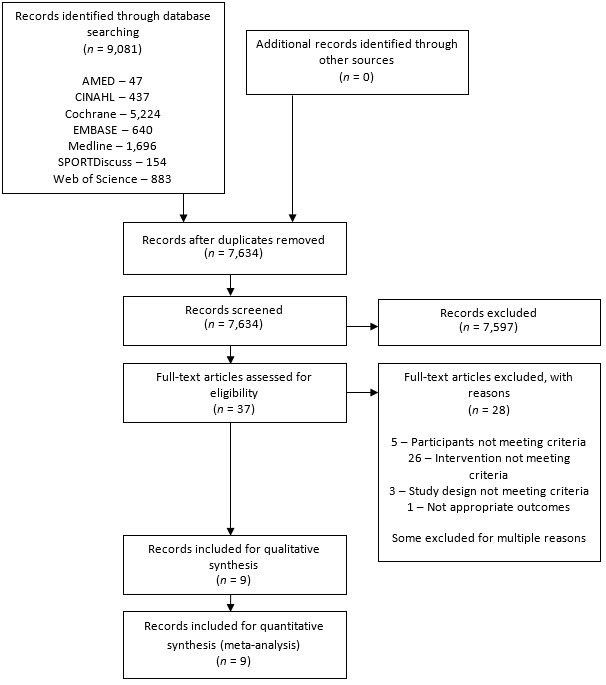
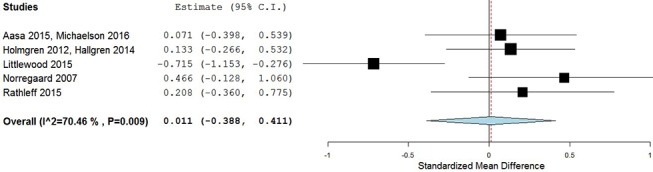
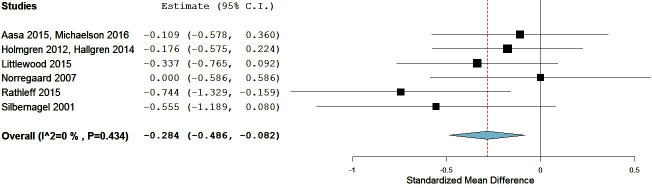
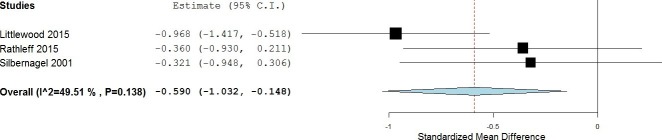
The literature search identified 9081 potentially eligible studies. Nine papers (from seven trials) with 385 participants met the inclusion criteria. There was short- term significant difference in pain, with moderate quality evidence for a small effect size of -0.27 (-0.54 to -0.05) in favour of painful exercises. For pain in the medium and long term, and function and disability in the short, medium and long term, there was no significant difference.
Protocols using painful exercises offer a small but significant benefit over pain-free exercises in the short term, with moderate quality of evidence. In the medium and long term there is no clear superiority of one treatment over another. Pain during therapeutic exercise for chronic musculoskeletal pain need not be a barrier to successful outcomes. Further research is warranted to fully evaluate the effectiveness of loading and resistance programmes into pain for chronic musculoskeletal disorders.
CRD42016038882.
慢性肌肉骨骼疾病是一个普遍且代价高昂的全球健康问题。一种新的运动疗法被提出,该疗法专注于负荷和阻力训练计划,会暂时加剧患者的疼痛。本综述的目的是在随机对照试验中,比较允许/鼓励疼痛的运动与无痛运动对慢性肌肉骨骼疼痛患者的疼痛、功能或残疾状况的影响。
两位作者独立筛选研究并评估偏倚风险。使用Cochrane偏倚风险工具评估方法学质量,并使用推荐分级评估系统评估证据质量。
文献检索共识别出9081项潜在符合条件的研究。九篇论文(来自七项试验),共385名参与者符合纳入标准。疼痛方面存在短期显著差异,有中等质量证据表明有利于疼痛性运动的小效应量为-0.27(-0.54至-0.05)。对于中长期疼痛以及短期、中期和长期的功能和残疾状况,没有显著差异。
在短期,使用疼痛性运动的方案比无痛运动有小但显著的益处,证据质量中等。在中长期,一种治疗方法并不明显优于另一种。慢性肌肉骨骼疼痛的治疗性运动中的疼痛不一定是成功治疗结果的障碍。有必要进行进一步研究,以全面评估负荷和阻力训练计划对慢性肌肉骨骼疾病疼痛的有效性。
PROSPERO注册编号:CRD42016038882。