Yin Shanye, Lopez-Gonzalez Rodrigo, Kunz Ryan C, Gangopadhyay Jaya, Borufka Carl, Gygi Steven P, Gao Fen-Biao, Reed Robin
Department of Cell Biology, Harvard Medical School, 240 Longwood Ave, Boston, MA 02115, USA.
Department of Neurology, University of Massachusetts Medical School, Worcester, MA 01605, USA.
Cell Rep. 2017 Jun 13;19(11):2244-2256. doi: 10.1016/j.celrep.2017.05.056.
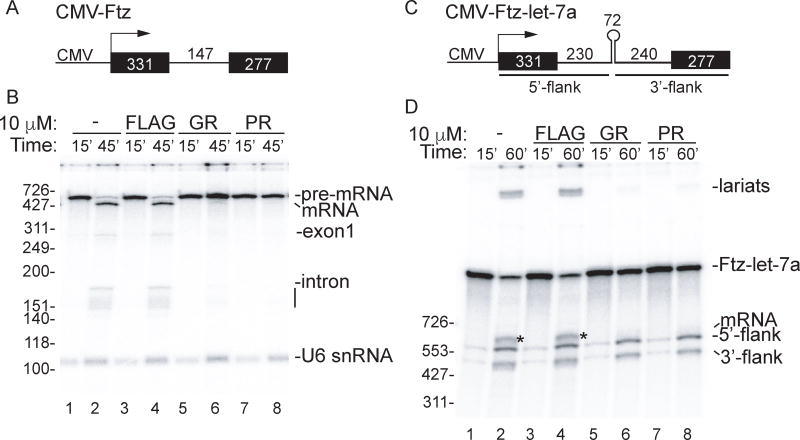
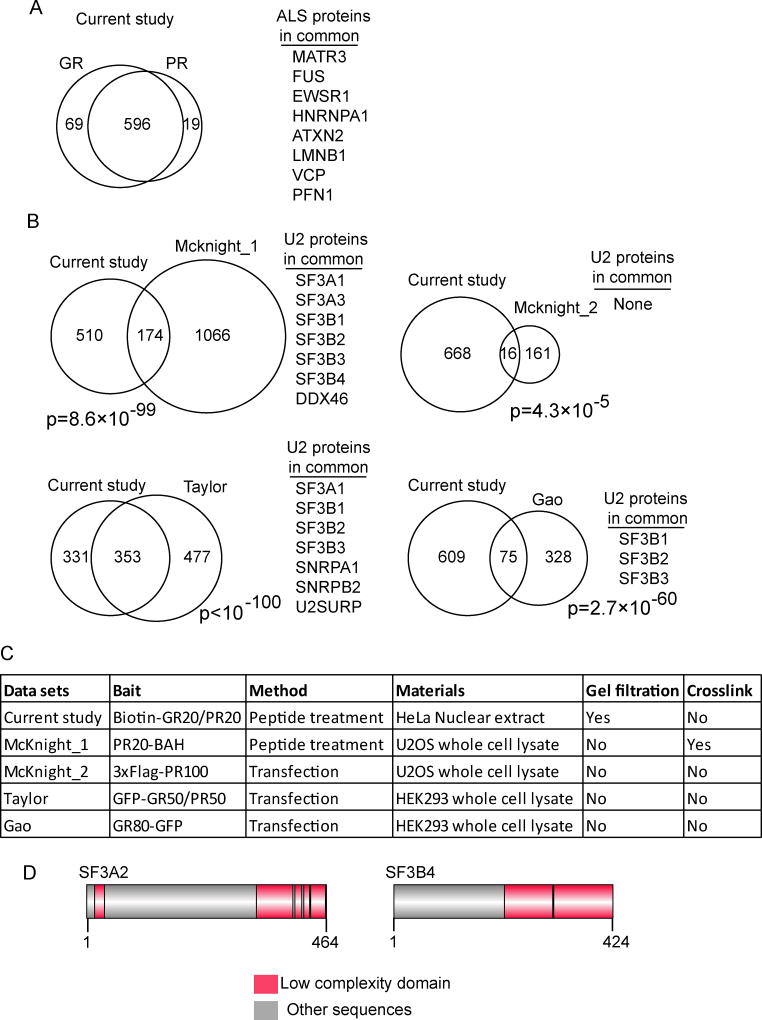
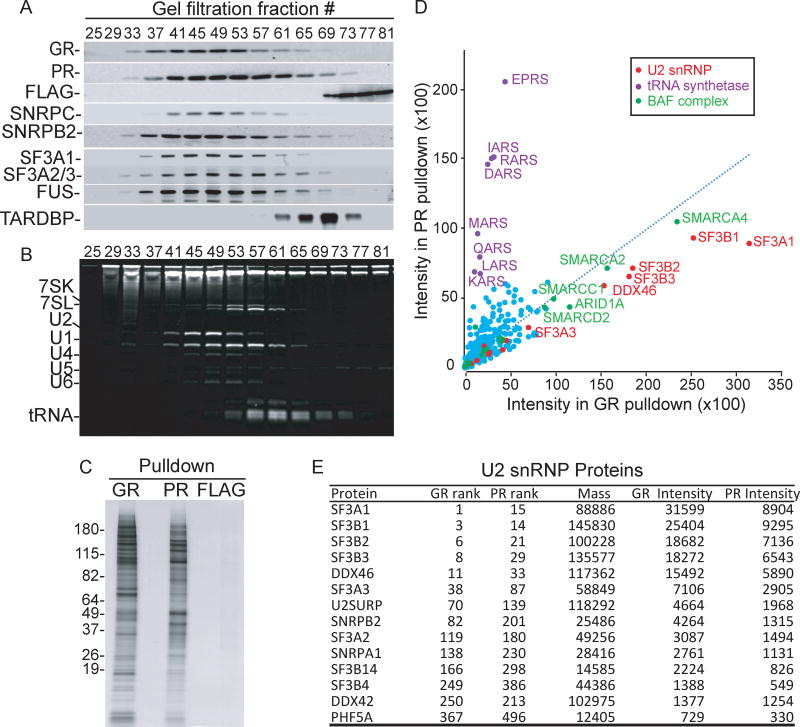
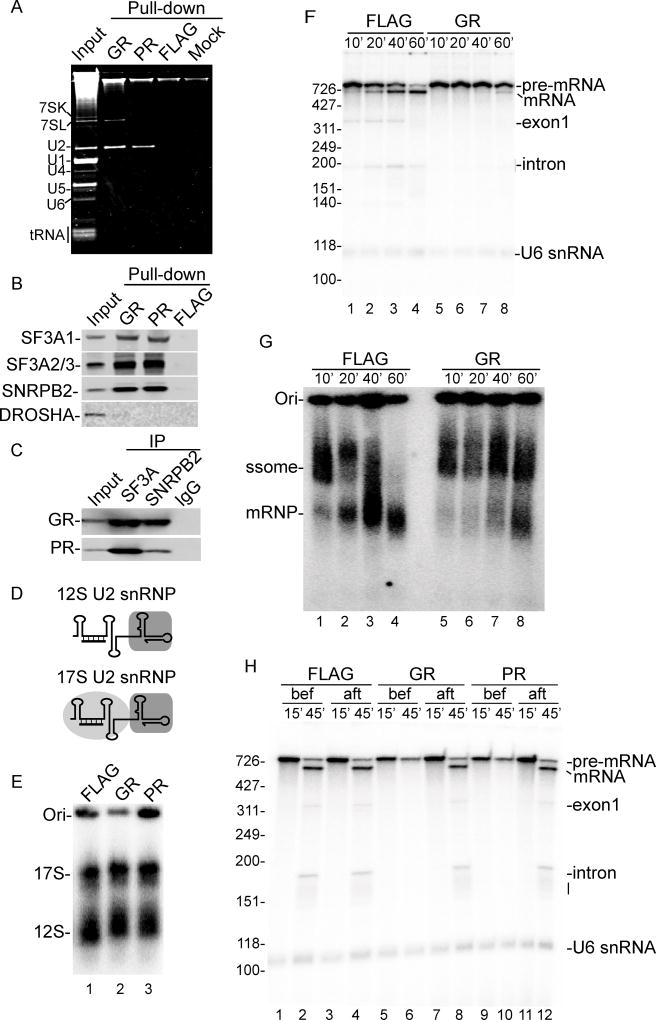
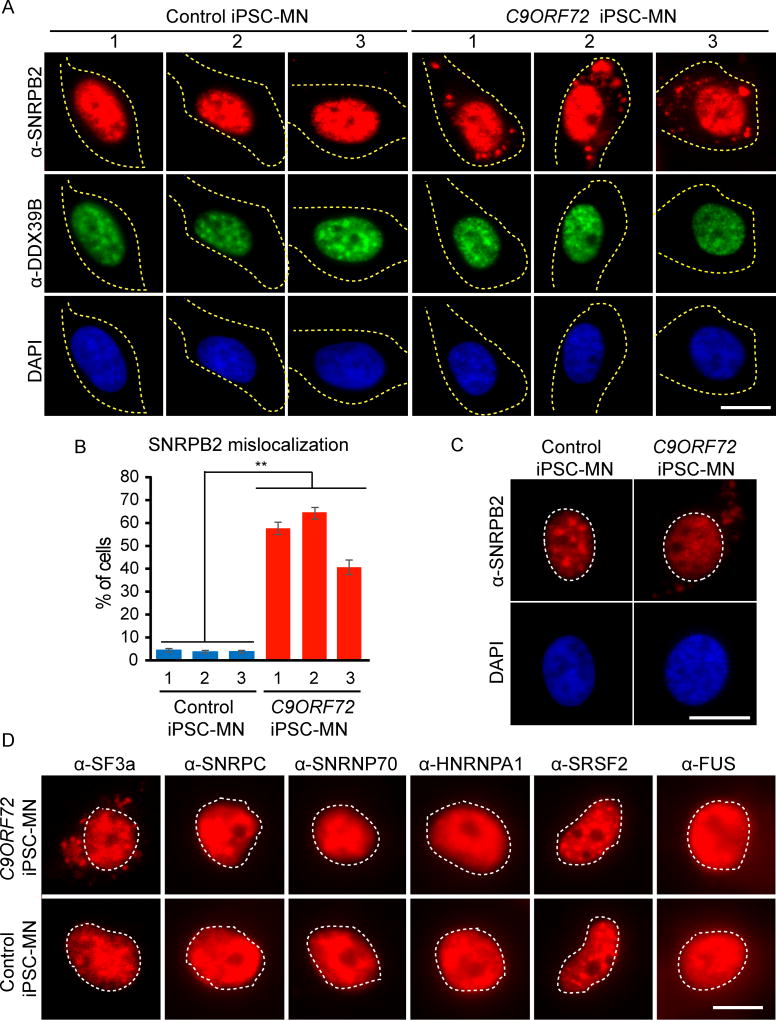
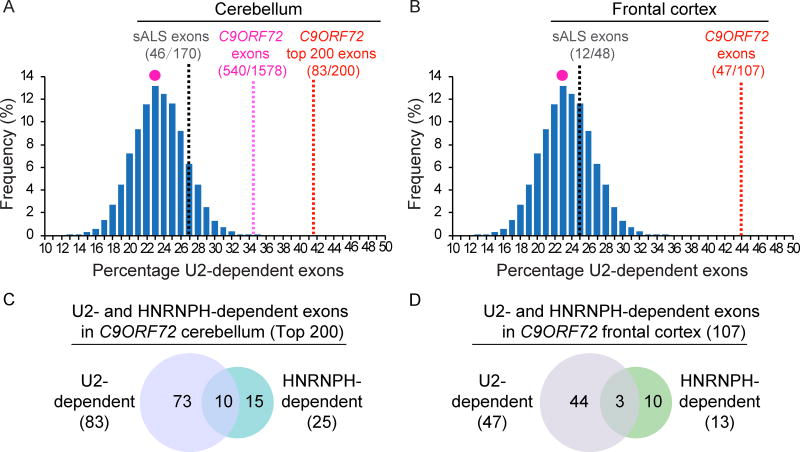
Hexanucleotide repeat expansion in the C9ORF72 gene results in production of dipeptide repeat (DPR) proteins that may disrupt pre-mRNA splicing in amyotrophic lateral sclerosis (ALS) and frontotemporal dementia (FTD) patients. At present, the mechanisms underlying this mis-splicing are not understood. Here, we show that addition of proline-arginine (PR) and glycine-arginine (GR) toxic DPR peptides to nuclear extracts blocks spliceosome assembly and splicing, but not other types of RNA processing. Proteomic and biochemical analyses identified the U2 small nuclear ribonucleoprotein particle (snRNP) as a major interactor of PR and GR peptides. In addition, U2 snRNP, but not other splicing factors, mislocalizes from the nucleus to the cytoplasm both in C9ORF72 patient induced pluripotent stem cell (iPSC)-derived motor neurons and in HeLa cells treated with the toxic peptides. Bioinformatic studies support a specific role for U2-snRNP-dependent mis-splicing in C9ORF72 patient brains. Together, our data indicate that DPR-mediated dysfunction of U2 snRNP could account for as much as ∼44% of the mis-spliced cassette exons in C9ORF72 patient brains.
C9ORF72基因中的六核苷酸重复扩增导致二肽重复(DPR)蛋白的产生,这些蛋白可能会破坏肌萎缩侧索硬化症(ALS)和额颞叶痴呆(FTD)患者的前体mRNA剪接。目前,这种错误剪接的潜在机制尚不清楚。在这里,我们表明,向核提取物中添加脯氨酸-精氨酸(PR)和甘氨酸-精氨酸(GR)毒性DPR肽会阻断剪接体组装和剪接,但不会影响其他类型的RNA加工。蛋白质组学和生化分析确定U2小核核糖核蛋白颗粒(snRNP)是PR和GR肽的主要相互作用因子。此外,在C9ORF72患者诱导多能干细胞(iPSC)衍生的运动神经元和用毒性肽处理的HeLa细胞中,U2 snRNP而非其他剪接因子会从细胞核错误定位到细胞质。生物信息学研究支持U2-snRNP依赖性错误剪接在C9ORF72患者大脑中的特定作用。总之,我们的数据表明,DPR介导的U2 snRNP功能障碍可能占C9ORF72患者大脑中错误剪接的盒式外显子的约44%。