Terkawi Abdullah Sulieman, Tsang Siny, Alshehri Anwar S, Mulafikh Dhaifallah S, Alghulikah Abdulrahman A, AlDhahri Saleh F
Department of Anesthesiology, University of Virginia, Charlottesville, VA, USA.
Department of Anesthesiology, King Fahad Medical City, Riyadh, Saudi Arabia.
Saudi J Anaesth. 2017 May;11(Suppl 1):S71-S79. doi: 10.4103/sja.SJA_162_17.
Little is known about the burden of chronic pain after major head and neck tumors' therapy. In this study, we aimed to estimate the prevalence of chronic pain, explore the factors associated with the presence of chronic pain, and assess the consequences of chronic pain on the patients' quality of life.
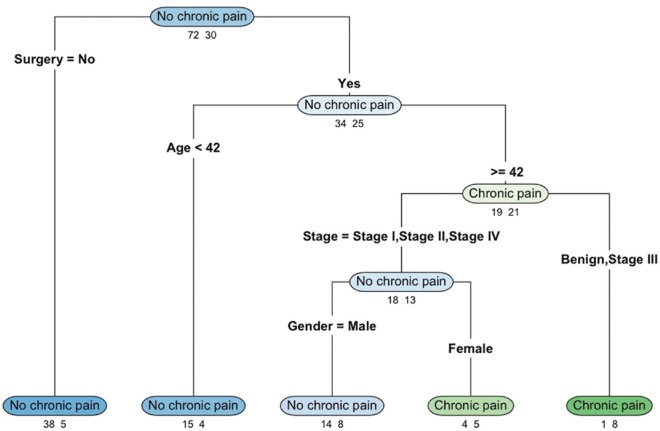
This was a cross-sectional survey among patients who had completed their therapy (e.g., surgery, radiotherapy, and chemotherapy) for major head and neck (larynx, nasopharynx, oropharynx, hypopharynx, oral cavity, tongue, and sinuses) tumors after at least 3 months. We collected relevant demographic and clinical data and administered the Brief Pain Inventory-Short Form, Neuropathic Pain Questionnaire-Short Form, and Pain Catastrophizing Scale questionnaires. Possible risk factors were explored using a classification tree model.
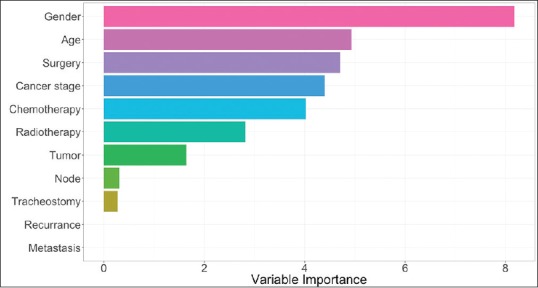
A total of 102 patients (59 men, 42 women) were enrolled in this study between 3 and 72 months after tumor treatment. 30% of the patients reported having chronic pain after their major head and neck tumors' therapy. The average pain score in the last 24-hr was 3.4 (standard deviation = 2.7). The prevalence of patients with chronic pain was higher (42%) among those who had surgery. Factors associated with chronic pain were female sex, older age, surgery, advanced cancer stage, and radiotherapy. Patients who reported having chronic pain also reported having a lower quality of life manifested by impairments in general activity, mood, walking ability, normal work, and sleeping. Patients who reported having chronic pain had higher Pain Catastrophizing Scale scores.
Our study highlighted the high burden of chronic pain after therapy for major head and neck tumors. We identified demographic and clinical factors that are associated with the presence of chronic pain. Further studies are required to better understand the risk factors to implement strategies to prevent, alleviate, and treat chronic pain associated with major head and neck tumor therapies.
关于头颈部大肿瘤治疗后慢性疼痛的负担,人们了解甚少。在本研究中,我们旨在估计慢性疼痛的患病率,探索与慢性疼痛存在相关的因素,并评估慢性疼痛对患者生活质量的影响。
这是一项对至少在3个月前完成头颈部(喉、鼻咽、口咽、下咽、口腔、舌和鼻窦)大肿瘤治疗(如手术、放疗和化疗)的患者进行的横断面调查。我们收集了相关的人口统计学和临床数据,并发放了简明疼痛问卷简表、神经性疼痛问卷简表和疼痛灾难化量表问卷。使用分类树模型探索可能的风险因素。
在肿瘤治疗后的3至72个月期间,共有102名患者(59名男性,42名女性)纳入本研究。30%的患者报告在头颈部大肿瘤治疗后患有慢性疼痛。过去24小时内的平均疼痛评分为3.4(标准差 = 2.7)。接受手术的患者中慢性疼痛患者的患病率更高(42%)。与慢性疼痛相关的因素包括女性、年龄较大、手术、癌症晚期和放疗。报告患有慢性疼痛的患者还报告生活质量较低,表现为一般活动、情绪、行走能力、正常工作和睡眠方面的受损。报告患有慢性疼痛的患者疼痛灾难化量表得分更高。
我们的研究突出了头颈部大肿瘤治疗后慢性疼痛的高负担。我们确定了与慢性疼痛存在相关的人口统计学和临床因素。需要进一步研究以更好地了解风险因素,从而实施预防、减轻和治疗与头颈部大肿瘤治疗相关的慢性疼痛的策略。