Hashimoto Takuma, Kunieda Takekazu
Laboratory for Radiation Biology, School of Medicine, Tohoku University, 2-1 Seiryo-machi, Aoba-ku, Sendai, Miyagi 980-8575, Japan.
Department of Biological Sciences, Graduate School of Science, The University of Tokyo, 7-3-1 Hongo, Bunkyo-ku, Tokyo 113-0033, Japan.
Life (Basel). 2017 Jun 15;7(2):26. doi: 10.3390/life7020026.
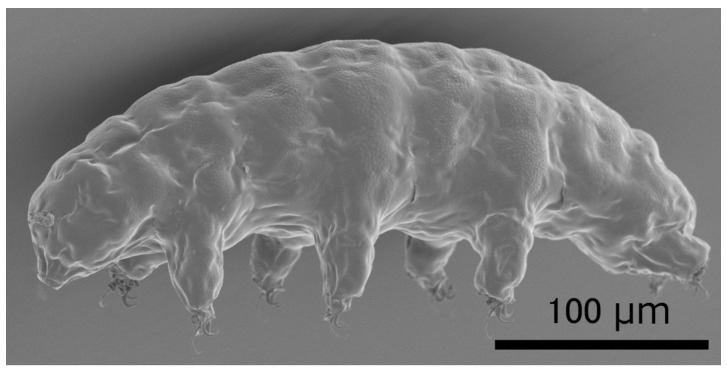
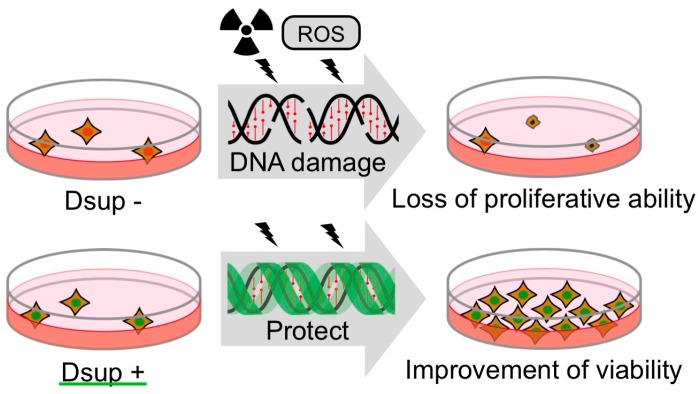
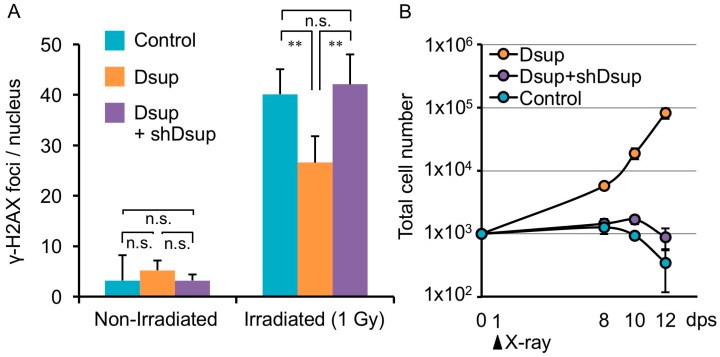
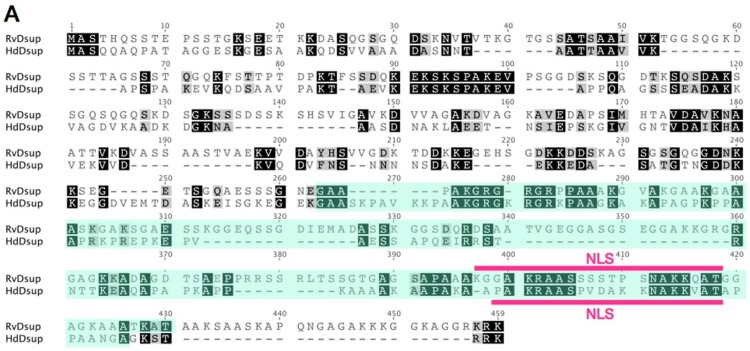
Genomic DNA stores all genetic information and is indispensable for maintenance of normal cellular activity and propagation. Radiation causes severe DNA lesions, including double-strand breaks, and leads to genome instability and even lethality. Regardless of the toxicity of radiation, some organisms exhibit extraordinary tolerance against radiation. These organisms are supposed to possess special mechanisms to mitigate radiation-induced DNA damages. Extensive study using radiotolerant bacteria suggested that effective protection of proteins and enhanced DNA repair system play important roles in tolerability against high-dose radiation. Recent studies using an extremotolerant animal, the tardigrade, provides new evidence that a tardigrade-unique DNA-associating protein, termed Dsup, suppresses the occurrence of DNA breaks by radiation in human-cultured cells. In this review, we provide a brief summary of the current knowledge on extremely radiotolerant animals, and present novel insights from the tardigrade research, which expand our understanding on molecular mechanism of exceptional radio-tolerability.
基因组DNA储存着所有的遗传信息,对于维持正常的细胞活动和繁殖不可或缺。辐射会导致严重的DNA损伤,包括双链断裂,并导致基因组不稳定甚至致死。尽管辐射具有毒性,但一些生物对辐射表现出非凡的耐受性。这些生物应该拥有特殊的机制来减轻辐射诱导的DNA损伤。对耐辐射细菌的广泛研究表明,对蛋白质的有效保护和增强的DNA修复系统在对高剂量辐射的耐受性中发挥着重要作用。最近对一种极端耐逆动物水熊虫的研究提供了新的证据,表明一种水熊虫特有的与DNA相关的蛋白质Dsup,可抑制人类培养细胞中因辐射而导致的DNA断裂的发生。在这篇综述中,我们简要总结了目前关于极端耐辐射动物的知识,并展示了水熊虫研究的新见解,这些见解扩展了我们对特殊耐辐射性分子机制的理解。