Key Laboratory of Functional Protein Research of Guangdong Higher Education Institutes, Institute of Life and Health Engineering, College of Life Science and Technology, Jinan University, Guangzhou, China.
Institute of Traditional Chinese Medicine and Natural Products, College of Pharmacy, Jinan University, Guangzhou, China.
Cell Death Dis. 2017 Jun 15;8(6):e2876. doi: 10.1038/cddis.2017.265.
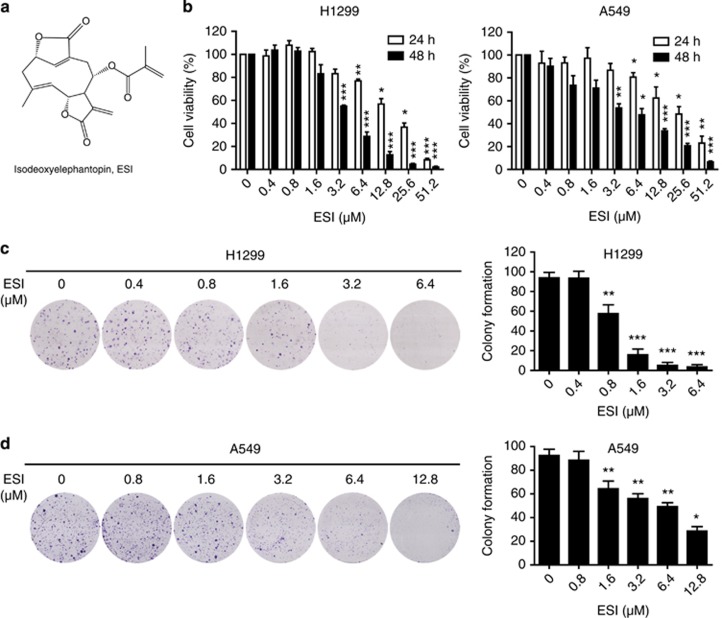
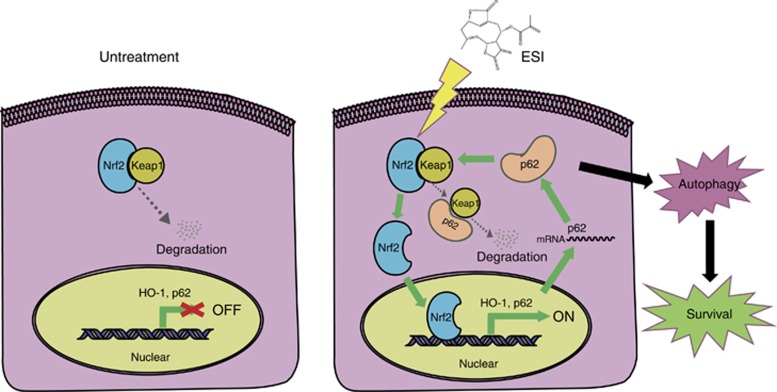
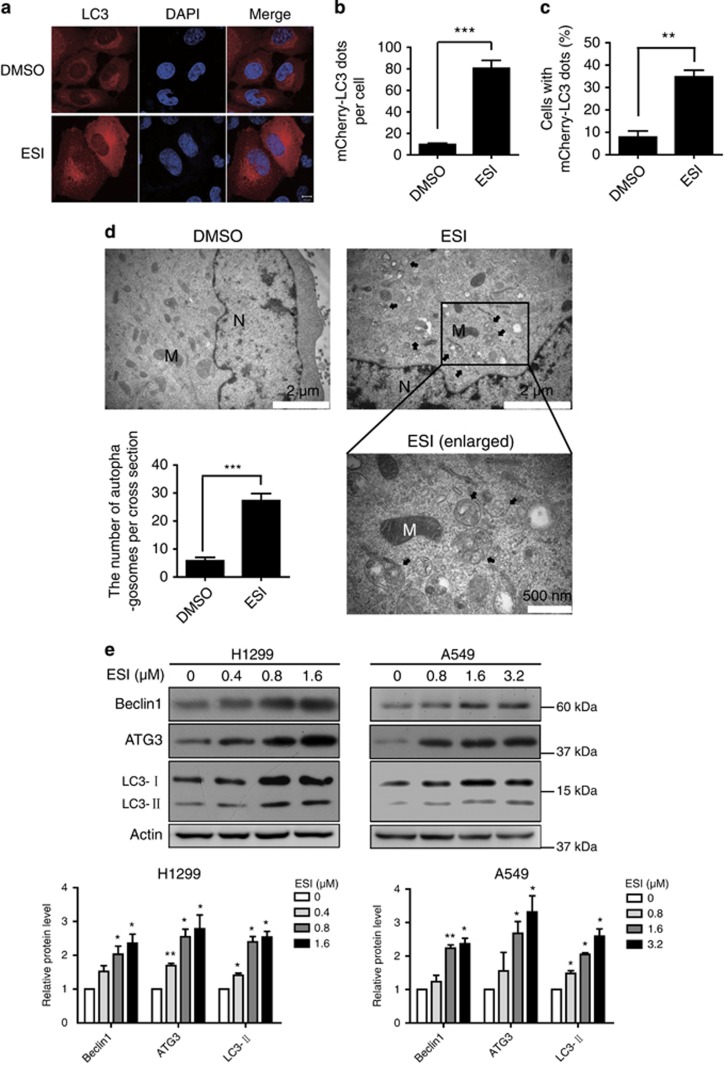
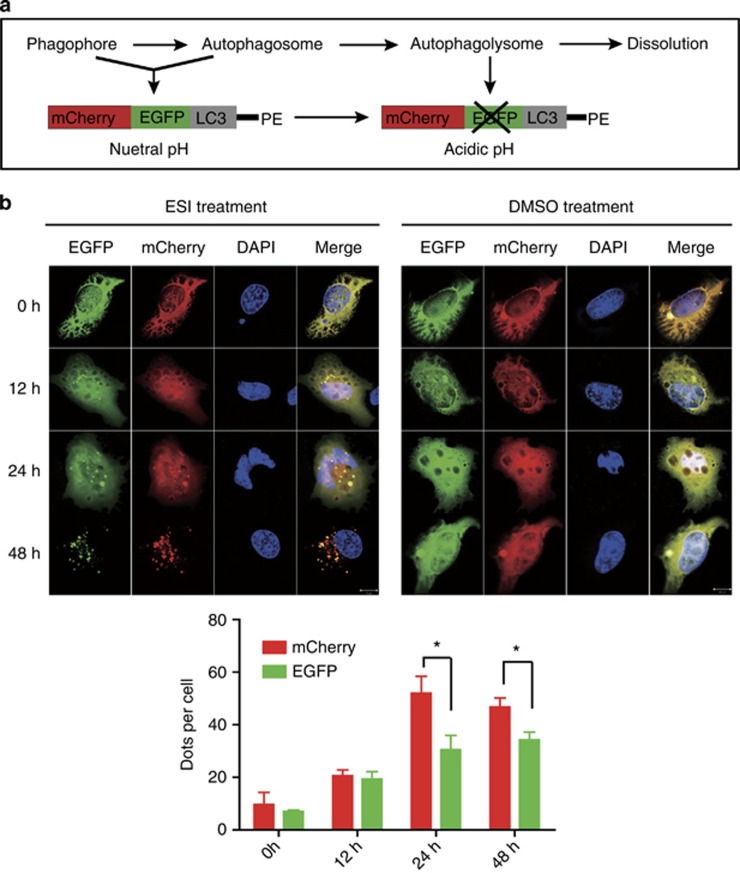
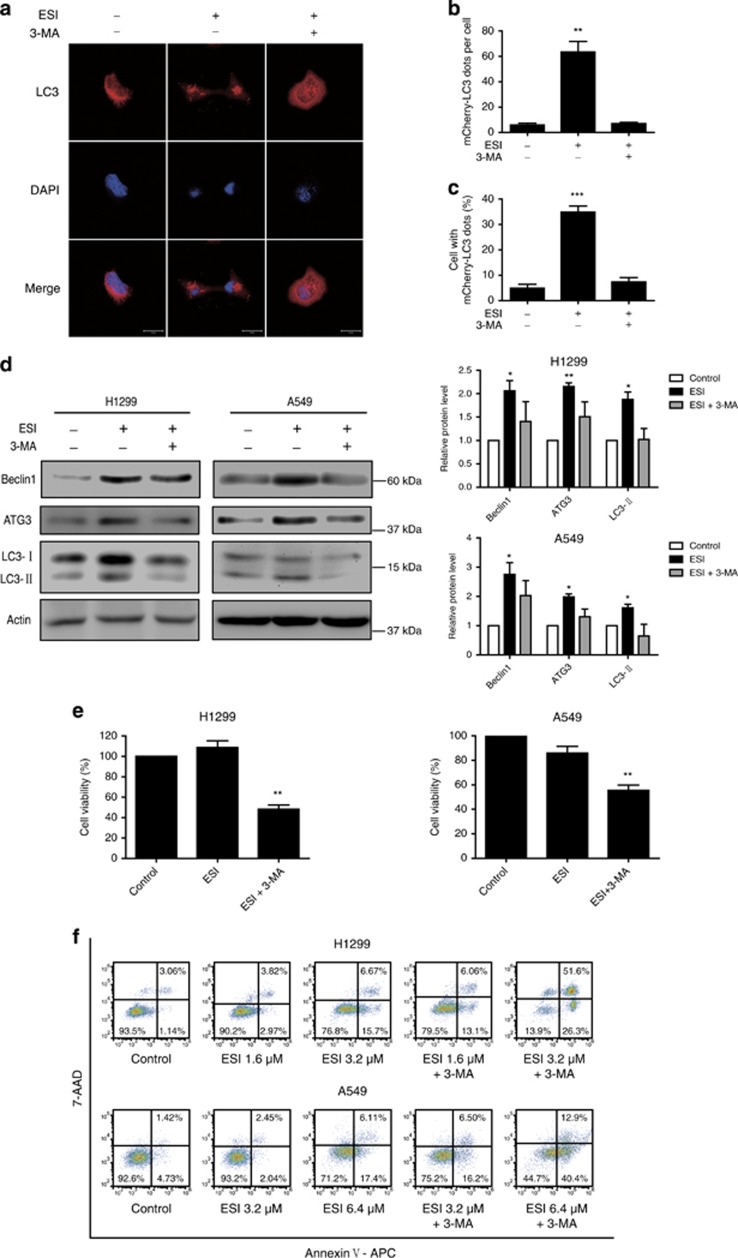
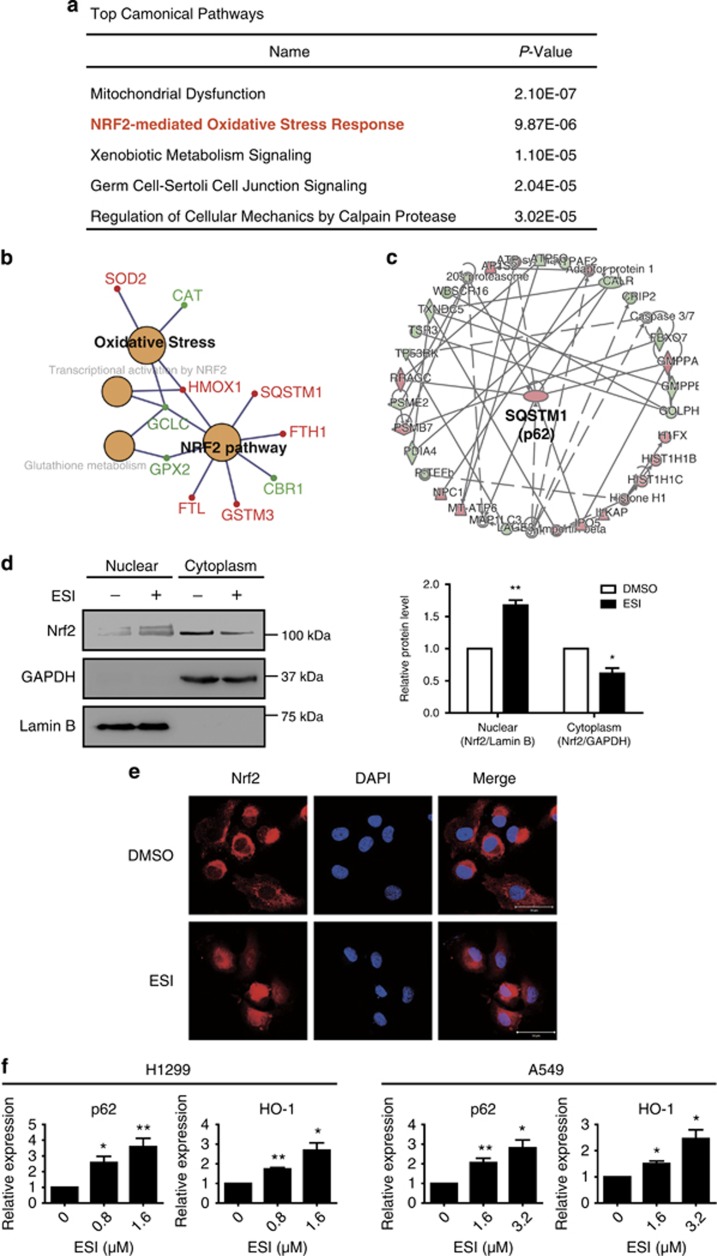
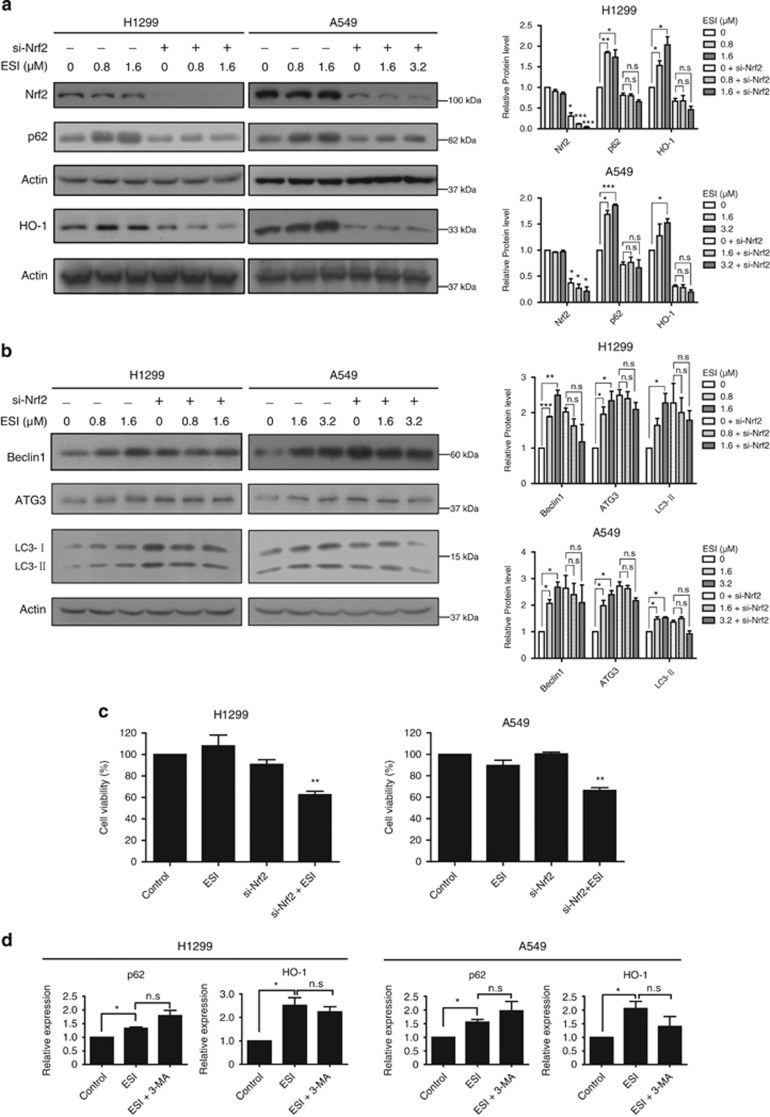
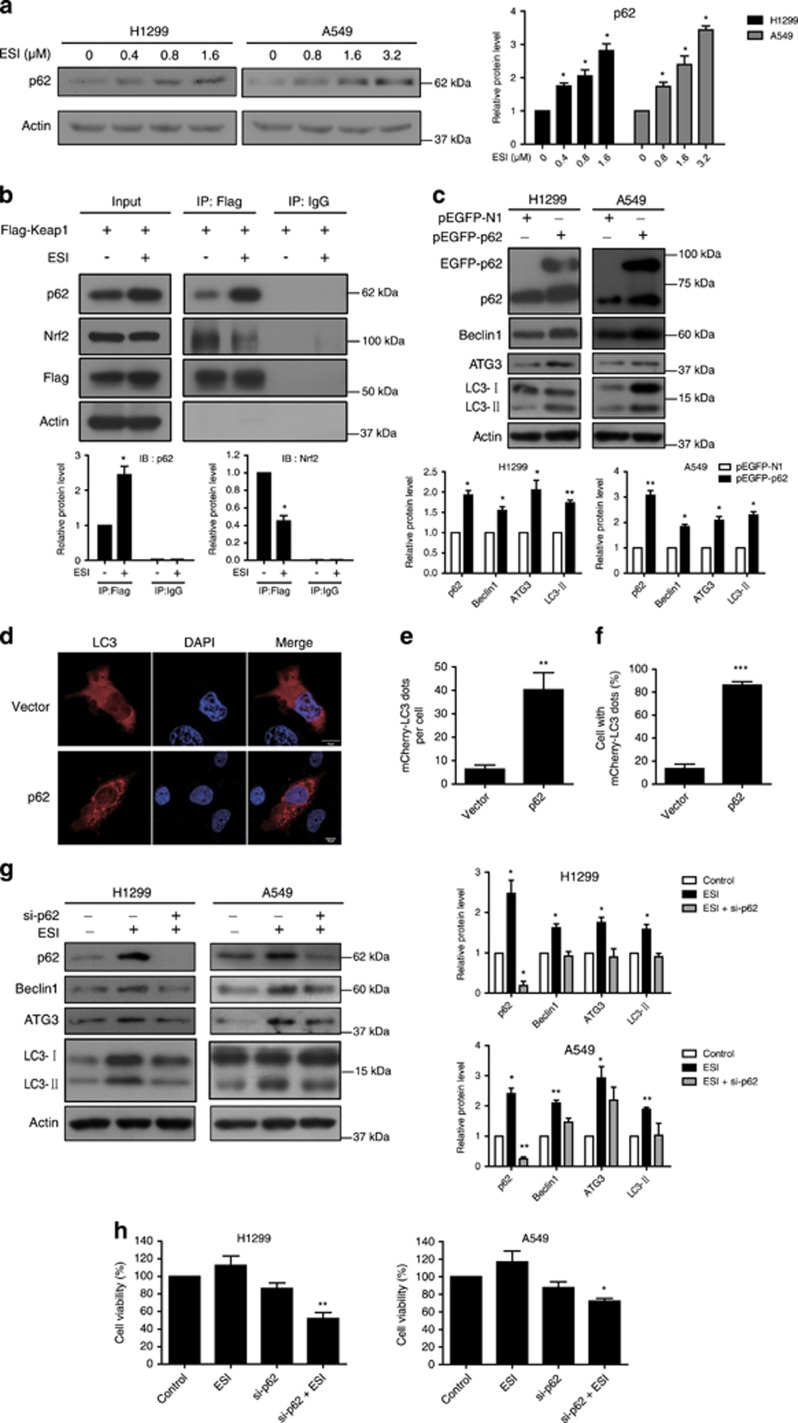
Isodeoxyelephantopin (ESI), isolated from Elephantopus scaber L. has been reported to exert anticancer effects. In this study, we aimed to investigate whether and how cancer cells exert protective responses against ESI treatment. Confocal fluorescence microscopy showed that ESI significantly induced autophagy flux in the lung cancer cells expressing mCherry-EGFP-LC3 reporter. Treatment of the cells with ESI increased the expression levels of the autophagy markers including LC3-II, ATG3 and Beclin1 in a dose-dependent manner. Pretreatment with autophagy inhibitor 3-methyladenine (3-MA) not only attenuated the effects of ESI on autophagy, but also enhanced the effects of ESI on cell viability and apoptosis. Mechanistically, the SILAC quantitative proteomics coupled with bioinformatics analysis revealed that the ESI-regulated proteins were mainly involved in Nrf2-mediated oxidative stress response. We found that ESI induced the nuclear translocation of Nrf2 for activating the downstream target genes including HO-1 and p62 (SQSTM1). More importantly, ESI-induced p62 could competitively bind with Keap1, and releases Nrf2 to activate downstream target gene p62 as a positive feedback loop, therefore promoting autophagy. Furthermore, knockdown of Nrf2 or p62 could abrogate the ESI-induced autophagy and significantly enhanced the anticancer effect of ESI. Taken together, we demonstrated that ESI can sustain cell survival by activating protective autophagy through Nrf2-p62-keap1 feedback loop, whereas targeting this regulatory axis combined with ESI treatment may be a promising strategy for anticancer therapy.
异土木香内酯(ESI)从土木香中分离得到,已被报道具有抗癌作用。在这项研究中,我们旨在研究癌细胞是否以及如何对 ESI 治疗产生保护反应。共聚焦荧光显微镜显示,ESI 显著诱导表达 mCherry-EGFP-LC3 报告基因的肺癌细胞中的自噬流。ESI 处理细胞以剂量依赖性方式增加自噬标记物的表达水平,包括 LC3-II、ATG3 和 Beclin1。自噬抑制剂 3-甲基腺嘌呤(3-MA)预处理不仅减弱了 ESI 对自噬的作用,而且增强了 ESI 对细胞活力和凋亡的作用。从机制上讲,SILAC 定量蛋白质组学与生物信息学分析表明,ESI 调节的蛋白质主要参与 Nrf2 介导的氧化应激反应。我们发现 ESI 诱导 Nrf2 的核易位以激活下游靶基因,包括 HO-1 和 p62(SQSTM1)。更重要的是,ESI 诱导的 p62 可以与 Keap1 竞争性结合,并释放 Nrf2 以激活下游靶基因 p62 作为正反馈环,从而促进自噬。此外,敲低 Nrf2 或 p62 可以消除 ESI 诱导的自噬,并显著增强 ESI 的抗癌作用。总之,我们证明 ESI 通过 Nrf2-p62-keap1 反馈环激活保护性自噬来维持细胞存活,而靶向该调节轴与 ESI 治疗相结合可能是一种有前途的抗癌治疗策略。