Sailer Verena, Gevensleben Heidrun, Dietrich Joern, Goltz Diane, Kristiansen Glen, Bootz Friedrich, Dietrich Dimo
Department of Pathology and Laboratory Medicine, Weill Cornell Medicine, New York, New York, United States of America.
Caryl and Israel Englander Institute for Precision Medicine, Weill Cornell Medicine, New York, New York, United States of America.
PLoS One. 2017 Jun 15;12(6):e0179412. doi: 10.1371/journal.pone.0179412. eCollection 2017.
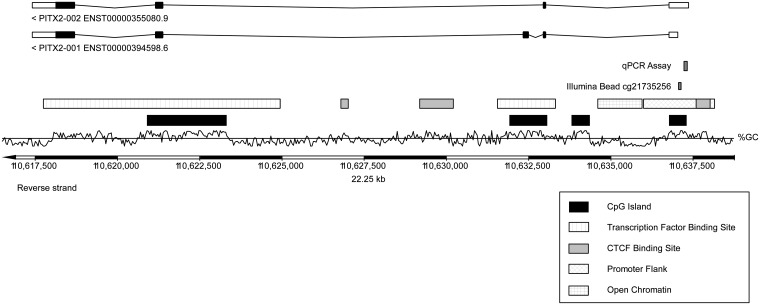
Despite advances in combined modality therapy, outcomes in head and neck squamous cell cancer (HNSCC) remain dismal with five-year overall survival rates of less than 50%. Prognostic biomarkers are urgently needed to identify patients with a high risk of death after initial curative treatment. Methylation status of the paired-like homeodomain transcription factor 2 (PITX2) has recently emerged as a powerful prognostic biomarker in various cancers. In the present study, the clinical performance of PITX2 methylation was validated in a HNSCC cohort by means of an independent analytical platform (Infinium HumanMethylation450 BeadChip, Illumina, Inc.).
A total of 528 HNSCC patients from The Cancer Genome Atlas (TCGA) were included in the study. Death was defined as primary endpoint. PITX2 methylation was correlated with overall survival and clinicopathological parameters.
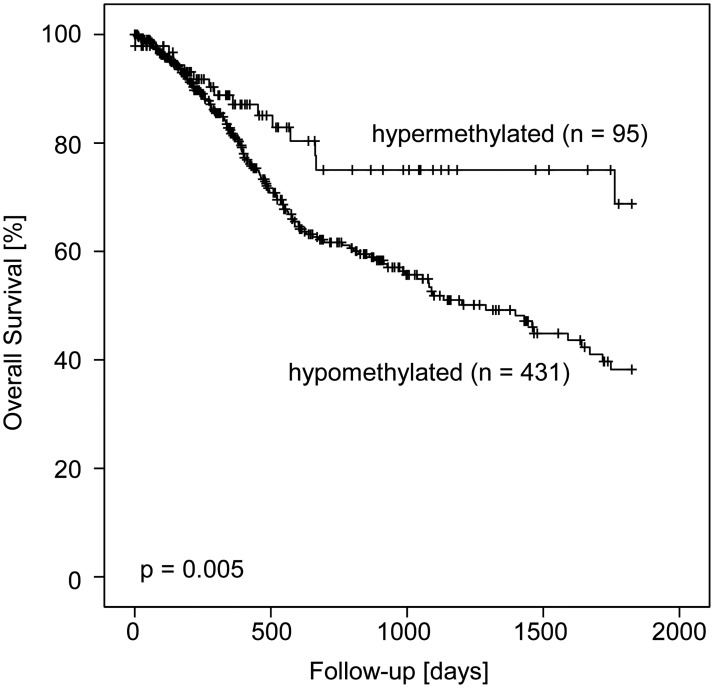
PITX2 methylation was significantly associated with sex, tumor site, p16 status, and grade. In univariate Cox proportional hazards analysis, PITX2 hypermethylation analyzed as continuous and dichotomized variable was significantly associated with prolonged overall survival of HNSCC patients (continuous: hazard ratio (HR) = 0.19 [95%CI: 0.04-0.88], p = 0.034; dichotomized: HR = 0.52 [95%CI: 0.33-0.84], p = 0.007). In multivariate Cox analysis including established clinicopathological parameters, PITX2 promoter methylation was confirmed as prognostic factor (HR = 0.28 [95%CI: 0.09-0.84], p = 0.023).
Using an independent analytical platform, PITX2 methylation was validated as a prognostic biomarker in HNSCC patients, identifying patients that potentially benefit from intensified surveillance and/or administration of adjuvant/neodjuvant treatment, i.e. immunotherapy.
尽管综合治疗取得了进展,但头颈部鳞状细胞癌(HNSCC)的治疗效果仍然不佳,五年总生存率低于50%。迫切需要预后生物标志物来识别初始根治性治疗后死亡风险高的患者。配对样同源域转录因子2(PITX2)的甲基化状态最近已成为各种癌症中一种强大的预后生物标志物。在本研究中,通过独立分析平台(Illumina公司的Infinium HumanMethylation450 BeadChip)在HNSCC队列中验证了PITX2甲基化的临床性能。
本研究纳入了来自癌症基因组图谱(TCGA)的528例HNSCC患者。将死亡定义为主要终点。PITX2甲基化与总生存率和临床病理参数相关。
PITX2甲基化与性别、肿瘤部位、p16状态和分级显著相关。在单变量Cox比例风险分析中,作为连续变量和二分变量分析的PITX2高甲基化与HNSCC患者总生存期延长显著相关(连续变量:风险比(HR)=0.19 [95%置信区间:0.04 - 0.88],p = 0.034;二分变量:HR = 0.52 [95%置信区间:0.33 - 0.84],p = 0.007)。在包括既定临床病理参数的多变量Cox分析中,PITX2启动子甲基化被确认为预后因素(HR = 0.28 [95%置信区间:0.09 - 0.84],p = 0.023)。
使用独立分析平台,PITX2甲基化被验证为HNSCC患者的预后生物标志物,可识别可能从强化监测和/或辅助/新辅助治疗(即免疫治疗)中获益的患者。