de Vries Robert P, Peng Wenjie, Grant Oliver C, Thompson Andrew J, Zhu Xueyong, Bouwman Kim M, de la Pena Alba T Torrents, van Breemen Marielle J, Ambepitiya Wickramasinghe Iresha N, de Haan Cornelis A M, Yu Wenli, McBride Ryan, Sanders Rogier W, Woods Robert J, Verheije Monique H, Wilson Ian A, Paulson James C
Departments of Molecular Medicine, & Immunology and Microbiology, The Scripps Research Institute, La Jolla, CA, United States of America.
Department of Chemical Biology and Drug Discovery, Utrecht Institute for Pharmaceutical Sciences, Utrecht University, CG Utrecht, The Netherlands.
PLoS Pathog. 2017 Jun 15;13(6):e1006390. doi: 10.1371/journal.ppat.1006390. eCollection 2017 Jun.
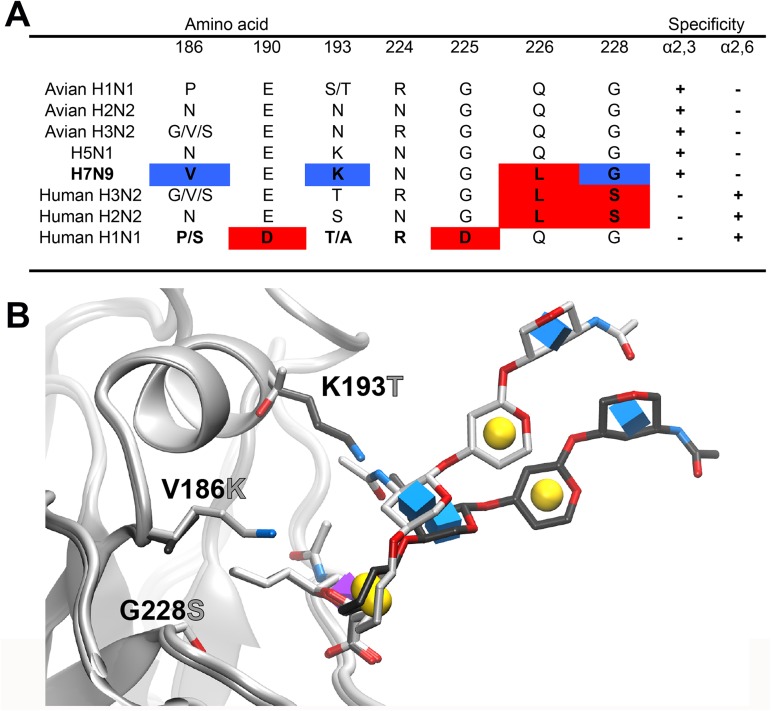
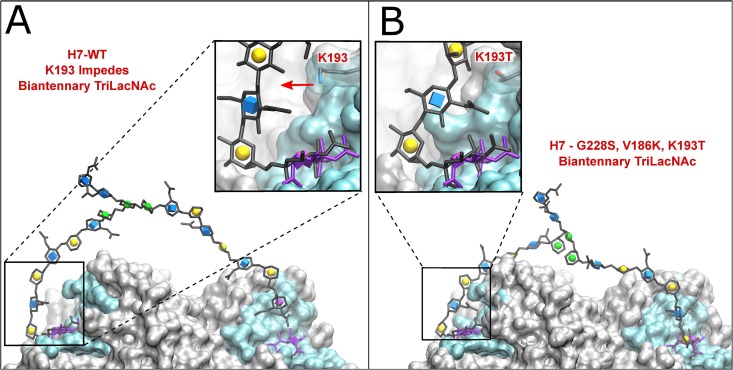
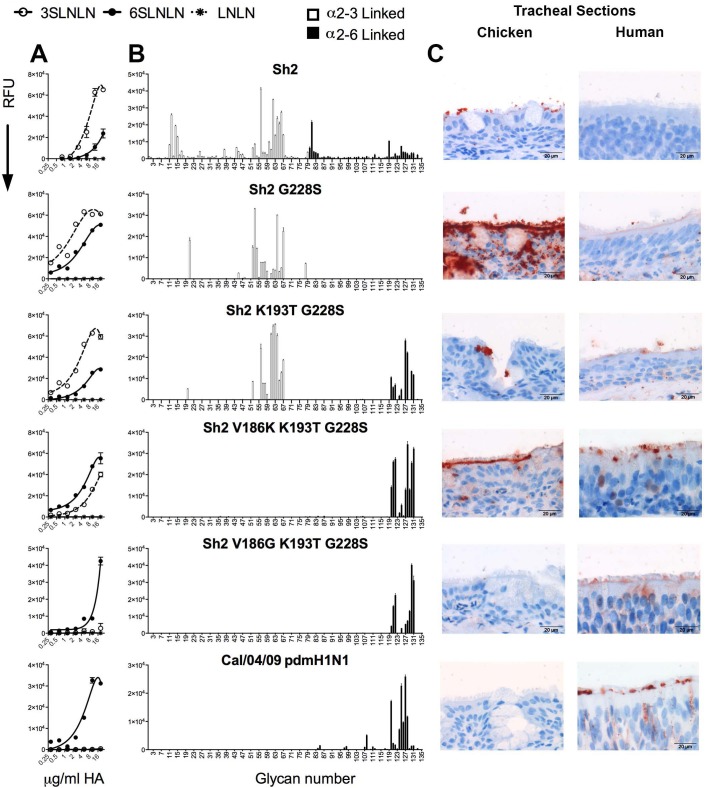
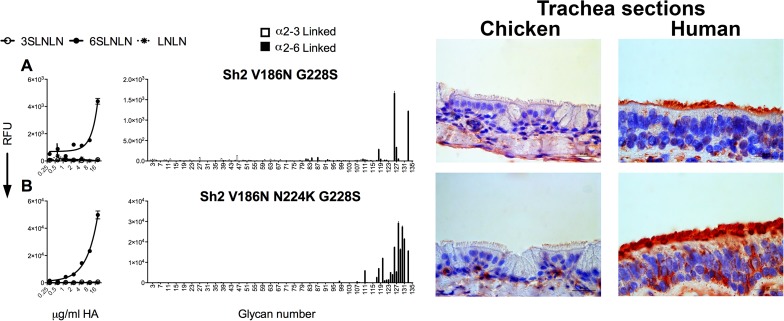
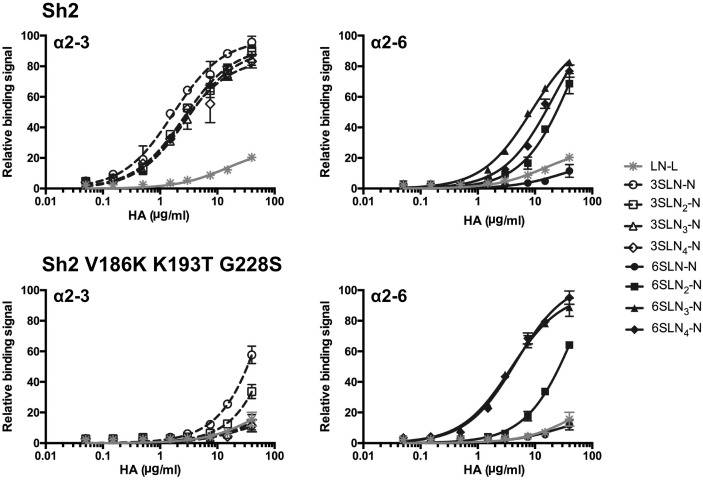
The avian H7N9 influenza outbreak in 2013 resulted from an unprecedented incidence of influenza transmission to humans from infected poultry. The majority of human H7N9 isolates contained a hemagglutinin (HA) mutation (Q226L) that has previously been associated with a switch in receptor specificity from avian-type (NeuAcα2-3Gal) to human-type (NeuAcα2-6Gal), as documented for the avian progenitors of the 1957 (H2N2) and 1968 (H3N2) human influenza pandemic viruses. While this raised concern that the H7N9 virus was adapting to humans, the mutation was not sufficient to switch the receptor specificity of H7N9, and has not resulted in sustained transmission in humans. To determine if the H7 HA was capable of acquiring human-type receptor specificity, we conducted mutation analyses. Remarkably, three amino acid mutations conferred a switch in specificity for human-type receptors that resembled the specificity of the 2009 human H1 pandemic virus, and promoted binding to human trachea epithelial cells.
2013年发生的人感染H7N9禽流感疫情是由感染家禽向人类传播流感的前所未有的发生率导致的。大多数人感染H7N9病毒分离株含有一种血凝素(HA)突变(Q226L),此前已证明该突变与受体特异性从禽型(NeuAcα2-3Gal)转换为人类型(NeuAcα2-6Gal)有关,1957年(H2N2)和1968年(H3N2)人类流感大流行病毒的禽类祖先也有这种情况。虽然这引发了人们对H7N9病毒正在适应人类的担忧,但这种突变不足以改变H7N9的受体特异性,也未导致其在人类中的持续传播。为了确定H7 HA是否能够获得人类型受体特异性,我们进行了突变分析。值得注意的是,三个氨基酸突变导致了对人类型受体特异性的转换,类似于2009年人类H1大流行病毒的特异性,并促进了与人类气管上皮细胞的结合。