Manshian Bella B, Martens Thomas F, Kantner Karsten, Braeckmans Kevin, De Smedt Stefaan C, Demeester Jo, Jenkins Gareth J S, Parak Wolfgang J, Pelaz Beatriz, Doak Shareen H, Himmelreich Uwe, Soenen Stefaan J
Biomedical NMR Unit/MoSAIC, KU Leuven Campus Gasthuisberg, Herestraat 49, 3000, Louvain, Belgium.
Institute of Life Science, Swansea University Medical School, Singleton Park, Swansea, SA2 8PP, UK.
J Nanobiotechnology. 2017 Jun 15;15(1):45. doi: 10.1186/s12951-017-0279-0.
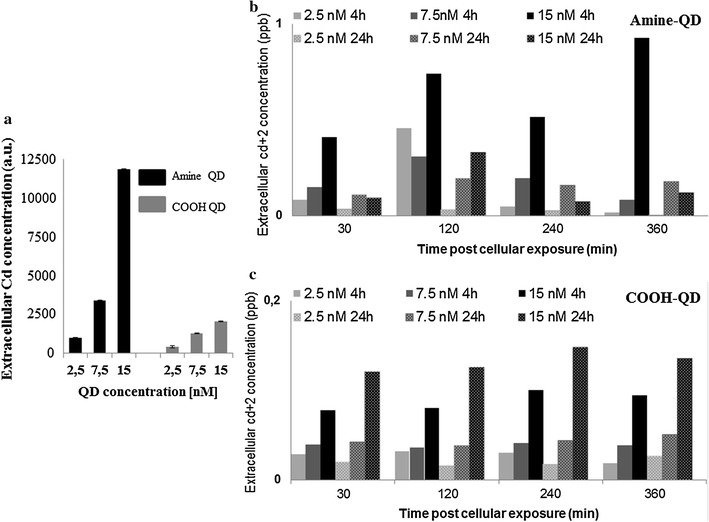
Nanoparticle interactions with cellular membranes and the kinetics of their transport and localization are important determinants of their functionality and their biological consequences. Understanding these phenomena is fundamental for the translation of such NPs from in vitro to in vivo systems for bioimaging and medical applications. Two CdSe/ZnS quantum dots (QD) with differing surface functionality (NH or COOH moieties) were used here for investigating the intracellular uptake and transport kinetics of these QDs.
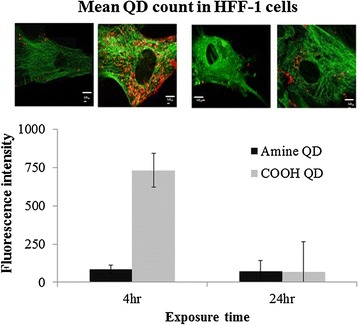
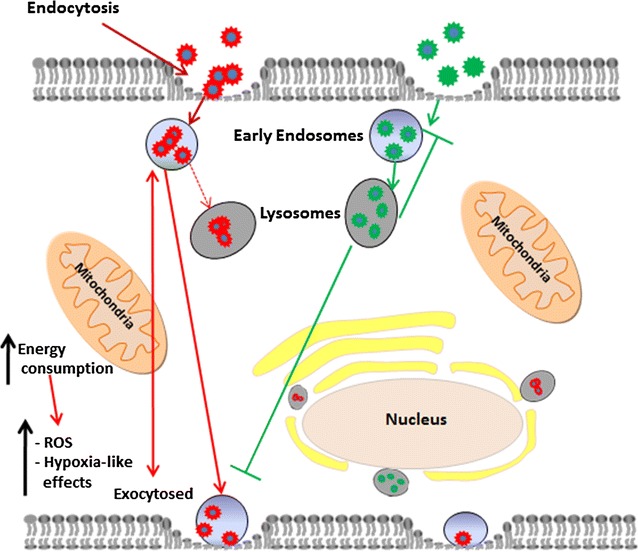
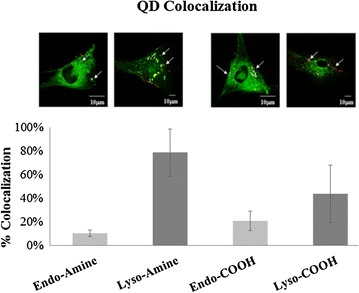
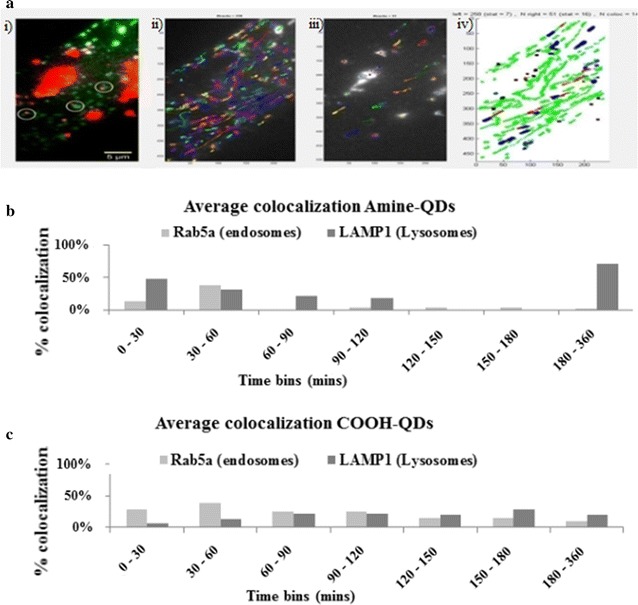
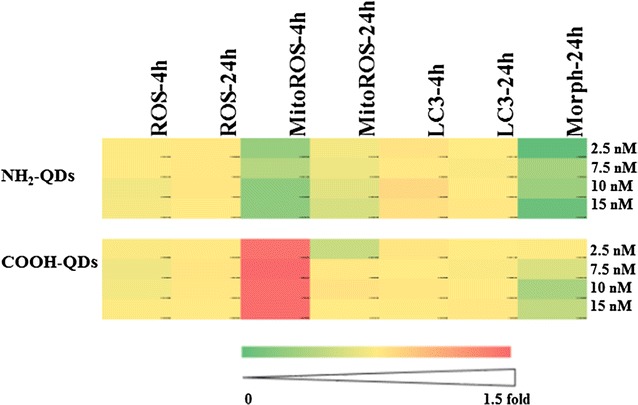
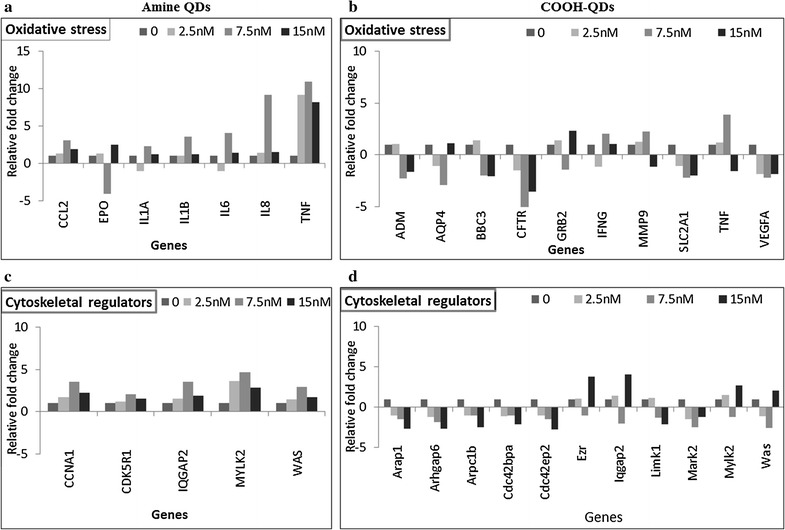
In water, the COOH- and NH-QDs were negatively and positively charged, respectively, while in serum-containing medium the NH-QDs were agglomerated, whereas the COOH-QDs remained dispersed. Though intracellular levels of NH- and COOH-QDs were very similar after 24 h exposure, COOH-QDs appeared to be continuously internalised and transported by endosomes and lysosomes, while NH-QDs mainly remained in the lysosomes. The results of (intra)cellular QD trafficking were correlated to their toxicity profiles investigating levels of reactive oxygen species (ROS), mitochondrial ROS, autophagy, changes to cellular morphology and alterations in genes involved in cellular stress, toxicity and cytoskeletal integrity. The continuous flux of COOH-QDs perhaps explains their higher toxicity compared to the NH-QDs, mainly resulting in mitochondrial ROS and cytoskeletal remodelling which are phenomena that occur early during cellular exposure.
Together, these data reveal that although cellular QD levels were similar after 24 h, differences in the nature and extent of their cellular trafficking resulted in differences in consequent gene alterations and toxicological effects.
纳米颗粒与细胞膜的相互作用及其运输和定位动力学是其功能和生物学后果的重要决定因素。了解这些现象是将此类纳米颗粒从体外系统转化到体内系统用于生物成像和医学应用的基础。本文使用了两种具有不同表面功能(NH或COOH基团)的CdSe/ZnS量子点(QD)来研究这些量子点的细胞内摄取和运输动力学。
在水中,COOH-QD和NH-QD分别带负电荷和正电荷,而在含血清的培养基中,NH-QD发生团聚,而COOH-QD仍保持分散状态。虽然暴露24小时后NH-QD和COOH-QD的细胞内水平非常相似,但COOH-QD似乎被内体和溶酶体持续内化和运输,而NH-QD主要留在溶酶体中。(细胞内)量子点运输的结果与其毒性特征相关,该毒性特征研究了活性氧(ROS)、线粒体ROS、自噬水平、细胞形态变化以及参与细胞应激、毒性和细胞骨架完整性的基因改变。COOH-QD的持续通量可能解释了其与NH-QD相比更高的毒性,主要导致线粒体ROS和细胞骨架重塑,这些是细胞暴露早期发生的现象。
总之,这些数据表明,尽管24小时后细胞内量子点水平相似,但它们在细胞运输的性质和程度上的差异导致了随后基因改变和毒理学效应的差异。