Secor Patrick R, Sass Gabriele, Nazik Hasan, Stevens David A
Department of Microbiology, University of Washington, Seattle, Washington, United States of America.
California Institute for Medical Research, San Jose, CA, United States of America.
PLoS One. 2017 Jun 16;12(6):e0179659. doi: 10.1371/journal.pone.0179659. eCollection 2017.
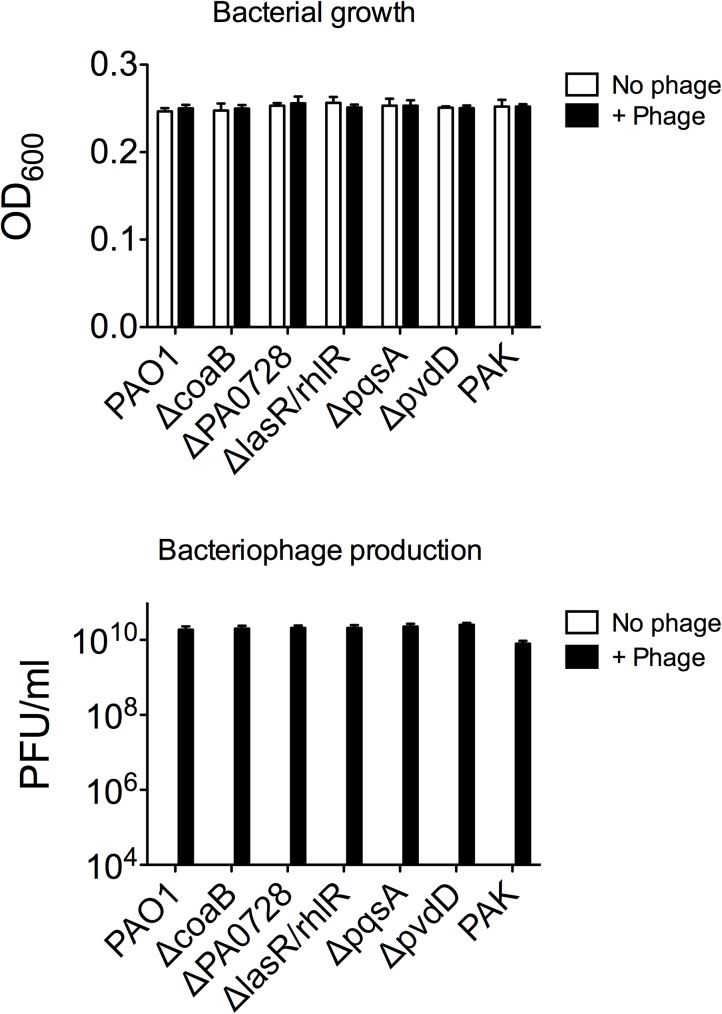
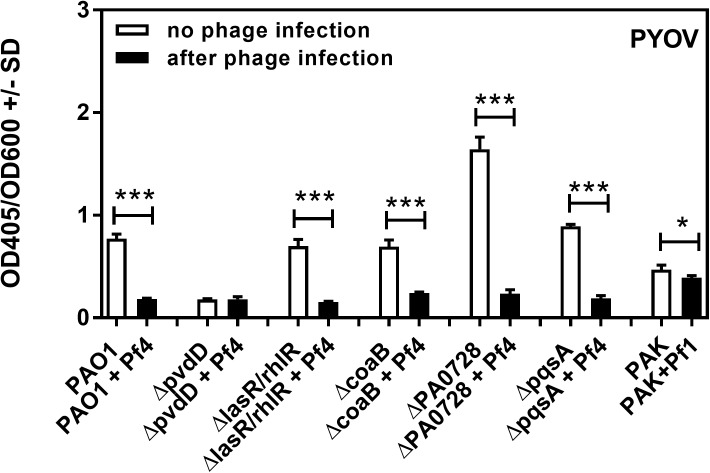
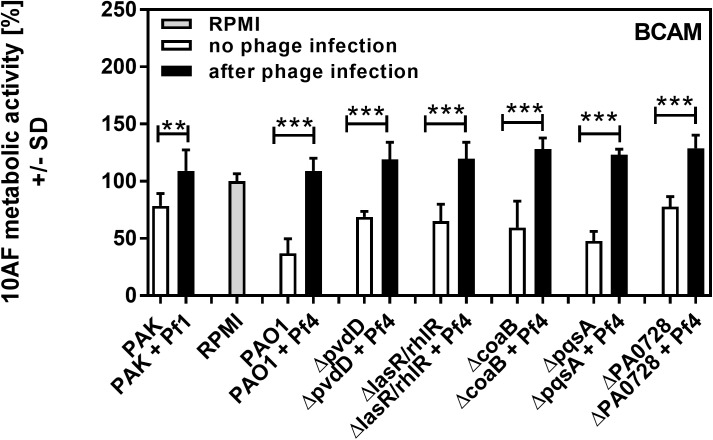
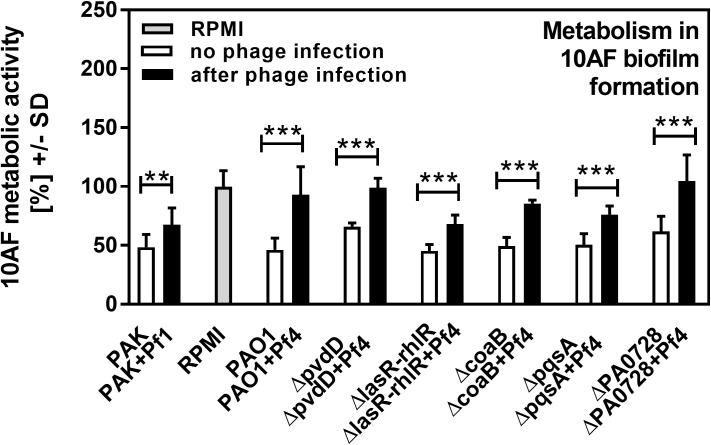
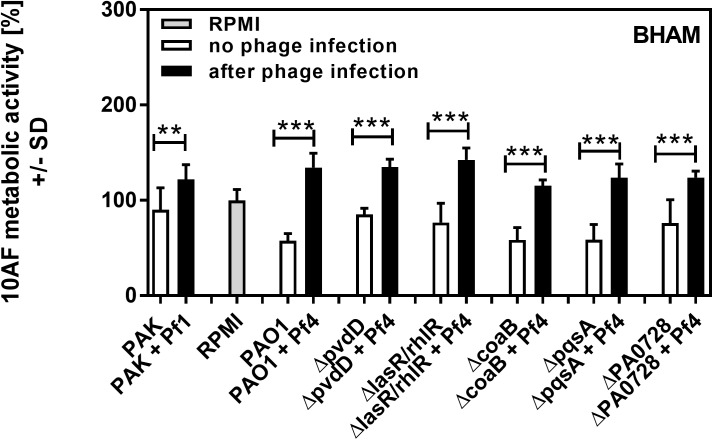
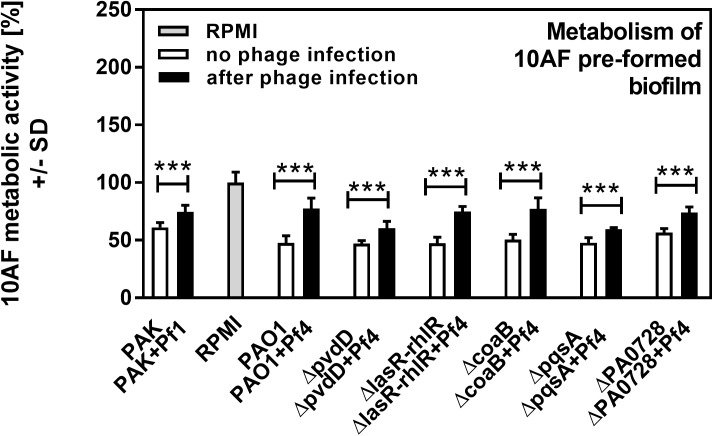
In persons with structural lung disease, particularly those with cystic fibrosis (CF), chronic airway infections cause progressive loss of lung function. CF airways can be colonized by a variety of microorganisms; the most frequently encountered bacterial and fungal pathogens are Pseudomonas aeruginosa and Aspergillus fumigatus, respectively. Co-infection with P. aeruginosa and A. fumigatus often results in a more rapid loss of lung function, indicating that interactions between these pathogens affect infection pathogenesis. There has been renewed interest in the use of viruses (bacteriophage, mycoviruses) as alternatives to antibiotics to treat these infections. In previous work, we found that filamentous Pf bacteriophage produced by P. aeruginosa directly inhibited the metabolic activity of A. fumigatus by binding to and sequestering iron. In the current study, we further examined how filamentous Pf bacteriophage affected interactions between P. aeruginosa and A. fumigatus. Here, we report that the antifungal properties of supernatants collected from P. aeruginosa cultures infected with Pf bacteriophage were substantially less inhibitory towards A. fumigatus biofilms. In particular, we found that acute infection of P. aeruginosa by Pf bacteriophage inhibited the production of the virulence factor pyoverdine. Our results raise the possibility that the reduced production of antimicrobials by P. aeruginosa infected by Pf bacteriophage may promote conditions in CF airways that allow co-infection with A. fumigatus to occur, exacerbating disease severity. Our results also highlight the importance of considering how the use of bacteriophage as therapeutic agents could affect the behavior and composition of polymicrobial communities colonizing sites of chronic infection.
在患有结构性肺病的人群中,尤其是那些患有囊性纤维化(CF)的患者,慢性气道感染会导致肺功能逐渐丧失。CF气道可被多种微生物定植;最常见的细菌和真菌病原体分别是铜绿假单胞菌和烟曲霉。铜绿假单胞菌和烟曲霉的共同感染通常会导致肺功能更快丧失,这表明这些病原体之间的相互作用会影响感染发病机制。人们对使用病毒(噬菌体、真菌病毒)作为抗生素的替代品来治疗这些感染重新产生了兴趣。在之前的研究中,我们发现铜绿假单胞菌产生的丝状Pf噬菌体通过结合并螯合铁直接抑制烟曲霉的代谢活性。在当前的研究中,我们进一步研究了丝状Pf噬菌体如何影响铜绿假单胞菌和烟曲霉之间的相互作用。在此,我们报告从感染Pf噬菌体的铜绿假单胞菌培养物中收集的上清液的抗真菌特性对烟曲霉生物膜的抑制作用明显减弱。特别是,我们发现Pf噬菌体对铜绿假单胞菌的急性感染抑制了毒力因子绿脓菌素的产生。我们的结果提出了一种可能性,即被Pf噬菌体感染的铜绿假单胞菌抗菌物质产量的降低可能会促进CF气道中允许与烟曲霉共同感染发生的条件,从而加剧疾病的严重程度。我们的结果还强调了考虑将噬菌体用作治疗剂如何影响定植于慢性感染部位的多微生物群落的行为和组成的重要性。