Siebenkäs Cornelia, Chiappinelli Katherine B, Guzzetta Angela A, Sharma Anup, Jeschke Jana, Vatapalli Rajita, Baylin Stephen B, Ahuja Nita
Department of Surgery, The Sidney Kimmel Comprehensive Cancer Center, The Johns Hopkins University School of Medicine, Baltimore, Maryland, United States of America.
Department of Microbiology, Immunology, & Tropical Medicine, The George Washington University, Washington, District of Columbia, United States of America.
PLoS One. 2017 Jun 16;12(6):e0179501. doi: 10.1371/journal.pone.0179501. eCollection 2017.
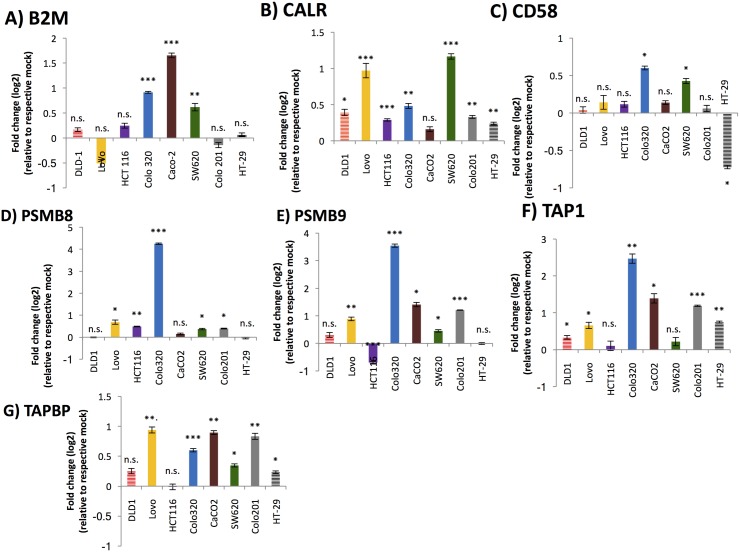
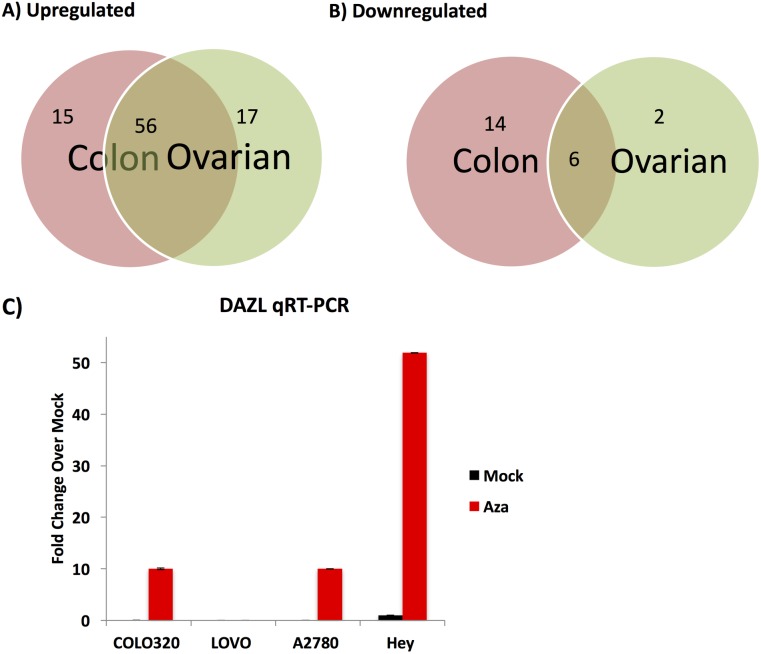
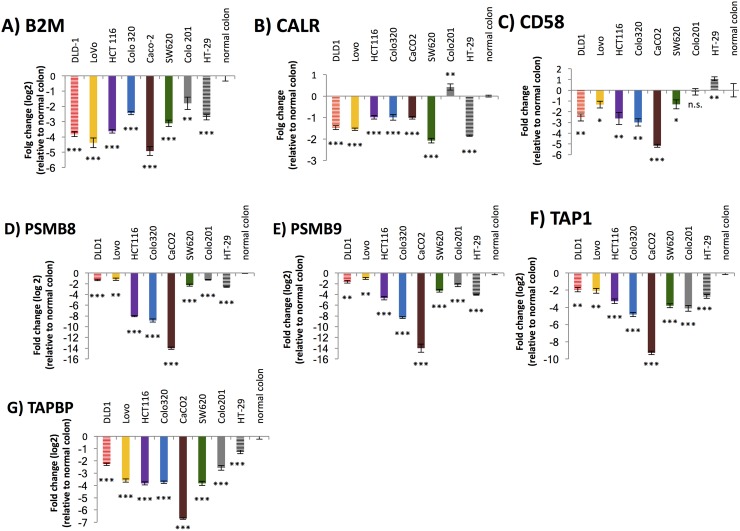
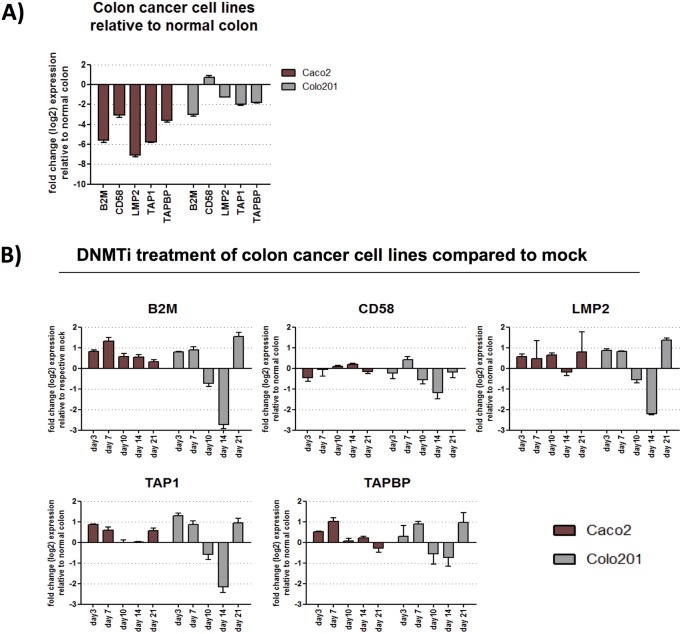
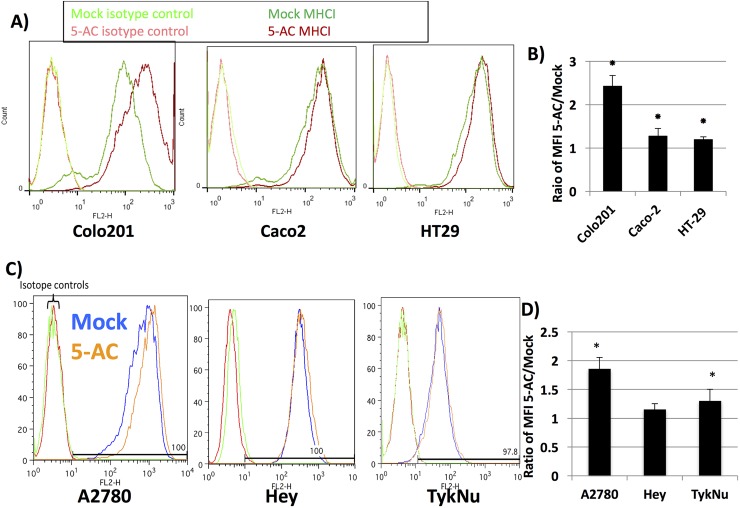
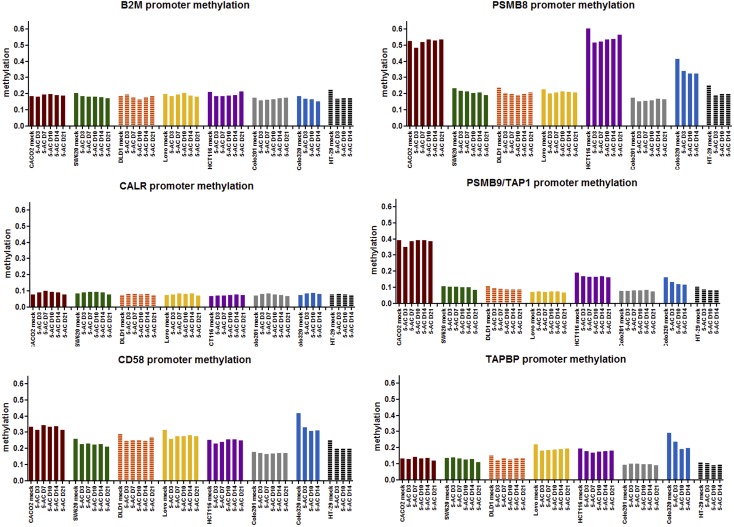
Innovative therapies for solid tumors are urgently needed. Recently, therapies that harness the host immune system to fight cancer cells have successfully treated a subset of patients with solid tumors. These responses have been strong and durable but observed in subsets of patients. Work from our group and others has shown that epigenetic therapy, specifically inhibiting the silencing DNA methylation mark, activates immune signaling in tumor cells and can sensitize to immune therapy in murine models. Here we show that colon and ovarian cancer cell lines exhibit lower expression of transcripts involved in antigen processing and presentation to immune cells compared to normal tissues. In addition, treatment with clinically relevant low doses of DNMT inhibitors (that remove DNA methylation) increases expression of both antigen processing and presentation and Cancer Testis Antigens in these cell lines. We confirm that treatment with DNMT inhibitors upregulates expression of the antigen processing and presentation molecules B2M, CALR, CD58, PSMB8, PSMB9 at the RNA and protein level in a wider range of colon and ovarian cancer cell lines and treatment time points than had been described previously. In addition, we show that DNMTi treatment upregulates many Cancer Testis Antigens common to both colon and ovarian cancer. This increase of both antigens and antigen presentation by epigenetic therapy may be one mechanism to sensitize patients to immune therapies.
实体瘤的创新疗法亟待开发。近年来,利用宿主免疫系统对抗癌细胞的疗法已成功治疗了部分实体瘤患者。这些反应强烈且持久,但仅见于部分患者。我们团队及其他团队的研究表明,表观遗传疗法,特别是抑制沉默DNA甲基化标记,可激活肿瘤细胞中的免疫信号,并能使小鼠模型对免疫疗法敏感。在此,我们发现与正常组织相比,结肠和卵巢癌细胞系中参与向免疫细胞进行抗原加工和呈递的转录本表达较低。此外,使用临床相关低剂量的DNA甲基转移酶抑制剂(可去除DNA甲基化)处理,可增加这些细胞系中抗原加工和呈递以及癌胚抗原的表达。我们证实,与之前描述的相比,在更广泛的结肠和卵巢癌细胞系及处理时间点上,使用DNA甲基转移酶抑制剂处理可在RNA和蛋白质水平上调抗原加工和呈递分子B2M、CALR、CD58、PSMB8、PSMB9的表达。此外,我们还表明,DNA甲基转移酶抑制剂处理可上调结肠和卵巢癌共有的许多癌胚抗原。通过表观遗传疗法增加抗原及抗原呈递可能是使患者对免疫疗法敏感的一种机制。