Molecular Biophysics and Integrated Bioimaging Division, Lawrence Berkeley National Laboratory, Berkeley, CA, 94720, USA.
Biology Department, Massachusetts Institute of Technology, Cambridge, MA, 02139, USA.
Sci Rep. 2017 Jun 16;7(1):3673. doi: 10.1038/s41598-017-03825-3.
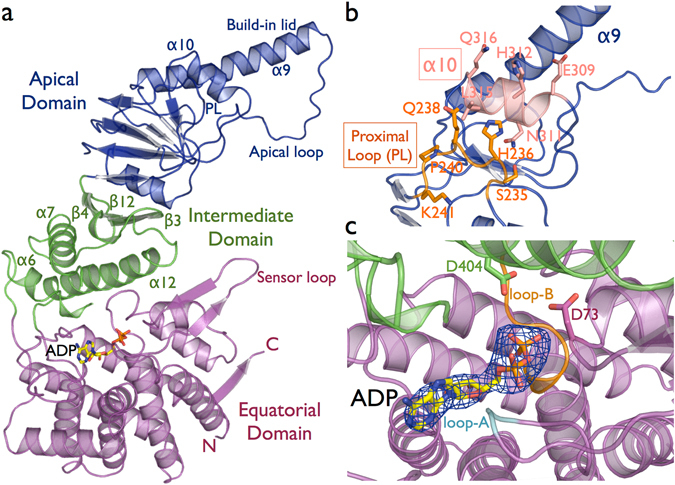
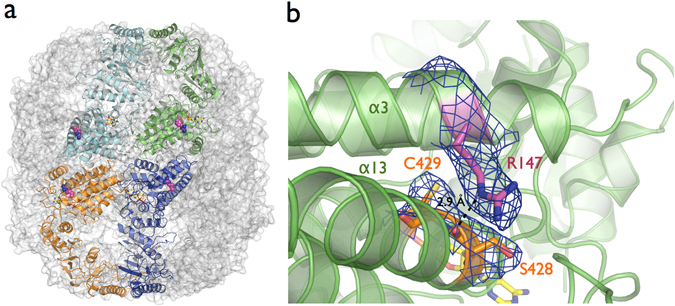
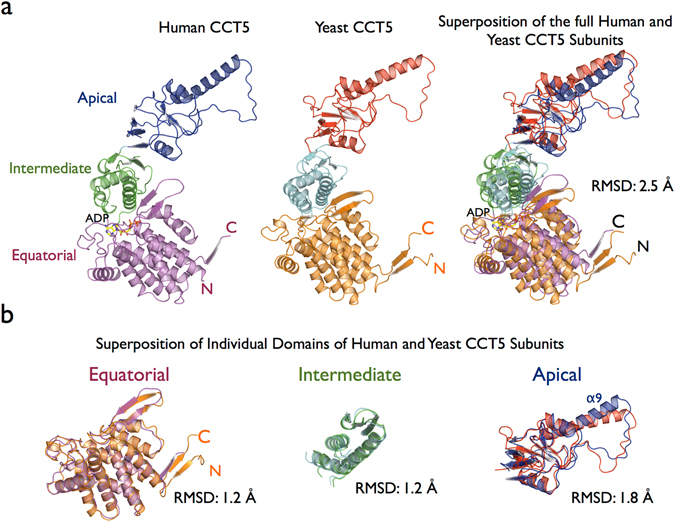
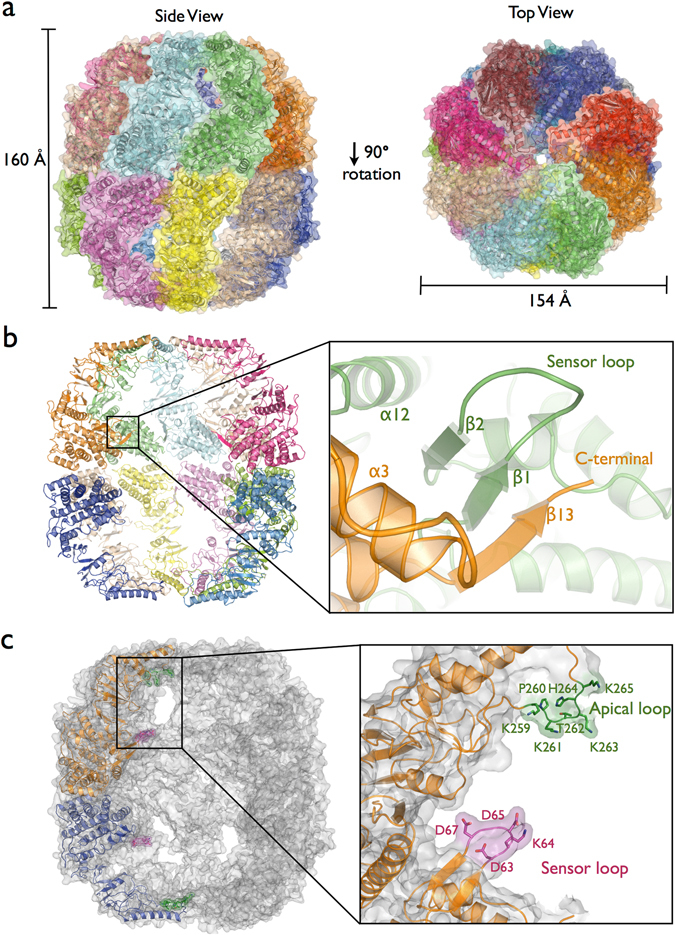
The human chaperonin TRiC consists of eight non-identical subunits, and its protein-folding activity is critical for cellular health. Misfolded proteins are associated with many human diseases, such as amyloid diseases, cancer, and neuropathies, making TRiC a potential therapeutic target. A detailed structural understanding of its ATP-dependent folding mechanism and substrate recognition is therefore of great importance. Of particular health-related interest is the mutation Histidine 147 to Arginine (H147R) in human TRiC subunit 5 (CCT5), which has been associated with hereditary sensory neuropathy. In this paper, we describe the crystal structures of CCT5 and the CCT5-H147R mutant, which provide important structural information for this vital protein-folding machine in humans. This first X-ray crystallographic study of a single human CCT subunit in the context of a hexadecameric complex can be expanded in the future to the other 7 subunits that form the TRiC complex.
人类伴侣蛋白 TRiC 由八个非同源亚基组成,其蛋白折叠活性对细胞健康至关重要。错误折叠的蛋白质与许多人类疾病有关,如淀粉样变性疾病、癌症和神经病变,这使得 TRiC 成为一个潜在的治疗靶点。因此,详细了解其依赖于 ATP 的折叠机制和底物识别对于理解其功能非常重要。特别与健康相关的是人类 TRiC 亚基 5(CCT5)中的组氨酸 147 突变为精氨酸(H147R),这与遗传性感觉神经病有关。在本文中,我们描述了 CCT5 和 CCT5-H147R 突变体的晶体结构,为人类这种重要的蛋白折叠机器提供了重要的结构信息。这是首次在十六聚体复合物的背景下对单个人类 CCT 亚基进行的 X 射线晶体学研究,未来可以扩展到形成 TRiC 复合物的其他 7 个亚基。