Rahamim-Ben Navi Liat, Tsukerman Anna, Feldman Alona, Melamed Philippa, Tomić Melanija, Stojilkovic Stanko S, Boehm Ulrich, Seger Rony, Naor Zvi
Department of Biochemistry and Molecular Biology, Tel Aviv University, Tel Aviv, Israel.
Faculty of Biology, Technion-Israel Institute of Technology, Haifa, Israel.
Front Endocrinol (Lausanne). 2017 Jun 2;8:113. doi: 10.3389/fendo.2017.00113. eCollection 2017.
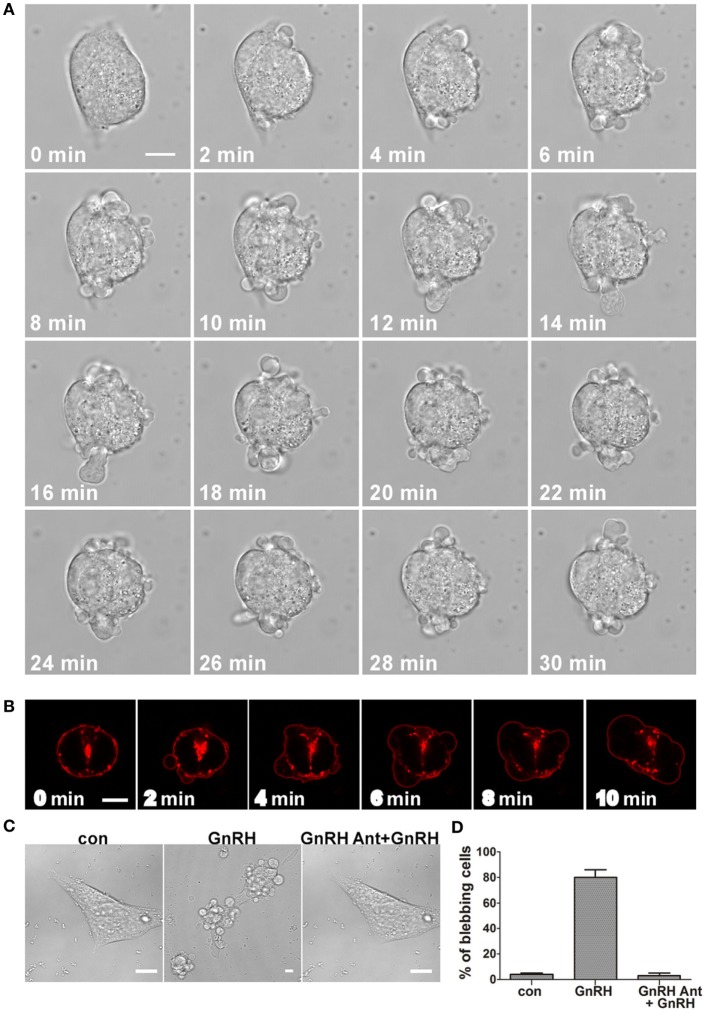
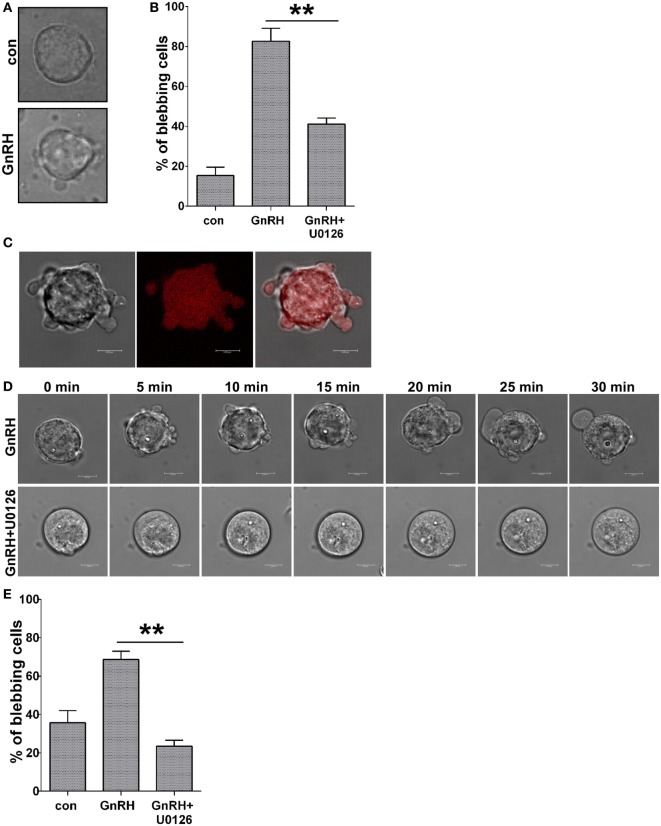
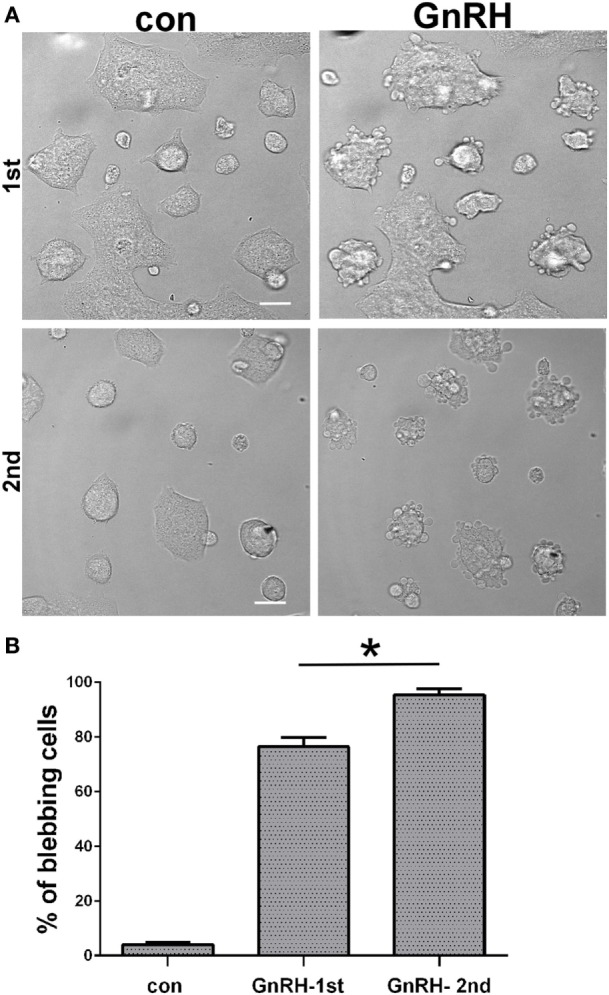
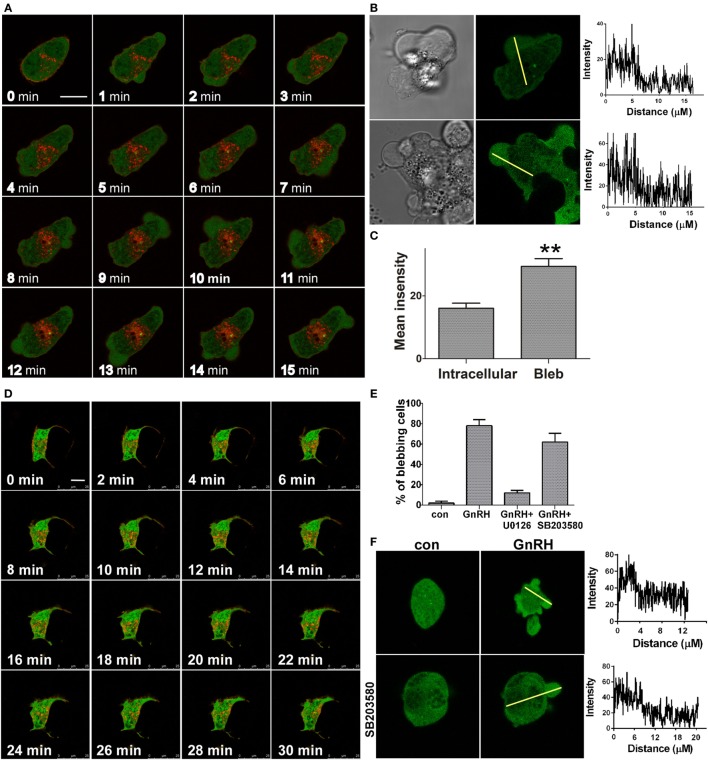
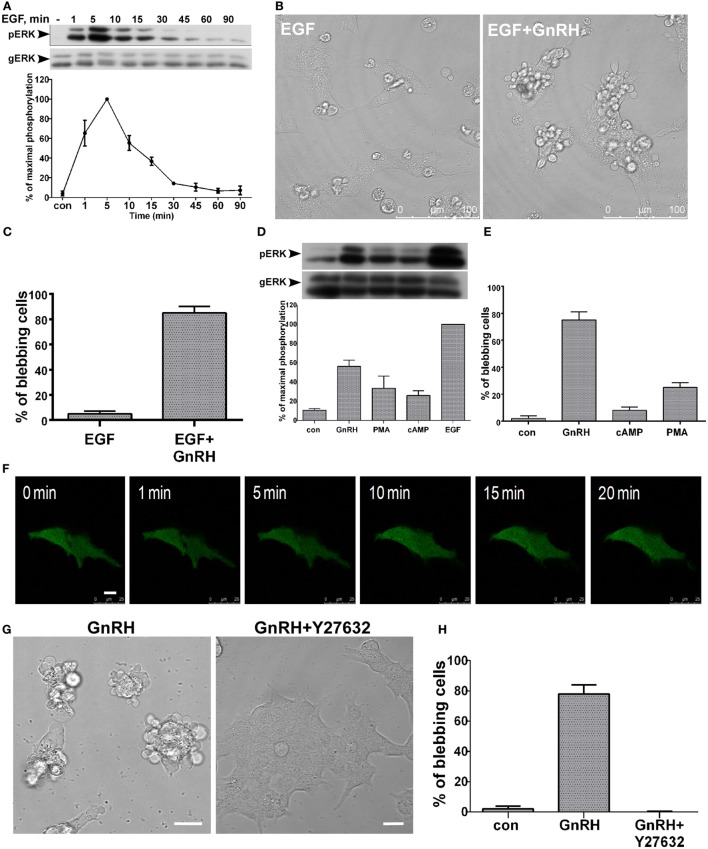
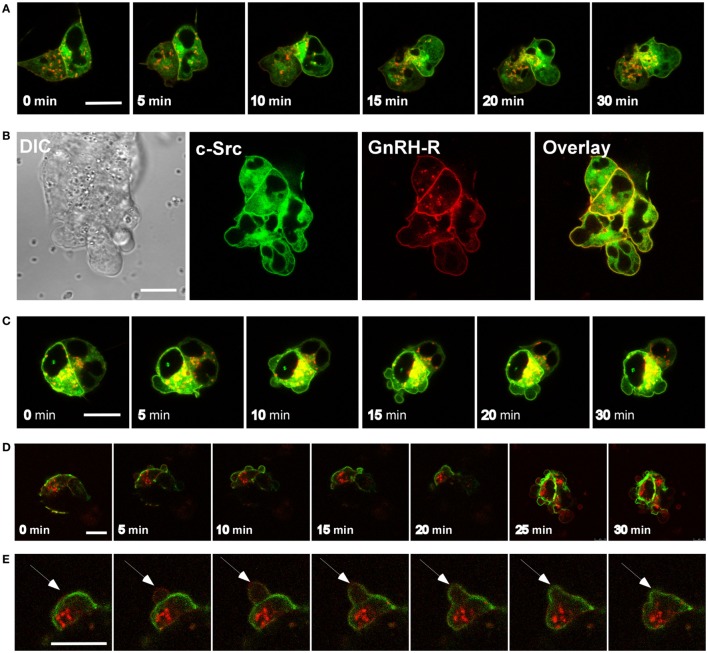
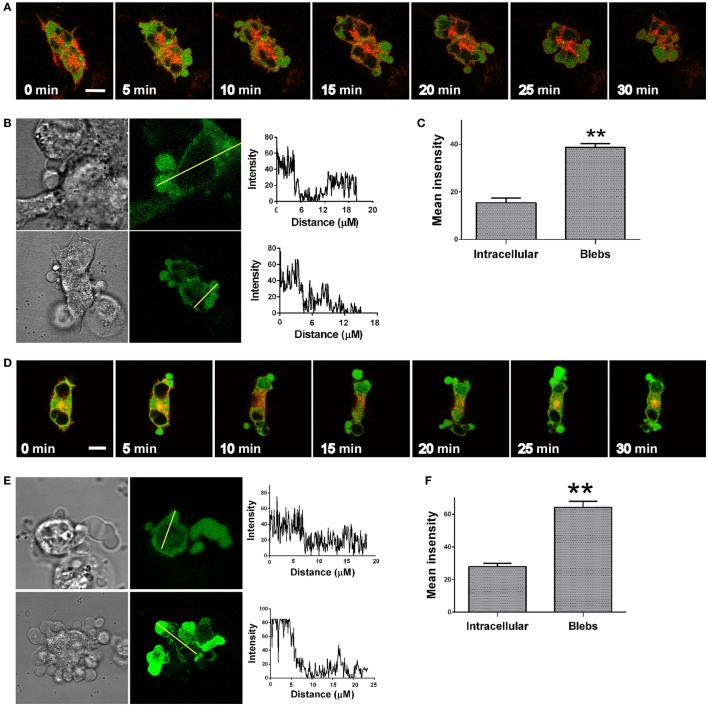
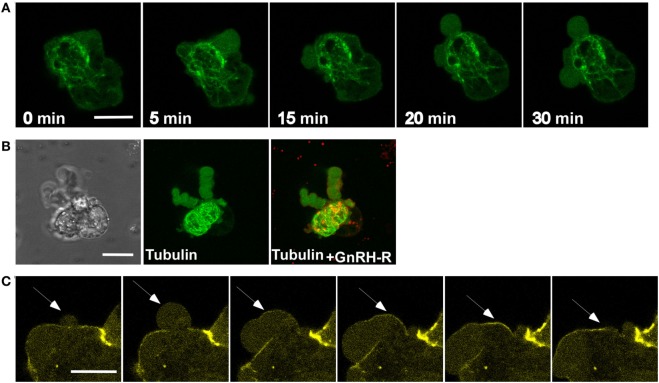
We have previously described a signaling complex (signalosome) associated with the GnRH receptor (GnRHR). We now report that GnRH induces bleb formation in the gonadotrope-derived LβT2 cells. The blebs appear within ~2 min at a turnover rate of ~2-3 blebs/min and last for at least 90 min. Formation of the blebs requires active ERK1/2 and RhoA-ROCK but not active c-Src. Although the following ligands stimulate ERK1/2 in LβT2 cells: EGF > GnRH > PMA > cyclic adenosine monophosphate (cAMP), they produced little or no effect on bleb formation as compared to the robust effect of GnRH (GnRH > PMA > cAMP > EGF), indicating that ERK1/2 is required but not sufficient for bleb formation possibly due to compartmentalization. Members of the above mentioned signalosome are recruited to the blebs, some during bleb formation (GnRHR, c-Src, ERK1/2, focal adhesion kinase, paxillin, and tubulin), and some during bleb retraction (vinculin), while F-actin decorates the blebs during retraction. Fluorescence intensity measurements for the above proteins across the cells showed higher intensity in the blebs vs. intracellular area. Moreover, GnRH induces blebs in primary cultures of rat pituitary cells and isolated mouse gonadotropes in an ERK1/2-dependent manner. The novel signalosome-bleb pathway suggests that as with the signalosome, the blebs are apparently involved in cell migration. Hence, we have extended the potential candidates which are involved in the blebs life cycle in general and for the GnRHR in particular.
我们之前描述过一种与促性腺激素释放激素受体(GnRHR)相关的信号复合物(信号小体)。我们现在报告促性腺激素释放激素(GnRH)可诱导促性腺激素细胞来源的LβT2细胞形成泡状突起。这些泡状突起在约2分钟内出现,转换率约为每分钟2 - 3个泡状突起,且至少持续90分钟。泡状突起的形成需要活性ERK1/2和RhoA - ROCK,但不需要活性c - Src。尽管以下配体可刺激LβT2细胞中的ERK1/2:表皮生长因子(EGF)>GnRH>佛波酯(PMA)>环磷酸腺苷(cAMP),但与GnRH的显著作用相比(GnRH>PMA>cAMP>EGF),它们对泡状突起形成的影响很小或没有影响,这表明ERK1/2是泡状突起形成所必需的,但可能由于区室化作用而不足以单独导致泡状突起形成。上述信号小体的成员被招募到泡状突起处,一些在泡状突起形成过程中(GnRHR、c - Src、ERK1/2、粘着斑激酶、桩蛋白和微管蛋白),一些在泡状突起回缩过程中(纽蛋白),而丝状肌动蛋白在回缩过程中装饰泡状突起。对上述蛋白质在细胞内的荧光强度测量显示,泡状突起处的强度高于细胞内区域。此外,GnRH以ERK1/2依赖的方式在大鼠垂体细胞原代培养物和分离的小鼠促性腺激素细胞中诱导泡状突起形成。这种新的信号小体 - 泡状突起途径表明,与信号小体一样,泡状突起显然参与细胞迁移。因此,我们扩展了一般参与泡状突起生命周期以及特别是参与GnRHR的潜在候选物范围。