Cheng Yong, Sun Chunli, Ou Xiaowen, Liu Bifeng, Lou Xiaoding, Xia Fan
Hubei Key Laboratory of Bioinorganic Chemistry & Materia Medica , School of Chemistry and Chemical Engineering , Huazhong University of Science and Technology , Wuhan 430074 , P. R. China . Email:
National Engineering Research Center for Nanomedicine , Department of Biomedical Engineering , College of Life Science and Technology , Huazhong University of Science and Technology , Wuhan 430074 , P. R. China.
Chem Sci. 2017 Jun 1;8(6):4571-4578. doi: 10.1039/c7sc00402h. Epub 2017 Apr 19.
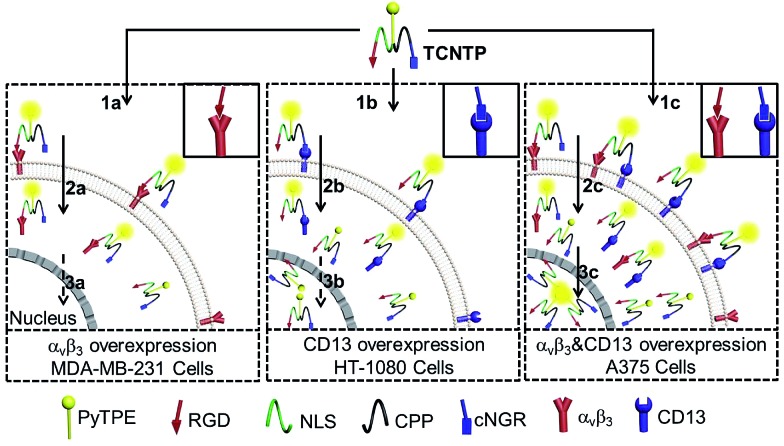
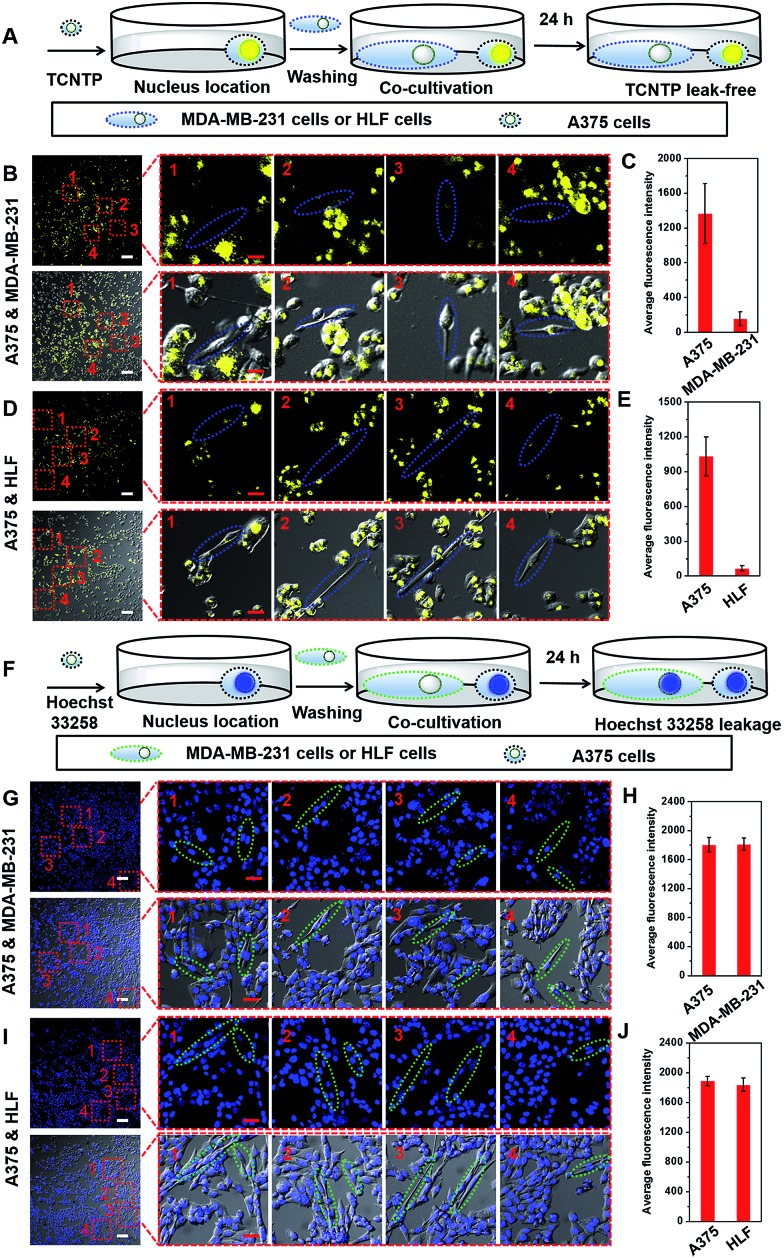
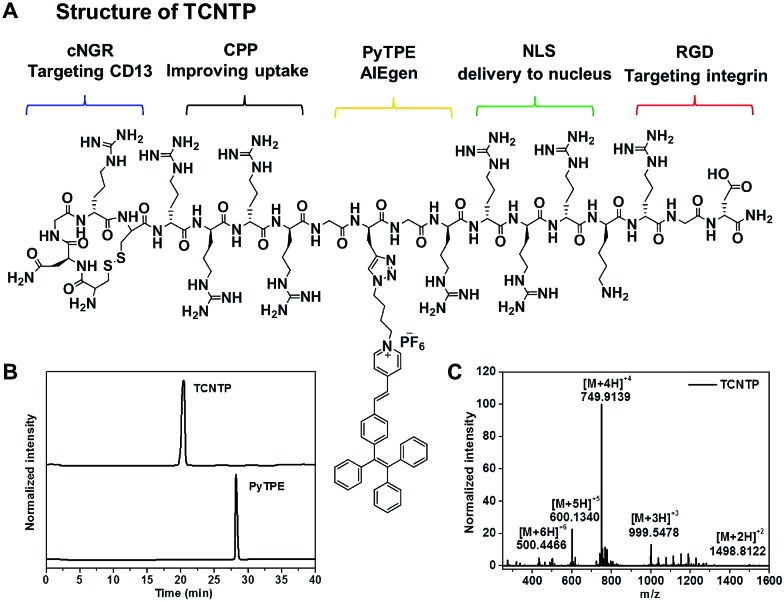
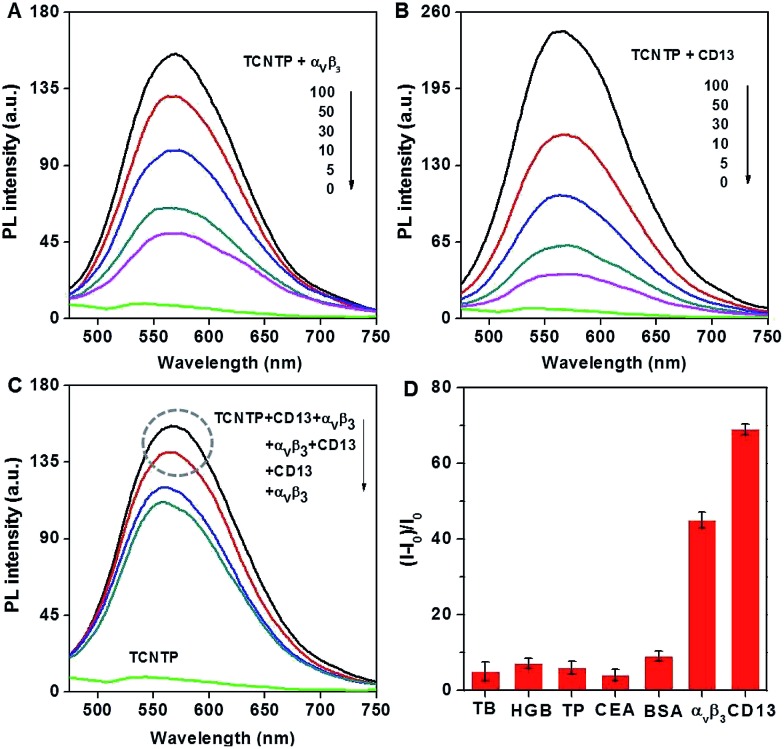
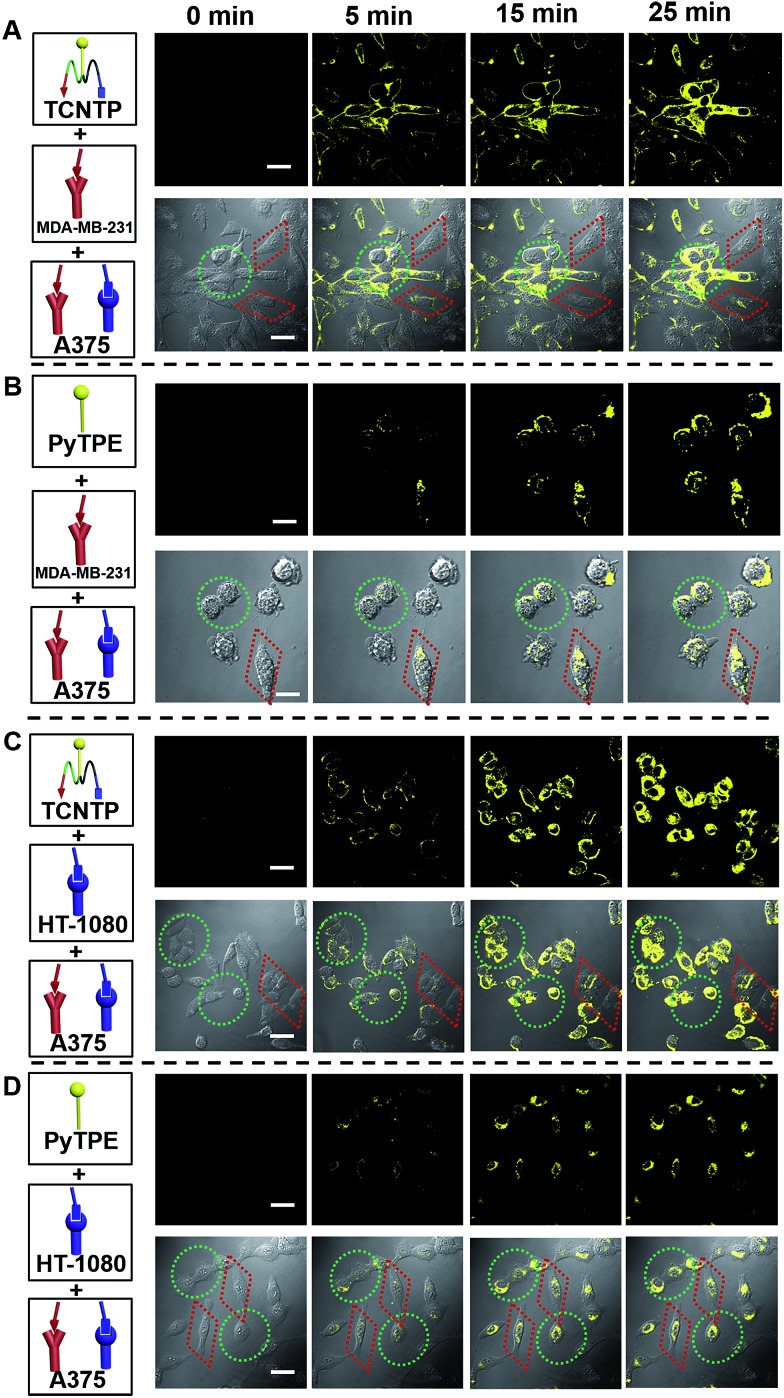
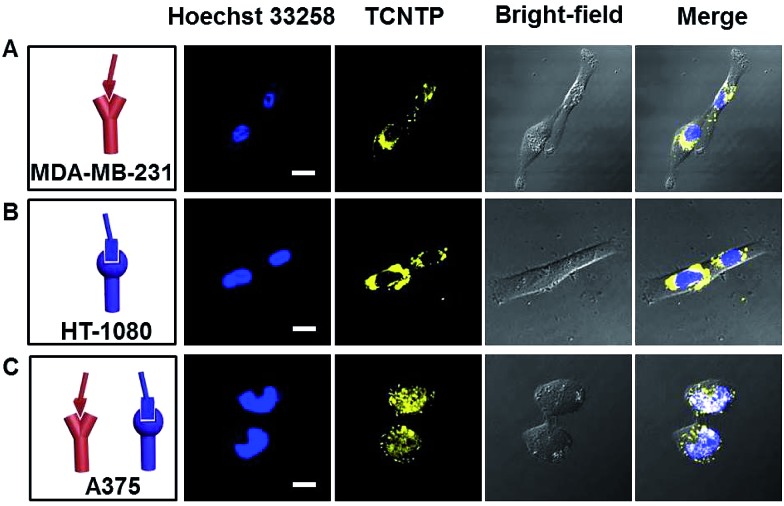
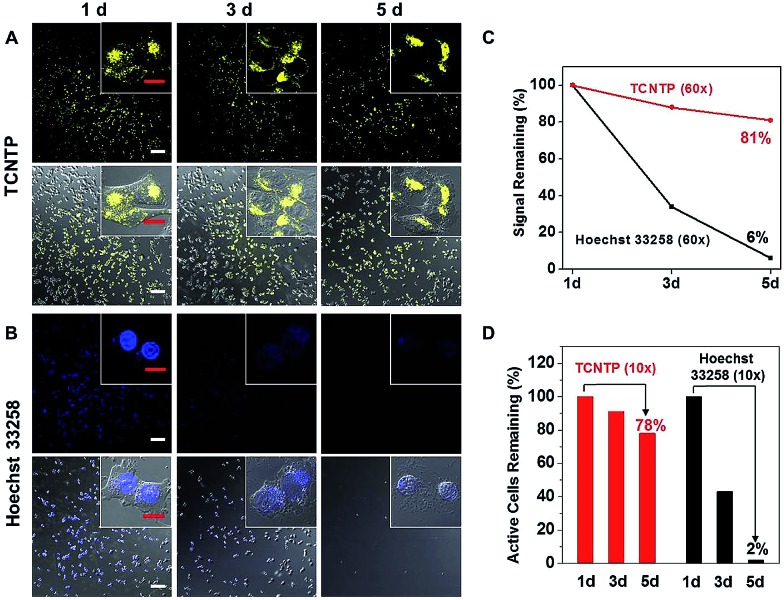
Precisely targeted transportation of a long-term tracing regent to a nucleus with low toxicity is one of the most challenging concerns in revealing cancer cell behaviors. Here, we report a dual-targeted peptide-conjugated multifunctional fluorescent probe (cNGR-CPP-NLS-RGD-PyTPE, TCNTP) with aggregation-induced emission (AIE) characteristic, for efficient nucleus-specific imaging and long-term and low-toxicity tracing of cancer cells. TCNTP mainly consists of two components: one is a functionalized combinatorial peptide (TCNT) containing two targeted peptides (cNGR and RGD), a cell-penetrating peptide (CPP) and a nuclear localization signal (NLS), which can specifically bind to a cell surface and effectively enter into the nucleus; the other one is an AIE-active tetraphenylethene derivative (PyTPE, a typical AIEgen) as fluorescence imaging reagent. In the presence of aminopeptidase N (CD13) and integrin αβ, TCNTP can specifically bind to both of them using cNGR and RGD, respectively, lighting up its yellow fluorescence. Because it contains CPP, TCNTP can be effectively integrated into the cytoplasm, and then be delivered into the nucleus with the help of NLS. TCNTP exhibited strong fluorescence in the nucleus of CD13 and integrin αβ overexpression cells due to the specific targeting ability, efficient transport capacity and AIE characteristic in a more crowded space. Furthermore, TCNTP can be applied for long-term tracing in living cells, scarcely affecting normal cells with negligible toxicity in more than ten passages.
将长期示踪剂精准靶向运输至细胞核且毒性较低,是揭示癌细胞行为最具挑战性的问题之一。在此,我们报道了一种具有聚集诱导发光(AIE)特性的双靶向肽偶联多功能荧光探针(cNGR-CPP-NLS-RGD-PyTPE,TCNTP),用于癌细胞的高效细胞核特异性成像以及长期低毒性示踪。TCNTP主要由两部分组成:一部分是功能化组合肽(TCNT),包含两种靶向肽(cNGR和RGD)、一个细胞穿透肽(CPP)和一个核定位信号(NLS),它能特异性结合细胞表面并有效进入细胞核;另一部分是作为荧光成像试剂的AIE活性四苯乙烯衍生物(PyTPE,一种典型的AIEgen)。在氨肽酶N(CD13)和整合素αβ存在的情况下,TCNTP可分别利用cNGR和RGD与它们特异性结合,发出黄色荧光。由于含有CPP,TCNTP能有效进入细胞质,然后在NLS的帮助下进入细胞核。由于具有特异性靶向能力、高效运输能力以及在更拥挤空间中的AIE特性,TCNTP在CD13和整合素αβ过表达细胞的细胞核中表现出强荧光。此外,TCNTP可用于活细胞的长期示踪,在十多个传代过程中对正常细胞影响极小且毒性可忽略不计。