CAS in Marine Biology, Faculty of Marine Sciences, Annamalai University, Parangipettai 608 502, India.
AVC College of Arts and Science, Mannampandal, Mayiladuthurai 609 305, India.
Biomed Res Int. 2017;2017:6509648. doi: 10.1155/2017/6509648. Epub 2017 May 25.
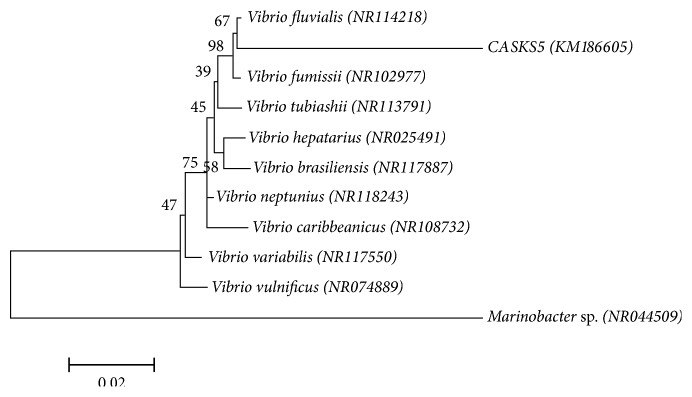
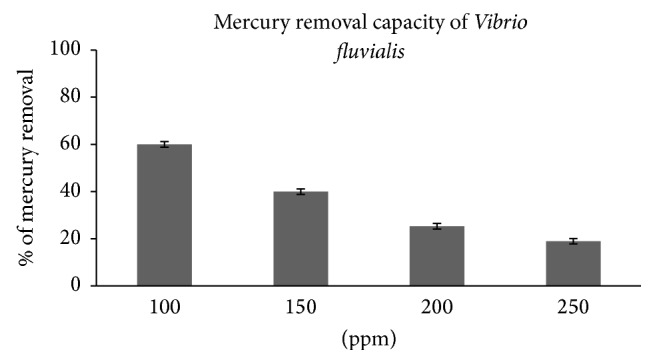
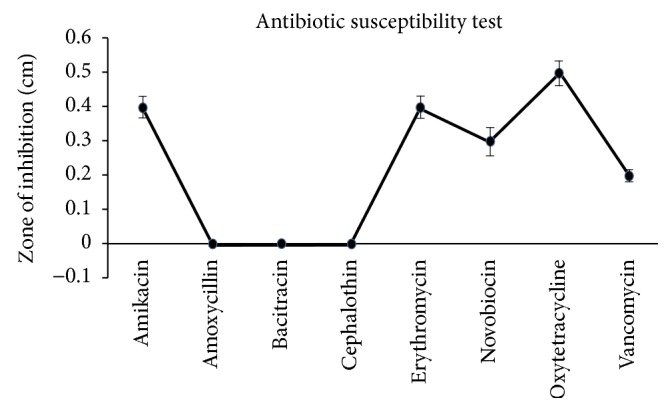
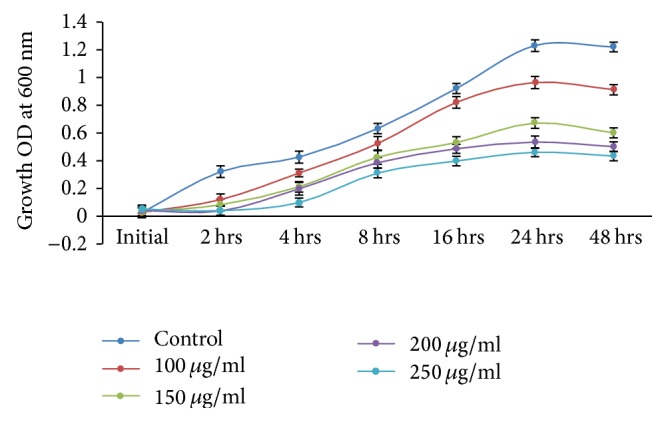
Thirty-one mercury-resistant bacterial strains were isolated from the effluent discharge sites of the SIPCOT industrial area. Among them, only one strain (CASKS5) was selected for further investigation due to its high minimum inhibitory concentration of mercury and low antibiotic susceptibility. In accordance with 16S ribosomal RNA gene sequences, the strain CASKS5 was identified as . The mercury-removal capacity of was analyzed at four different concentrations (100, 150, 200, and 250 g/ml). Efficient bioremediation was observed at a level of 250 g/ml with the removal of 60% of mercury ions. The interesting outcome of this study was that the strain had a high bioremediation efficiency but had a low antibiotic resistance. Hence, could be successfully used as a strain for the ecofriendly removal of mercury.
从 SIPCOT 工业区的废水排放口分离出 31 株耐汞细菌。其中,由于其对汞的最小抑菌浓度高且对抗生素的敏感性低,仅选择了一株菌株(CASKS5)进行进一步研究。根据 16S 核糖体 RNA 基因序列,菌株 CASKS5 被鉴定为. 分析了 在四个不同浓度(100、150、200 和 250μg/ml)下的汞去除能力。在 250μg/ml 的水平下观察到有效的生物修复,汞离子的去除率为 60%。这项研究的有趣结果是,菌株 具有很高的生物修复效率,但抗生素耐药性低。因此, 可以成功用作环保去除汞的菌株。