Geophysical Institute, University of Bergen, and Bjerknes Centre for Climate Research, Allégaten 70, Bergen 5007, Norway.
Department of Earth Sciences, University of Oxford, South Parks Road, Oxford OX1 3AN, UK.
Nat Commun. 2017 Jun 20;8:15875. doi: 10.1038/ncomms15875.
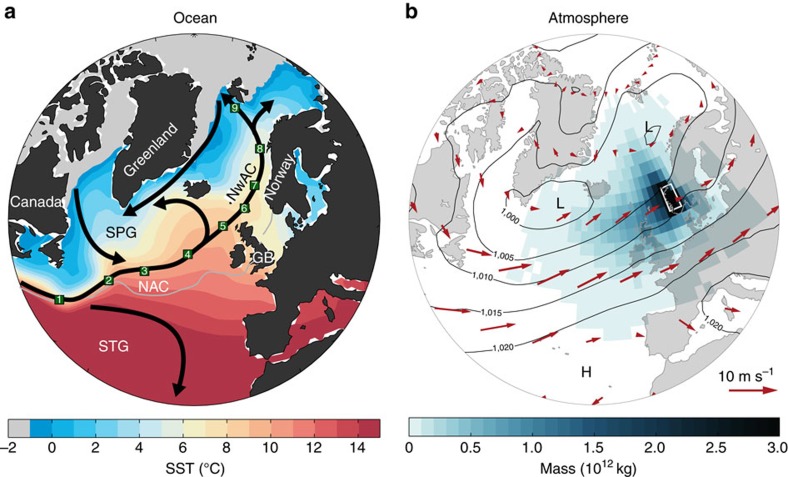
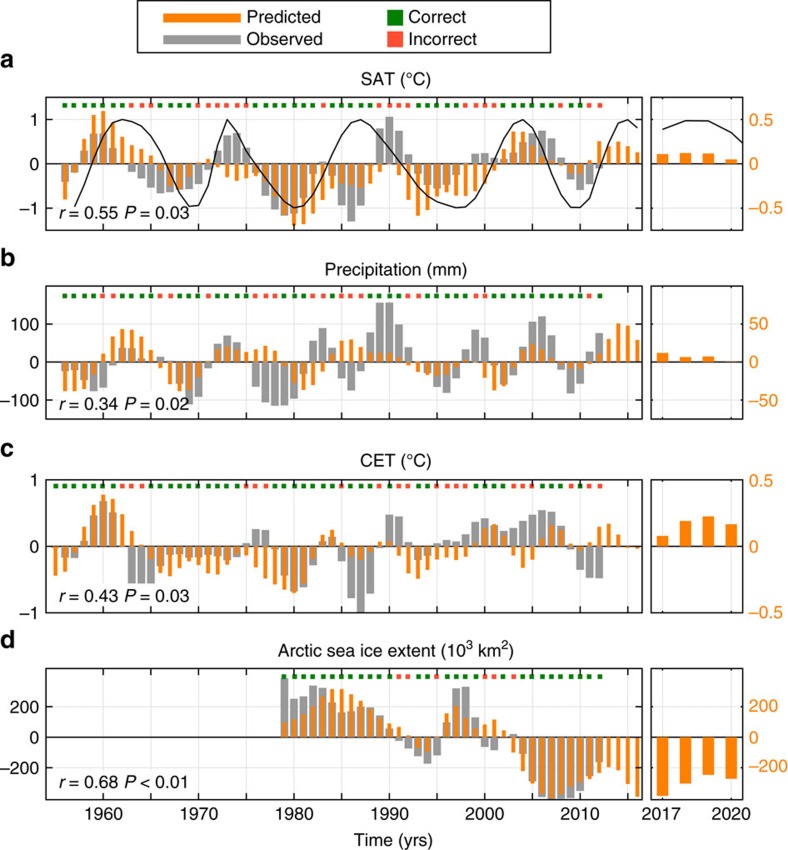
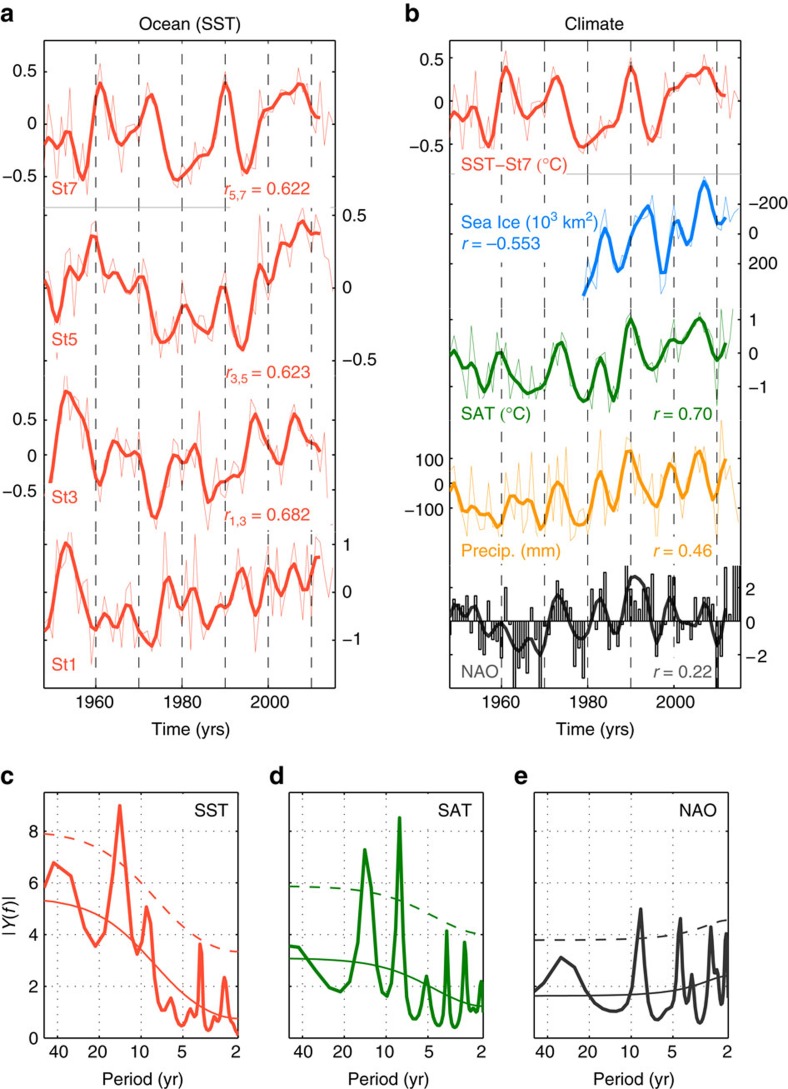
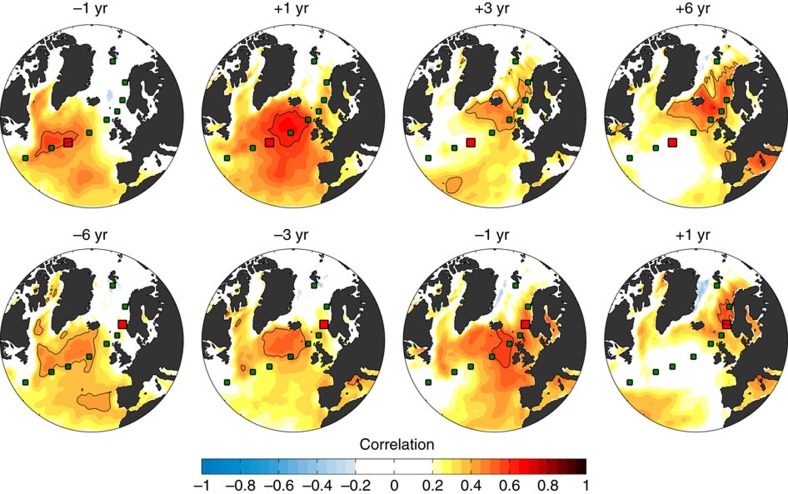
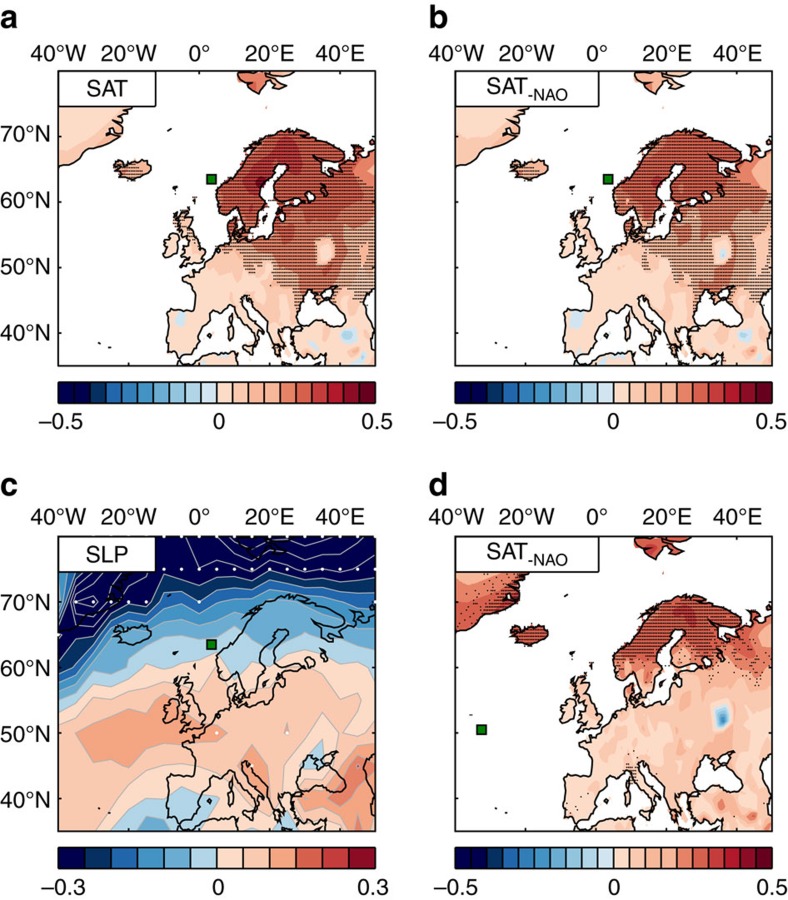
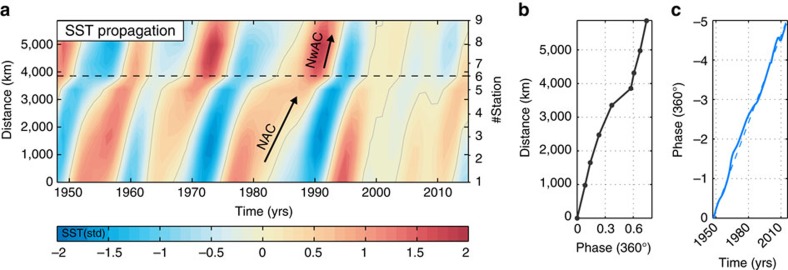
It is commonly understood that a potential for skillful climate prediction resides in the ocean. It nevertheless remains unresolved to what extent variable ocean heat is imprinted on the atmosphere to realize its predictive potential over land. Here we assess from observations whether anomalous heat in the Gulf Stream's northern extension provides predictability of northwestern European and Arctic climate. We show that variations in ocean temperature in the high latitude North Atlantic and Nordic Seas are reflected in the climate of northwestern Europe and in winter Arctic sea ice extent. Statistical regression models show that a significant part of northern climate variability thus can be skillfully predicted up to a decade in advance based on the state of the ocean. Particularly, we predict that Norwegian air temperature will decrease over the coming years, although staying above the long-term (1981-2010) average. Winter Arctic sea ice extent will remain low but with a general increase towards 2020.
人们普遍认为,海洋蕴藏着实现熟练气候预测的潜力。然而,海洋热量的变化在多大程度上影响大气,从而实现其对陆地的预测潜力,这一问题仍未得到解决。在这里,我们通过观测评估北大西洋高纬度的墨西哥湾流北部延伸部分的异常热量是否为西北欧和北极气候提供了可预测性。我们表明,北大西洋和北欧海域高纬度的海洋温度变化反映在西北欧的气候和冬季北极海冰范围中。统计回归模型表明,根据海洋状况,很大一部分北部气候可变性可以提前十年以上进行精确预测。特别是,我们预测挪威的气温将在未来几年下降,尽管仍高于长期(1981-2010 年)平均值。冬季北极海冰范围将保持较低水平,但在 2020 年之前总体呈上升趋势。