Liu Jeffrey C, Zacksenhouse Miriam, Eisen Andrea, Nofech-Mozes Sharon, Zacksenhaus Eldad
Division of Advanced Diagnostics, Toronto General Research Institute-University Health Network, Toronto, Ontario, Canada.
Brain-computer Interfaces for Rehabilitation Laboratory, Faculty of Mechanical Engineering, Technion-Israel Institute of Technology Haifa, Israel.
PLoS One. 2017 Jun 20;12(6):e0179223. doi: 10.1371/journal.pone.0179223. eCollection 2017.
Multi-gene prognostic signatures derived from primary tumor biopsies can guide clinicians in designing an appropriate course of treatment. Identifying genes and pathways most essential to a signature performance may facilitate clinical application, provide insights into cancer progression, and uncover potentially new therapeutic targets. We previously developed a 17-gene prognostic signature (HTICS) for HER2+:ERα- breast cancer patients, using genes that are differentially expressed in tumor initiating cells (TICs) versus non-TICs from MMTV-Her2/neu mammary tumors. Here we probed the pathways and genes that underlie the prognostic power of HTICS.
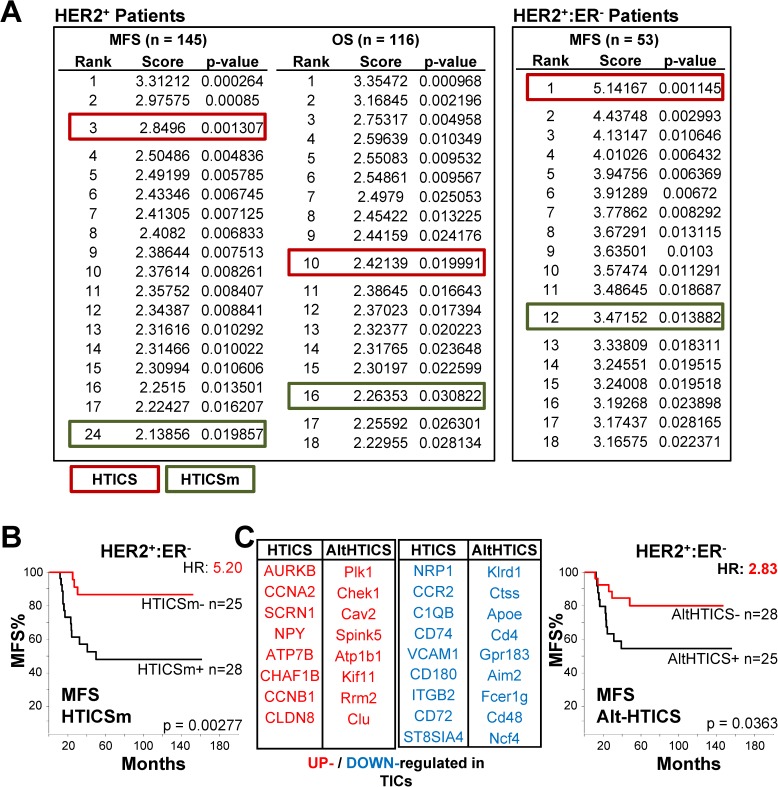
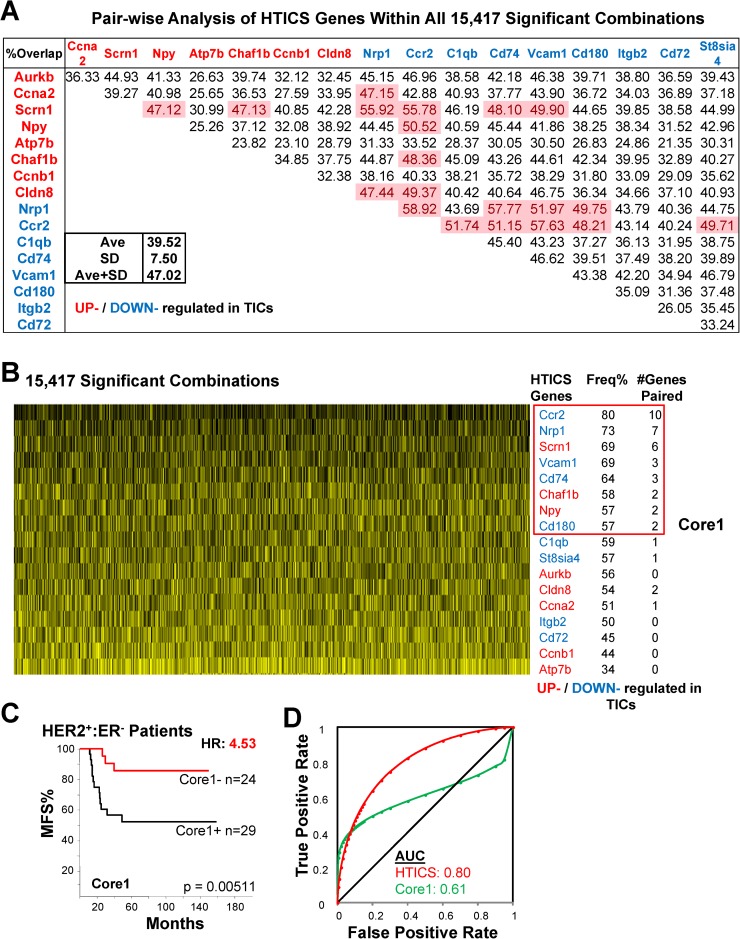
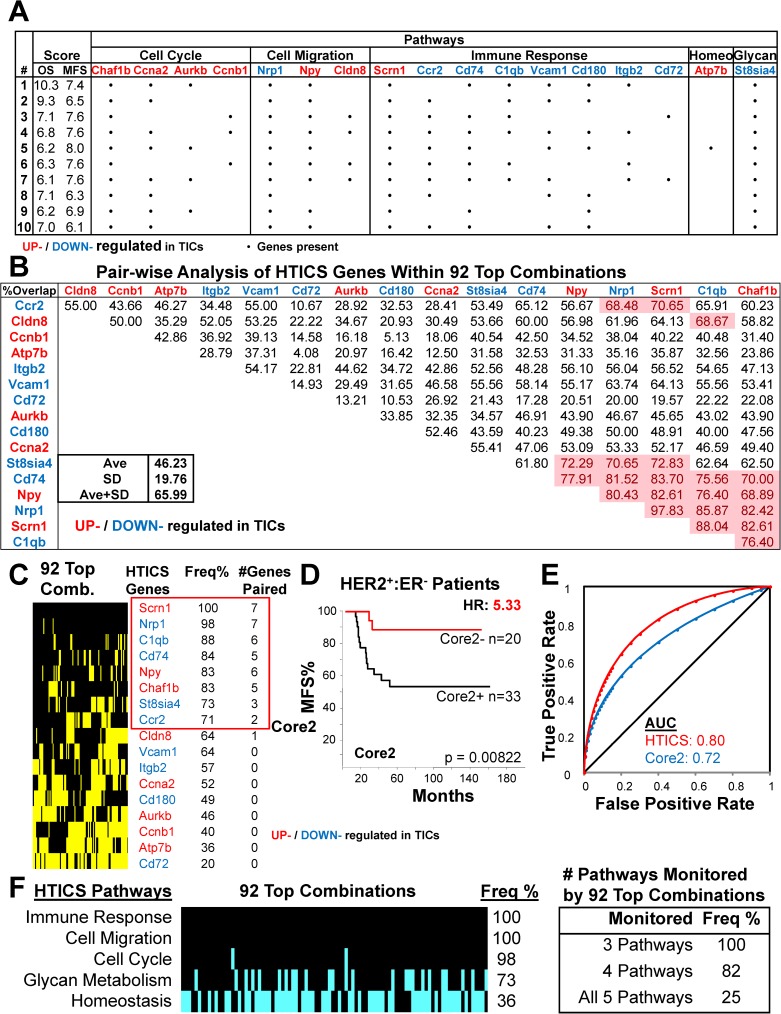
We used Leave-One Out, Data Combination Test, Gene Set Enrichment Analysis (GSEA), Correlation and Substitution analyses together with Receiver Operating Characteristic (ROC) and Kaplan-Meier survival analysis to identify critical biological pathways within HTICS. Publically available cohorts with gene expression and clinical outcome were used to assess prognosis. NanoString technology was used to detect gene expression in formalin-fixed paraffin embedded (FFPE) tissues.
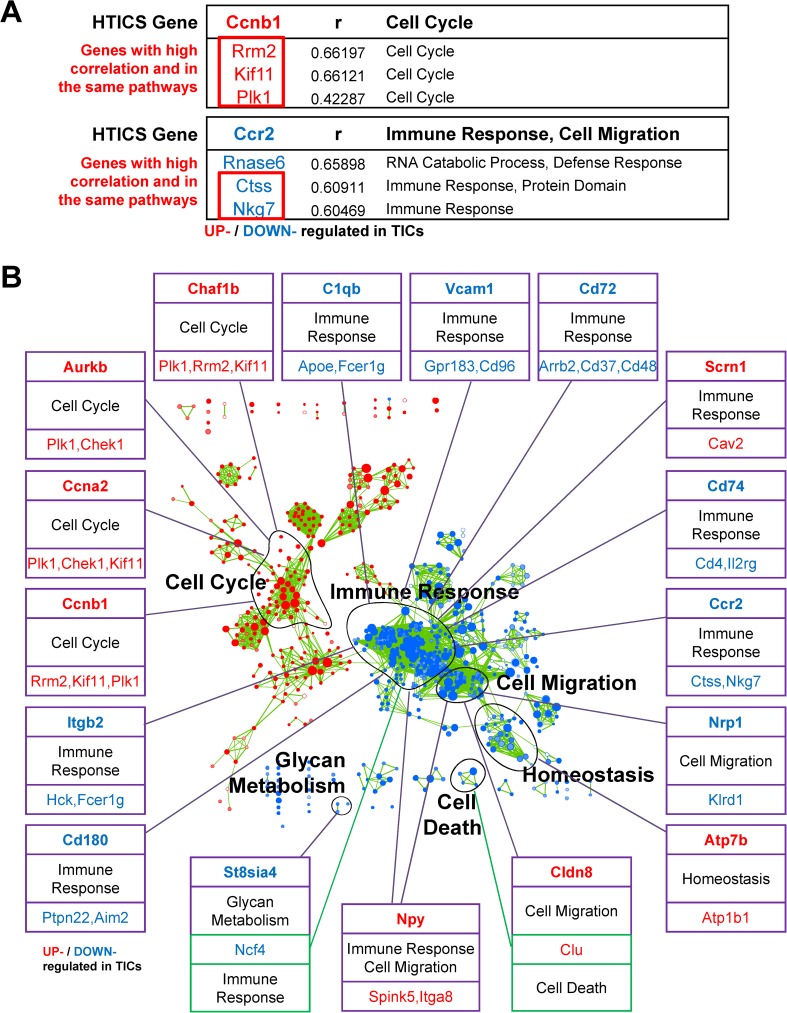
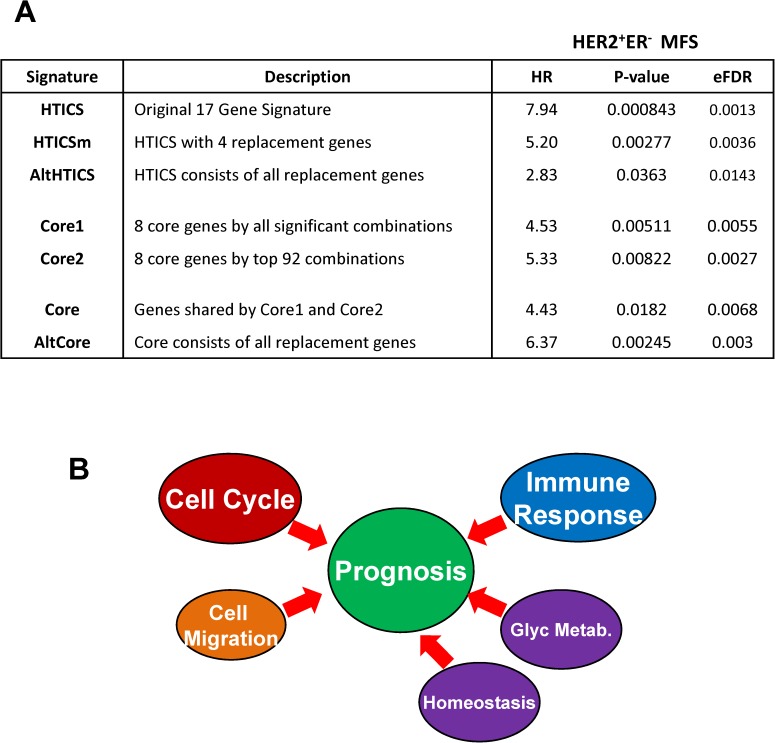
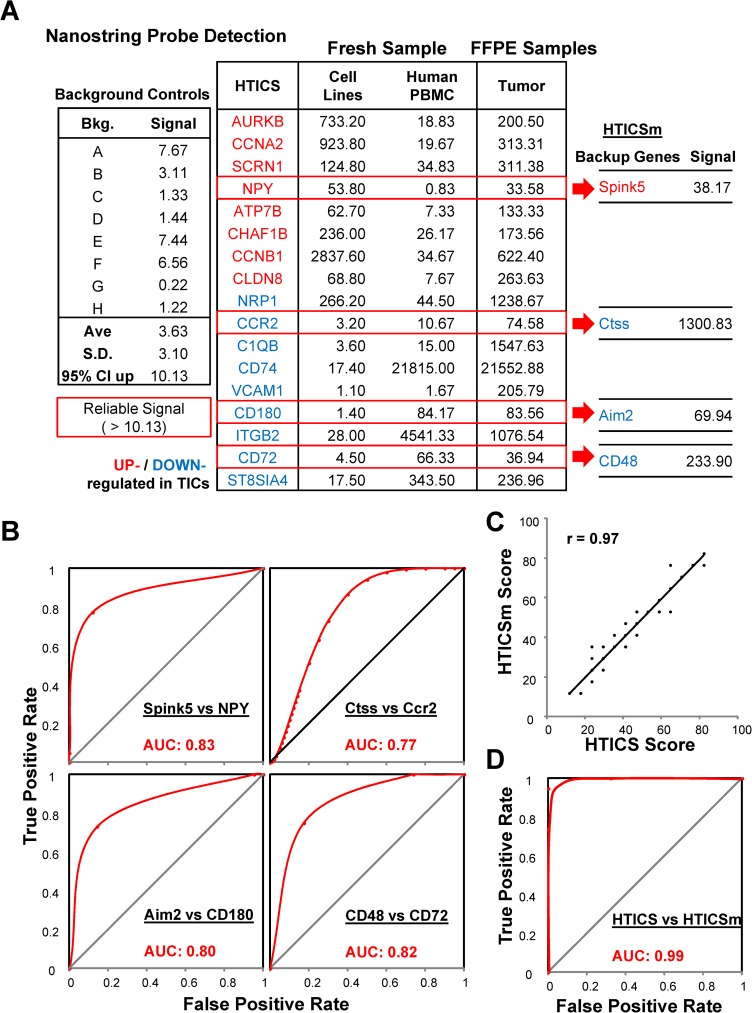
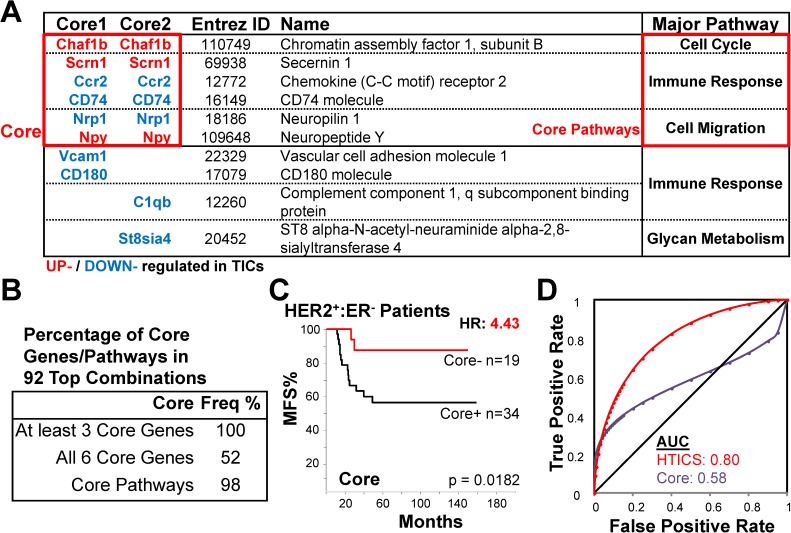
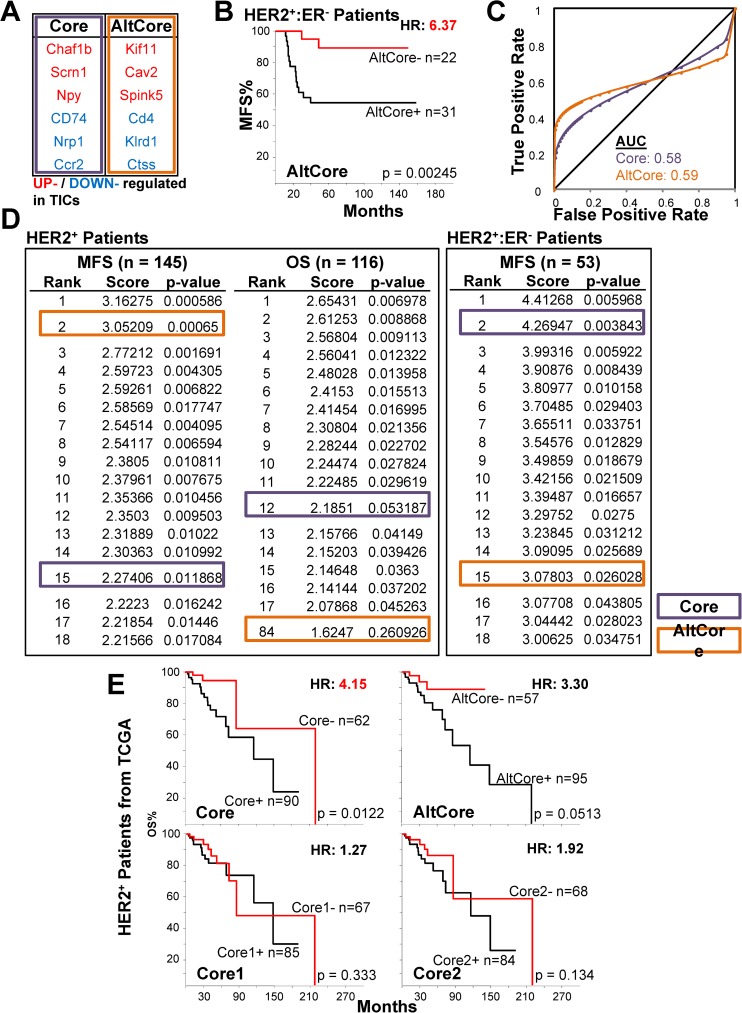
We show that three major biological pathways: cell proliferation, immune response, and cell migration, drive the prognostic power of HTICS, which is further tuned by Homeostatic and Glycan metabolic signalling. A 6-gene minimal Core that retained a significant prognostic power, albeit less than HTICS, also comprised the proliferation/immune/migration pathways. Finally, we developed NanoString probes that could detect expression of HTICS genes and their substitutions in FFPE samples.
Our results demonstrate that the prognostic power of a signature is driven by the biological processes it monitors, identify cell proliferation, immune response and cell migration as critical pathways for HER2+:ERα- cancer progression, and defines substitutes and Core genes that should facilitate clinical application of HTICS.
源自原发性肿瘤活检的多基因预后特征可指导临床医生设计合适的治疗方案。确定对特征表现最为关键的基因和通路可能有助于临床应用,深入了解癌症进展,并发现潜在的新治疗靶点。我们之前利用在MMTV-Her2/neu乳腺肿瘤的肿瘤起始细胞(TICs)与非TICs中差异表达的基因,为HER2+:ERα-乳腺癌患者开发了一种17基因预后特征(HTICS)。在此,我们探究了HTICS预后能力背后的通路和基因。
我们使用留一法、数据组合测试、基因集富集分析(GSEA)、相关性和替代分析以及受试者工作特征(ROC)和Kaplan-Meier生存分析来识别HTICS内的关键生物学通路。利用公开可用的具有基因表达和临床结果的队列来评估预后。使用NanoString技术检测福尔马林固定石蜡包埋(FFPE)组织中的基因表达。
我们表明,三个主要生物学通路:细胞增殖、免疫反应和细胞迁移,驱动了HTICS的预后能力,稳态和聚糖代谢信号进一步对其进行调节。一个保留了显著预后能力(尽管低于HTICS)的6基因最小核心也包含增殖/免疫/迁移通路。最后,我们开发了可以检测FFPE样本中HTICS基因及其替代物表达的NanoString探针。
我们的结果表明,一个特征的预后能力由其监测的生物学过程驱动,确定细胞增殖、免疫反应和细胞迁移是HER2+:ERα-癌症进展的关键通路,并定义了应有助于HTICS临床应用的替代物和核心基因。