Geelong Centre for Emerging Infectious Diseases, Geelong, Victoria, 3220, Australia.
Deakin University, School of Medicine, Geelong, Victoria, 3220, Australia.
Sci Rep. 2017 Jun 20;7(1):3861. doi: 10.1038/s41598-017-04145-2.
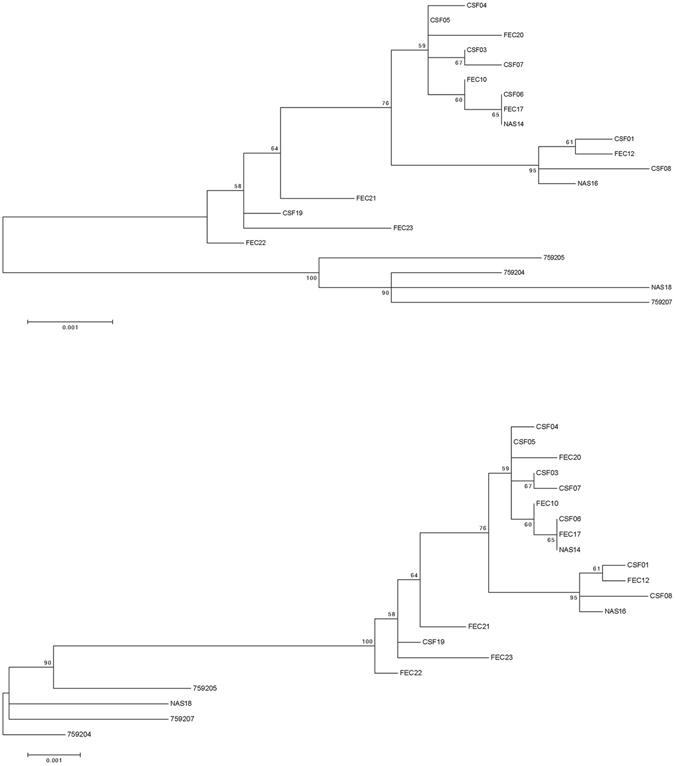
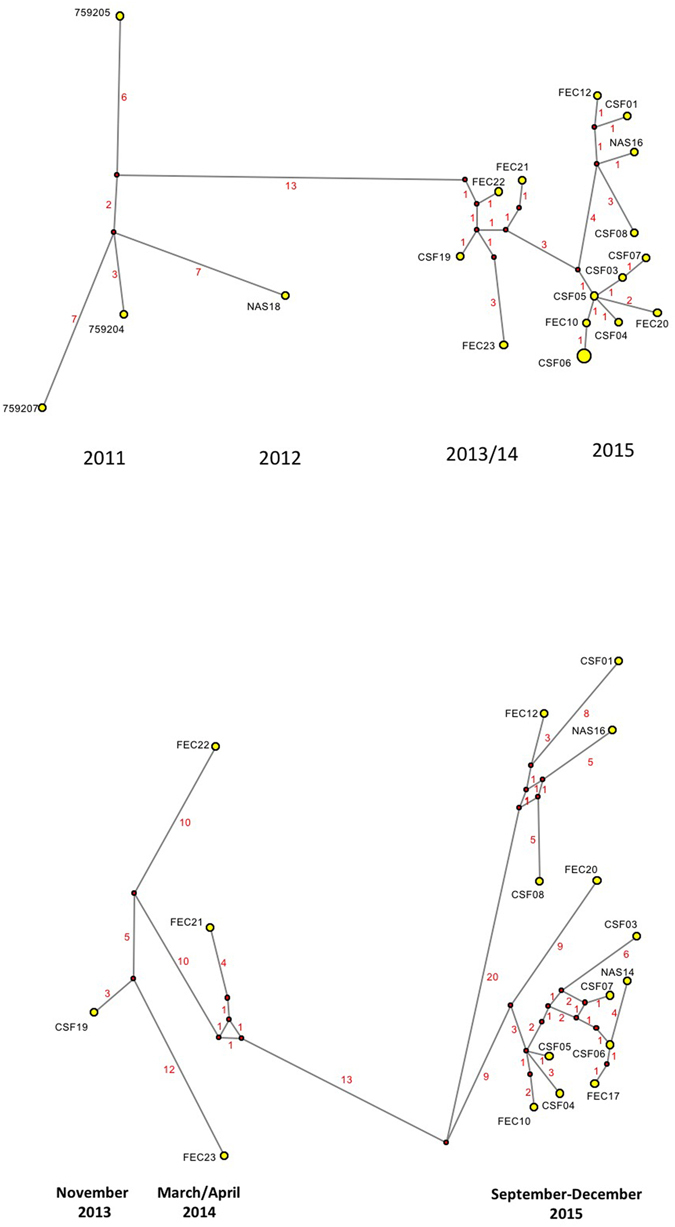
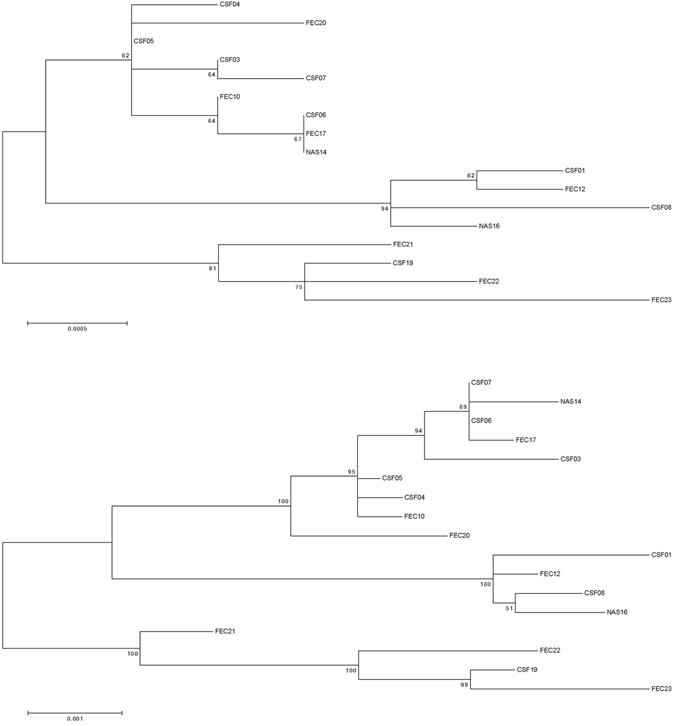
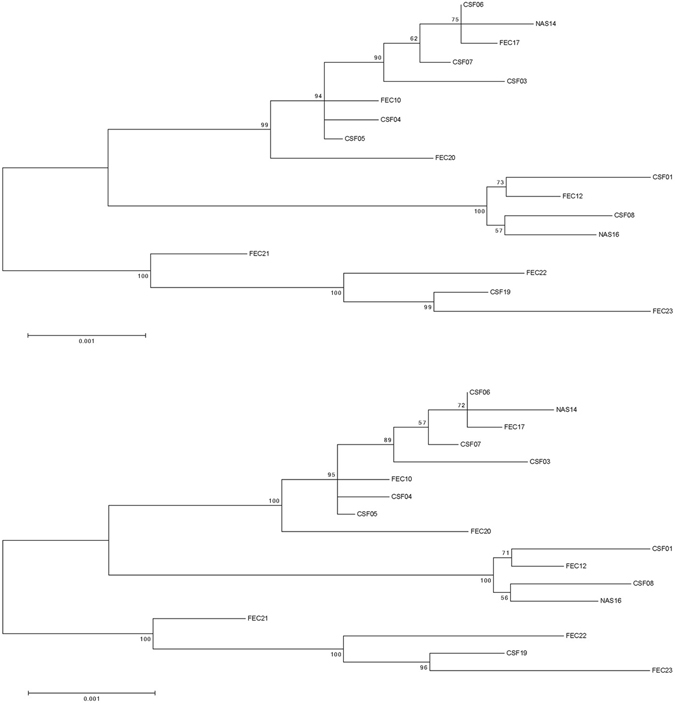
We present the near complete virus genome sequences with phylogenetic and network analyses of potential transmission networks of a total of 18 Australian cases of human parechovirus type 3 (HPeV3) infection in infants in the period from 2012-2015. Overall the results support our previous finding that the Australian outbreak strain/lineage is a result of a major recombination event that took place between March 2012 and November 2013 followed by further virus evolution and possibly recombination. While the nonstructural coding region of unknown provenance appears to evolve significantly both at the nucleotide and amino acid level, the capsid encoding region derived from the Yamagata 2011 lineage of HPeV3 appears to be very stable, particularly at the amino acid level. The phylogenetic and network analyses performed support a temporal evolution from the first Australian recombinant virus sequence from November 2013 to March/April 2014, onto the 2015 outbreak. The 2015 outbreak samples fall into two separate clusters with a possible common ancestor between March/April 2014 and September 2015, with each cluster further evolving in the period from September to November/December 2015.
我们展示了与潜在传播网络相关的近完整病毒基因组序列以及系统进化和网络分析,这些传播网络涉及了在 2012 年至 2015 年期间澳大利亚的总共 18 例人类肠道病毒 3 型(HPeV3)感染的婴儿病例。总体而言,结果支持了我们之前的发现,即澳大利亚暴发株/谱系是 2012 年 3 月至 2013 年 11 月之间发生的重大重组事件的结果,随后病毒进一步进化并可能发生重组。虽然非结构编码区的起源未知,但无论是在核苷酸还是氨基酸水平上,该区域似乎都在显著进化,而源自 HPeV3 的 Yamagata 2011 谱系的衣壳编码区则似乎非常稳定,特别是在氨基酸水平上。进行的系统进化和网络分析支持从 2013 年 11 月的第一个澳大利亚重组病毒序列到 2014 年 3 月/4 月的时间演变,然后是 2015 年的暴发。2015 年暴发的样本分为两个单独的簇,在 2014 年 3 月/4 月至 2015 年 9 月之间可能存在共同的祖先,每个簇在 2015 年 9 月至 11 月/12 月期间进一步进化。