Siracusa Rosalba, Impellizzeri Daniela, Cordaro Marika, Crupi Rosalia, Esposito Emanuela, Petrosino Stefania, Cuzzocrea Salvatore
Department of Chemical, Biological, Pharmaceutical and Environmental Science, University of Messina, Messina, Italy.
Endocannabinoid Research Group, Istituto di Chimica Biomolecolare, Consiglio Nazionale delle Ricerche, Pozzuoli, Naples, Italy.
Front Neurol. 2017 Jun 6;8:233. doi: 10.3389/fneur.2017.00233. eCollection 2017.
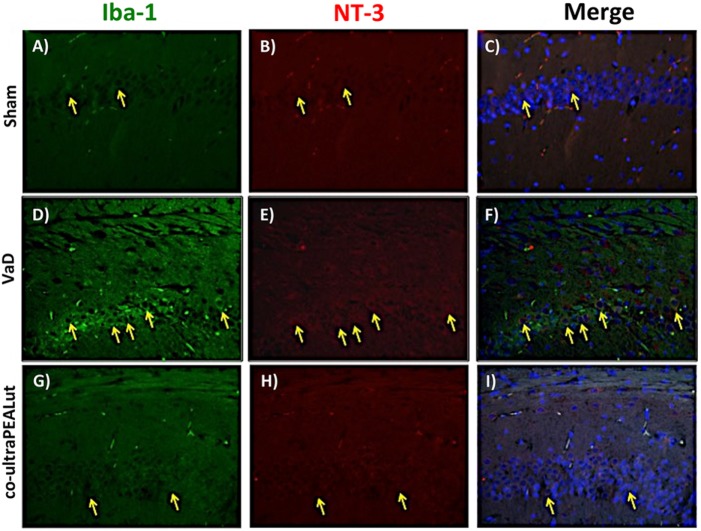
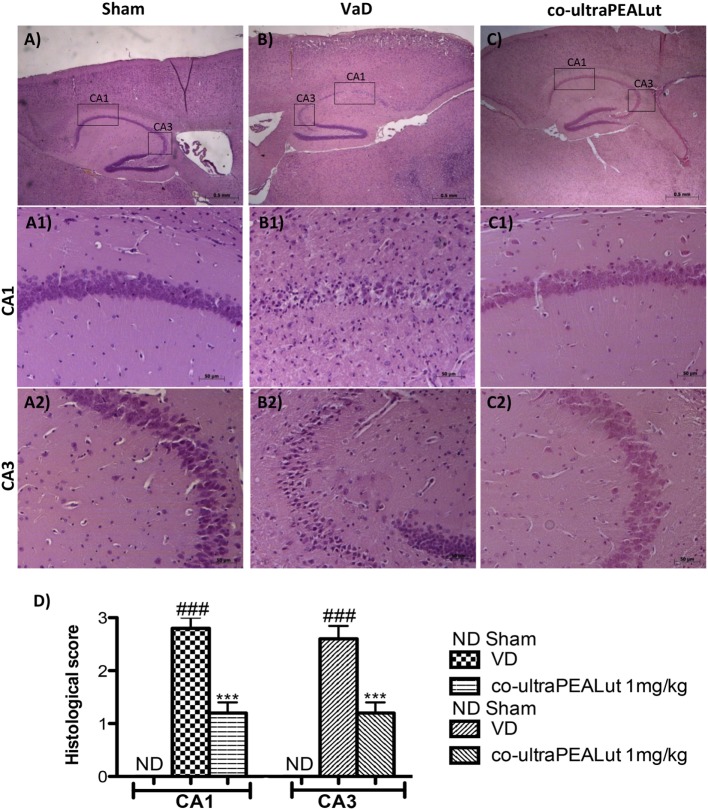
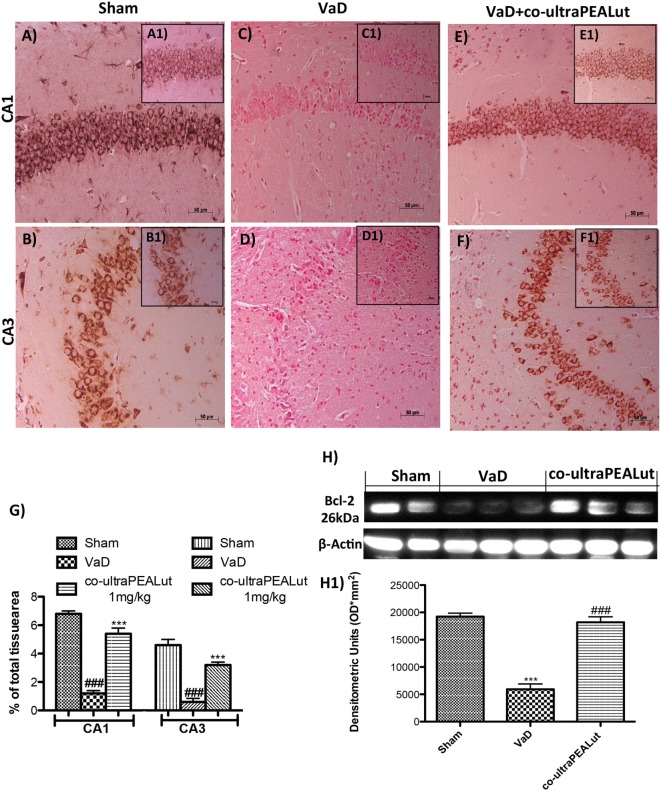
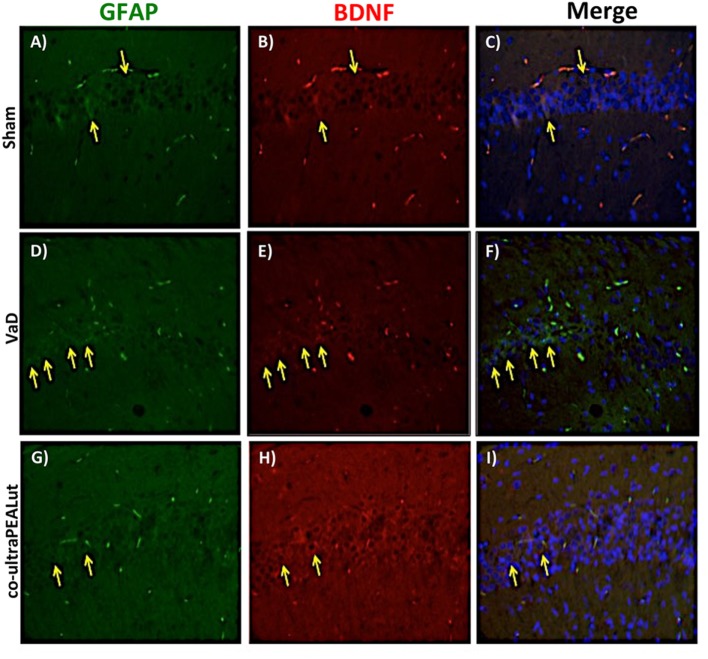
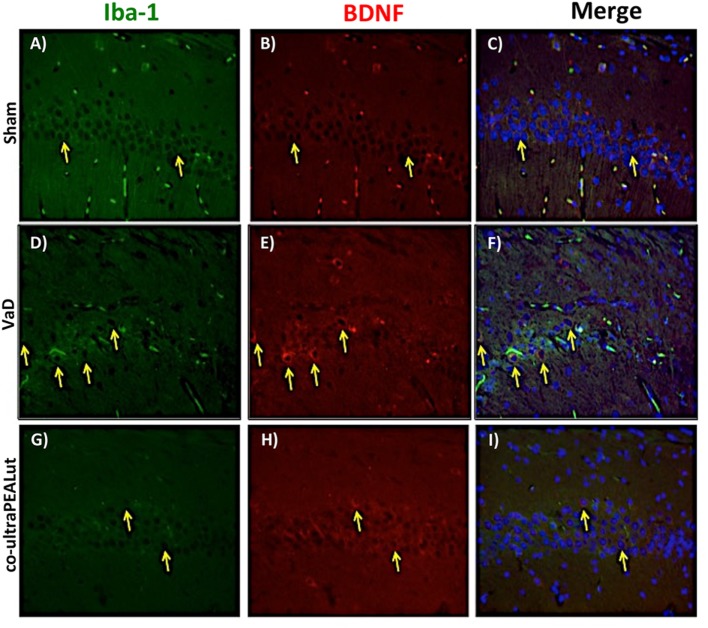
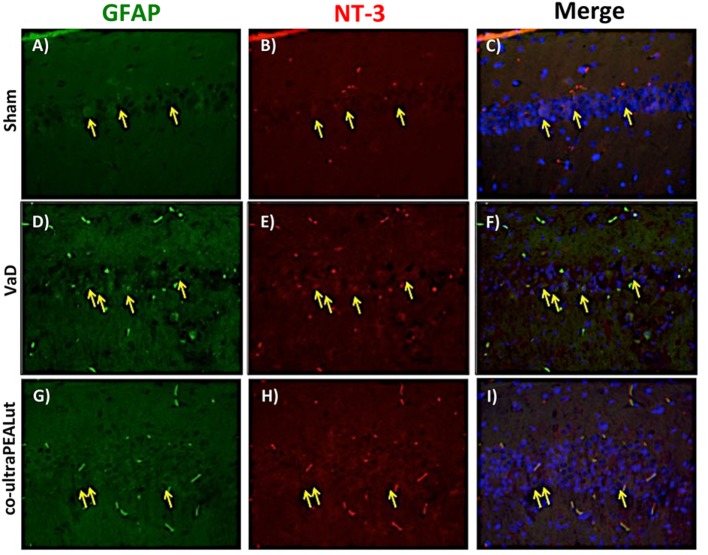
Vascular dementia (VaD), the second most common cause of cognitive impairment in the population, is a disease that results from reduction in regional cerebral blood flow and involves oxidative stress and inflammation. Co-ultramicronized PEALut (co-ultra PEALut) is a new compound with beneficial effects, which include anti-inflammatory and antioxidant properties. Recently, co-ultraPEALut has been shown to exhibit neuroprotective effects in models of Parkinson's disease, cerebral ischemia and Alzheimer's disease. However, its effects on VaD remain unknown. Therefore, the purpose of the present study was to highlight the potential neuroprotective actions of co-ultraPEALut containing -palmitoylethanolamine (PEA) and the antioxidant flavonoid luteolin (Lut) (10:1 by mass) in a mouse model of VaD induced by bilateral carotid arteries occlusion. At 24 h after VaD induction, mice were orally treated with 1 mg/kg co-ultraPEALut daily for 15 days. On the 15th day, brain tissues were processed for histological, immunohistochemical, Western blot, and immunofluorescent analysis. Our results clearly demonstrate that co-ultraPEALut improved learning, memory ability, locomotor activity, and the reciprocal social interaction. In addition, the mice subjected to VaD and treated with the co-ultraPEALut showed a reorganization of CA1 and CA3 regions of the hippocampus and restored the number of hippocampal neurons as evidenced by NeuN expression, a specific marker of neurons. Furthermore following carotid arteries ligation, mice treated with co-ultraPEALut showed a modification of proinflammatory, proapoptotic proteins and of oxidative stress as evidenced by the expression of IκB-α, NF-κB p65, Bax, Bcl-2, inducible nitric oxide synthase, and cyclooxygenase-2. In order, co-ultraPEALut treatment restored VaD-induced loss of brain-derived neurotrophic factor and neurotrophins 3 (NT-3) expression in mice. These results confirmed that the neuroprotective effects of co-ultraPEALut were associated with its anti-inflammatory and antioxidant properties.
血管性痴呆(VaD)是人群中认知障碍的第二大常见病因,是一种因局部脑血流量减少而引发的疾病,涉及氧化应激和炎症。共超微细化PEALut(co-ultra PEALut)是一种具有有益作用的新化合物,其作用包括抗炎和抗氧化特性。最近,共超微细化PEALut已被证明在帕金森病、脑缺血和阿尔茨海默病模型中具有神经保护作用。然而,其对VaD的影响仍不清楚。因此,本研究的目的是在双侧颈动脉闭塞诱导的VaD小鼠模型中,突出含棕榈酰乙醇胺(PEA)和抗氧化黄酮类木犀草素(Lut)(质量比为10:1)的共超微细化PEALut的潜在神经保护作用。在诱导VaD后24小时,小鼠每天口服1mg/kg共超微细化PEALut,持续15天。在第15天,对脑组织进行组织学、免疫组织化学、蛋白质印迹和免疫荧光分析。我们的结果清楚地表明,共超微细化PEALut改善了学习、记忆能力、运动活动以及相互社交互动。此外,接受VaD并接受共超微细化PEALut治疗的小鼠海马体CA1和CA3区域出现了重组,并恢复了海马神经元数量,这通过神经元特异性标志物NeuN的表达得以证明。此外,在颈动脉结扎后,接受共超微细化PEALut治疗的小鼠促炎、促凋亡蛋白和氧化应激发生了改变,这通过IκB-α、NF-κB p65、Bax、Bcl-2、诱导型一氧化氮合酶和环氧化酶-2的表达得以证明。依次来看,共超微细化PEALut治疗恢复了VaD诱导的小鼠脑源性神经营养因子和神经营养因子3(NT-3)表达的丧失。这些结果证实,共超微细化PEALut的神经保护作用与其抗炎和抗氧化特性有关。