Department of Biophysics, Graduate School of Science, Kyoto University, Sakyo-ku, Kyoto, 606-8502, Japan.
Sci Rep. 2017 Jun 21;7(1):3944. doi: 10.1038/s41598-017-04273-9.
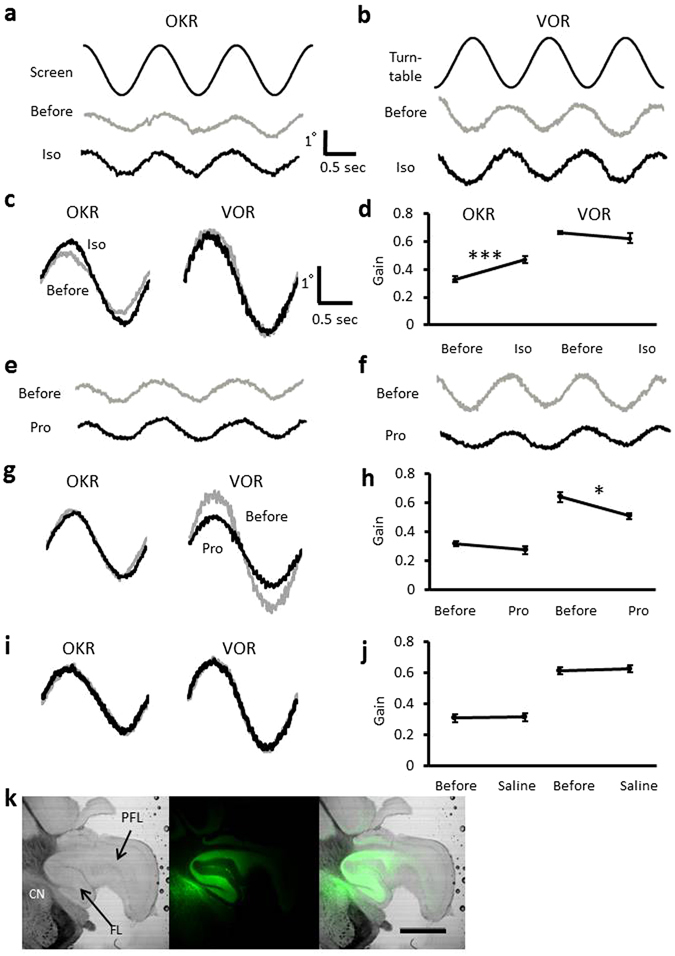
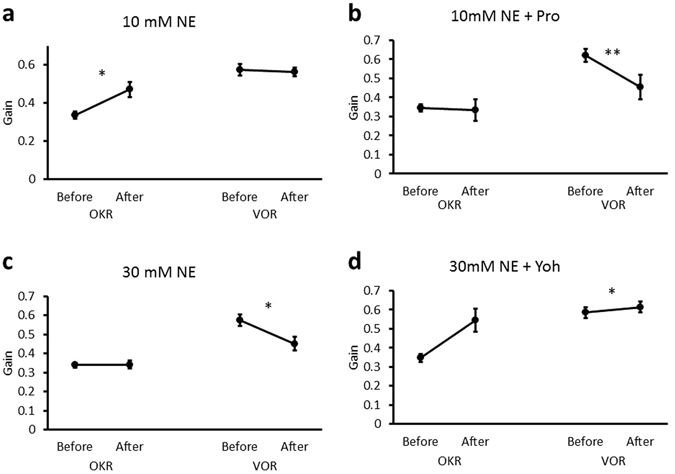
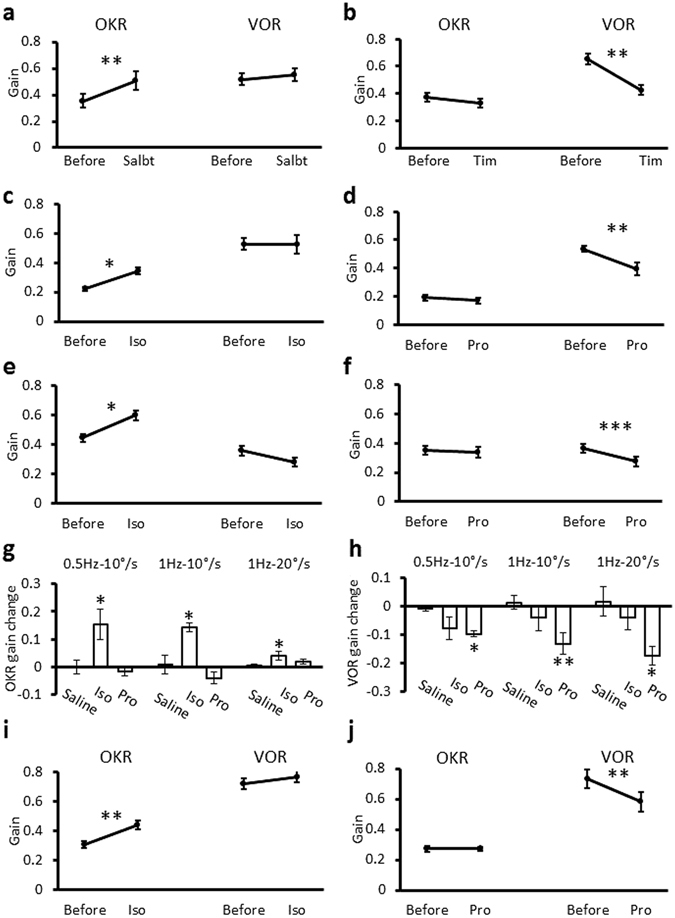
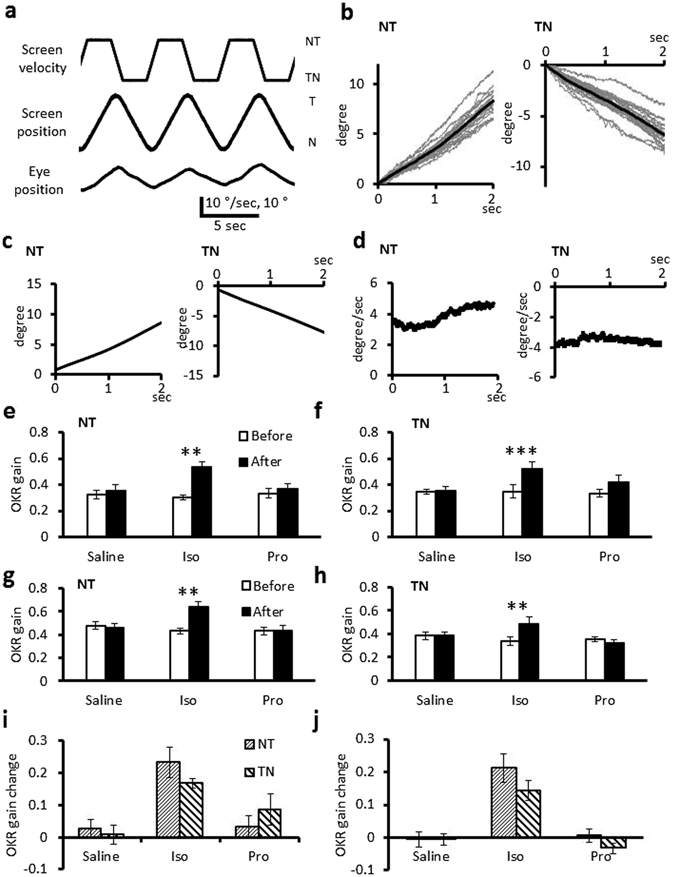
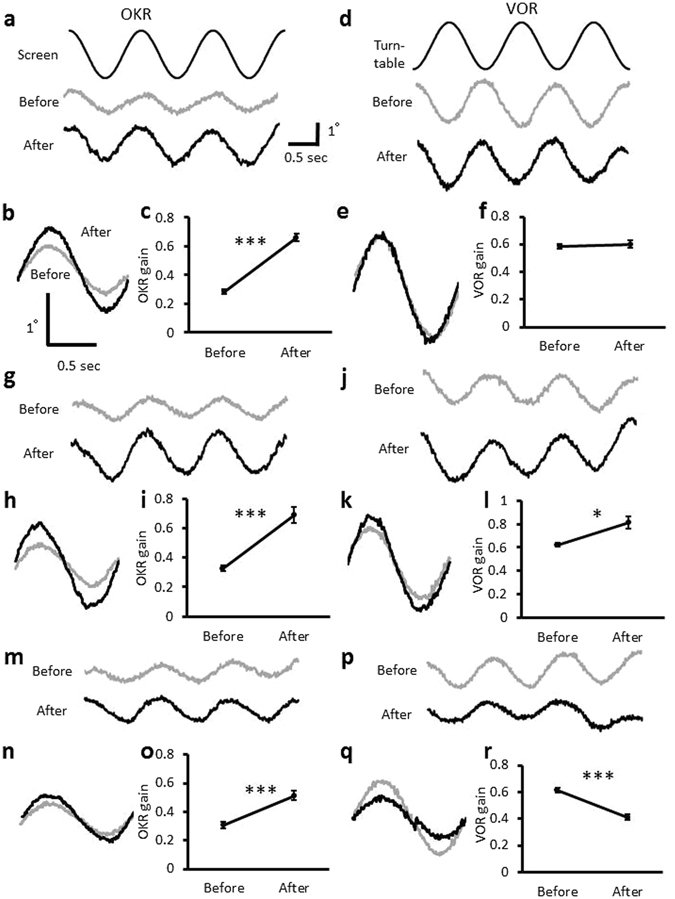
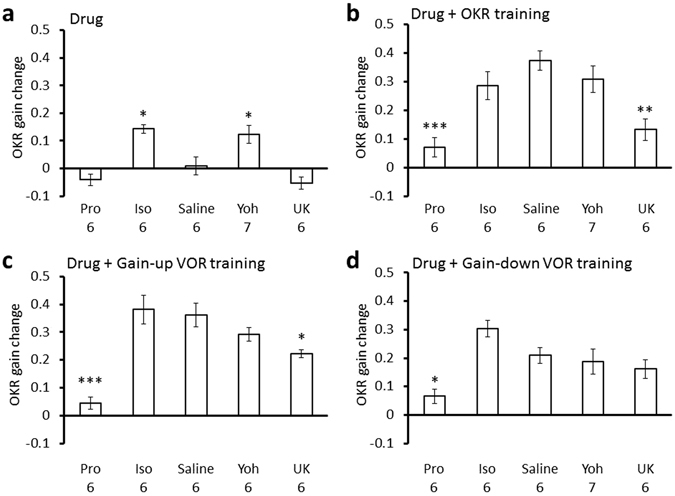
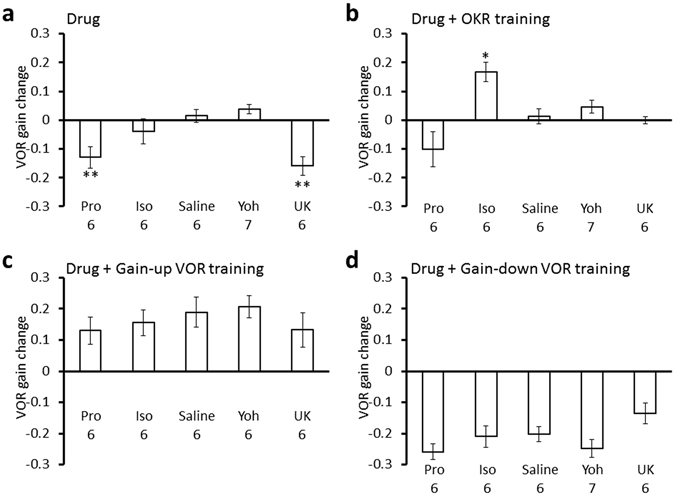
Norepinephrine modulates synaptic plasticity in various brain regions and is implicated in memory formation, consolidation and retrieval. The cerebellum is involved in motor learning, and adaptations of the vestibulo-ocular reflex (VOR) and optokinetic response (OKR) have been studied as models of cerebellum-dependent motor learning. Previous studies showed the involvement of adrenergic systems in the regulation of VOR, OKR and cerebellar synaptic functions. Here, we show differential contributions of β- and α2-adrenergic receptors in the mouse cerebellar flocculus to VOR and OKR control. Effects of application of β- or α2-adrenergic agonist or antagonist into the flocculus suggest that the β-adrenergic receptor activity maintains the VOR gain at high levels and contributes to adaptation of OKR, and that α2-adrenergic receptor counteracts the β-receptor activity in VOR and OKR control. We also examined effects of norepinephrine application, and the results suggest that norepinephrine regulates VOR and OKR through β-adrenergic receptor at low concentrations and through α2-receptor at high concentrations.
去甲肾上腺素调节各种脑区的突触可塑性,与记忆的形成、巩固和提取有关。小脑参与运动学习,并且已经研究了前庭眼反射 (VOR) 和光跟踪反应 (OKR) 的适应作为小脑依赖运动学习的模型。先前的研究表明,儿茶酚胺系统参与了 VOR、OKR 和小脑突触功能的调节。在这里,我们展示了 β-和 α2-肾上腺素能受体在小鼠小脑绒球小叶中对 VOR 和 OKR 控制的不同贡献。将 β-或 α2-肾上腺素能激动剂或拮抗剂应用于绒球小叶表明,β-肾上腺素能受体活性将 VOR 增益维持在较高水平,并有助于 OKR 的适应,而 α2-肾上腺素能受体在 VOR 和 OKR 控制中拮抗 β-受体活性。我们还检查了去甲肾上腺素应用的效果,结果表明去甲肾上腺素通过低浓度的 β-受体和高浓度的 α2-受体调节 VOR 和 OKR。