Institute of Marine Sciences, University of North Carolina at Chapel Hill, Morehead City, NC, 28557, USA.
Microb Biotechnol. 2017 Sep;10(5):1106-1110. doi: 10.1111/1751-7915.12725. Epub 2017 Jun 21.
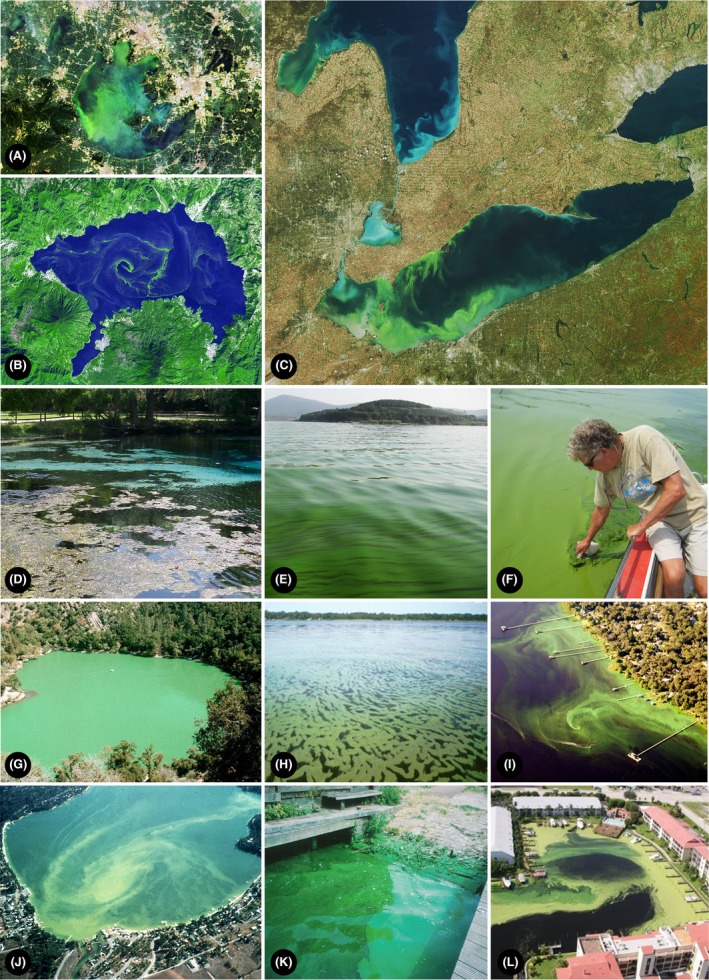
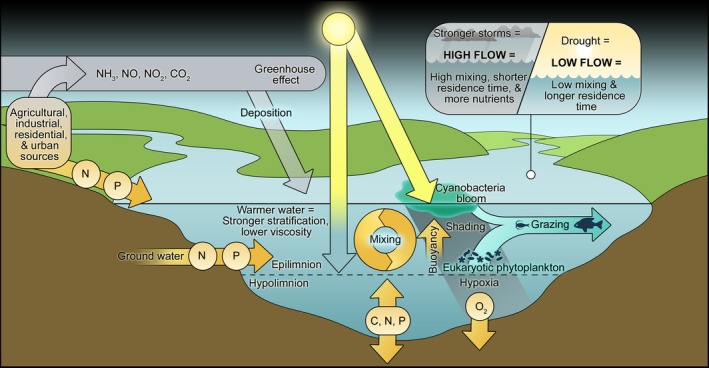
Cyanobacteria's long evolutionary history has enabled them to adapt to geochemical and climatic changes, and more recent human and climatic modifications of aquatic ecosystems, including nutrient over-enrichment, hydrologic modifications, and global warming. Harmful (toxic, hypoxia-generating, food web altering) cyanobacterial bloom (CyanoHAB) genera are controlled by the synergistic effects of nutrient (nitrogen and phosphorus) supplies, light, temperature, water residence/flushing times, and biotic interactions. Accordingly, mitigation strategies are focused on manipulating these dynamic factors. Strategies based on physical, chemical (algaecide) and biological manipulations can be effective in reducing CyanoHABs. However, these strategies should invariably be accompanied by nutrient (both nitrogen and phosphorus in most cases) input reductions to ensure long-term success and sustainability. While the applicability and feasibility of various controls and management approaches is focused on freshwater ecosystems, they will also be applicable to estuarine and coastal ecosystems. In order to ensure long-term control of CyanoHABs, these strategies should be adaptive to climatic variability and change, because nutrient-CyanoHAB thresholds will likely be altered in a climatically more-extreme world.
蓝藻漫长的进化历史使它们能够适应地球化学和气候变化,以及最近人类和气候对水生生态系统的改变,包括营养物质过度富集、水文条件改变和全球变暖。有害(有毒、产生缺氧、改变食物网)的蓝藻水华(CyanoHAB)属受到营养物质(氮和磷)供应、光照、温度、水停留/冲洗时间和生物相互作用的协同效应控制。因此,缓解策略侧重于操纵这些动态因素。基于物理、化学(杀藻剂)和生物操纵的策略可以有效地减少 CyanoHAB。然而,这些策略应该始终伴随着减少营养物质(大多数情况下是氮和磷)的输入,以确保长期的成功和可持续性。虽然各种控制和管理方法的适用性和可行性主要集中在淡水生态系统,但它们也将适用于河口和沿海生态系统。为了确保对 CyanoHAB 的长期控制,这些策略应该适应气候变化的可变性,因为在气候更加极端的世界中,营养物质-CyanoHAB 阈值可能会发生改变。