Yang Yoolhee, Kim Hee Jung, Woo Kyong-Je, Cho Daeho, Bang Sa Ik
Department of Plastic Surgery, Samsung Medical Center, Sungkyunkwan University School of Medicine, Seoul, Korea.
Institute of Women's Life Medical Science, Department of Obstetrics and Gynecology, Yonsei University College of Medicine, Seoul, Korea.
PLoS One. 2017 Jun 23;12(6):e0179614. doi: 10.1371/journal.pone.0179614. eCollection 2017.
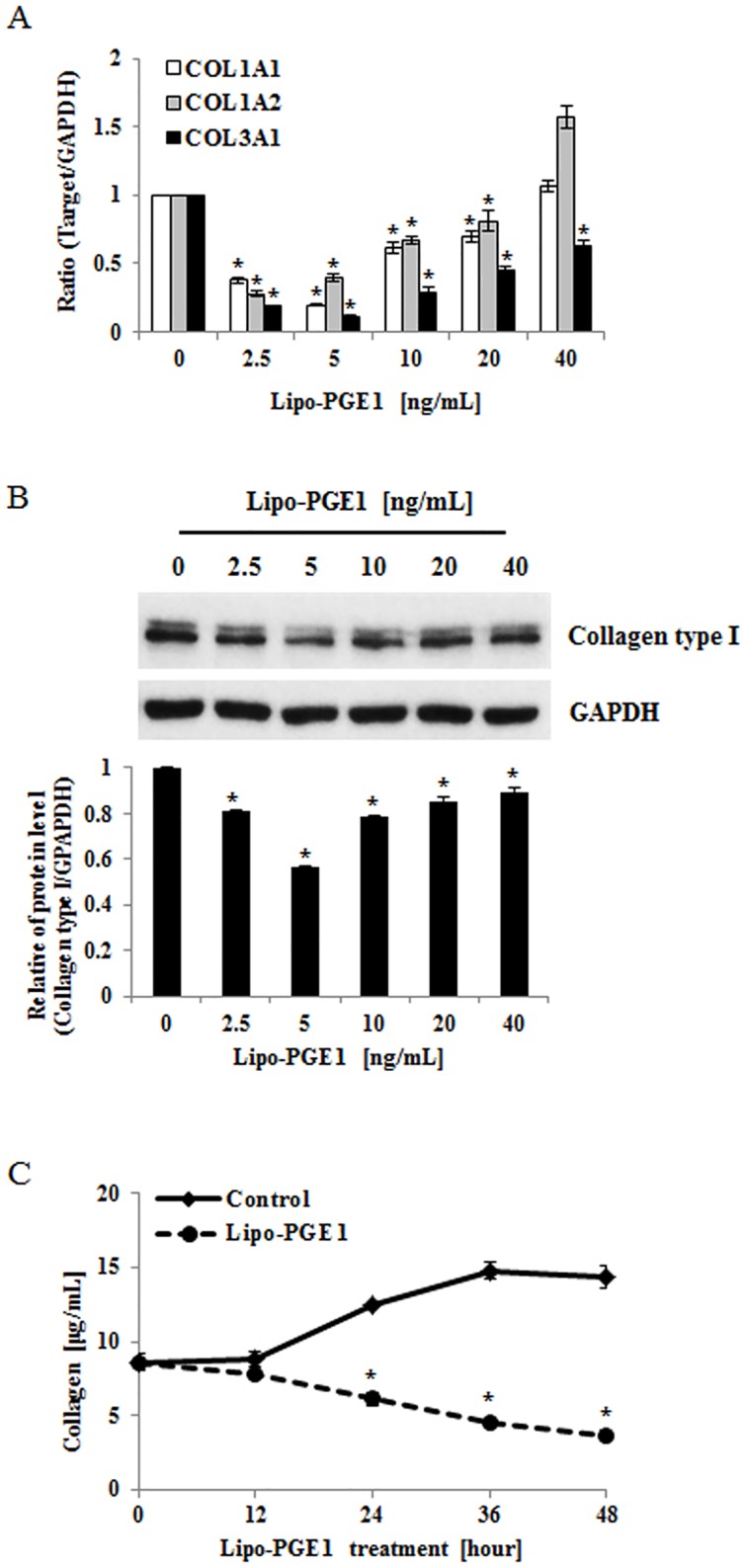
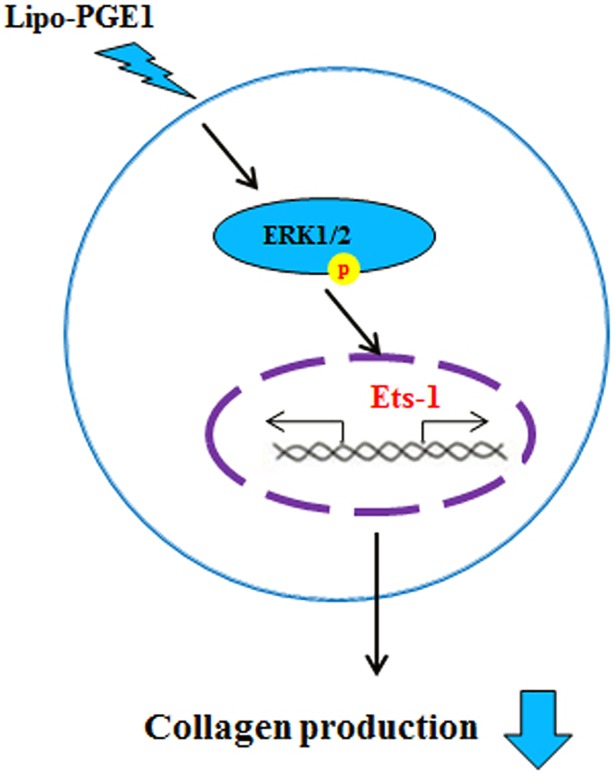
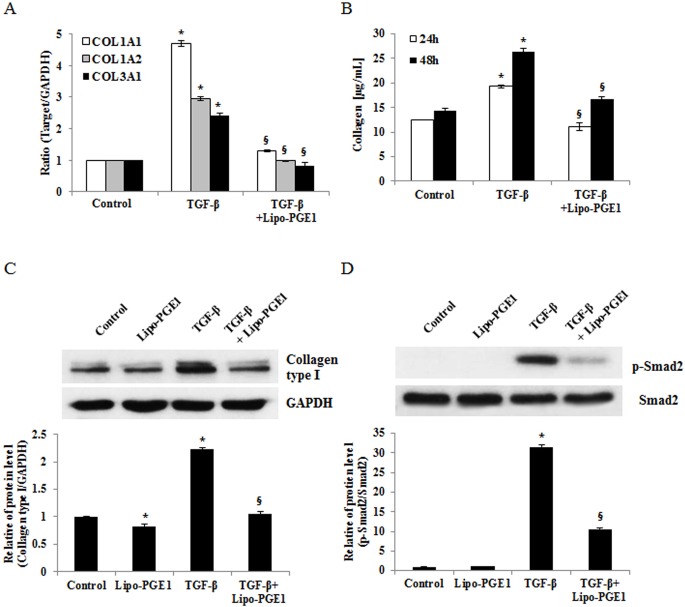
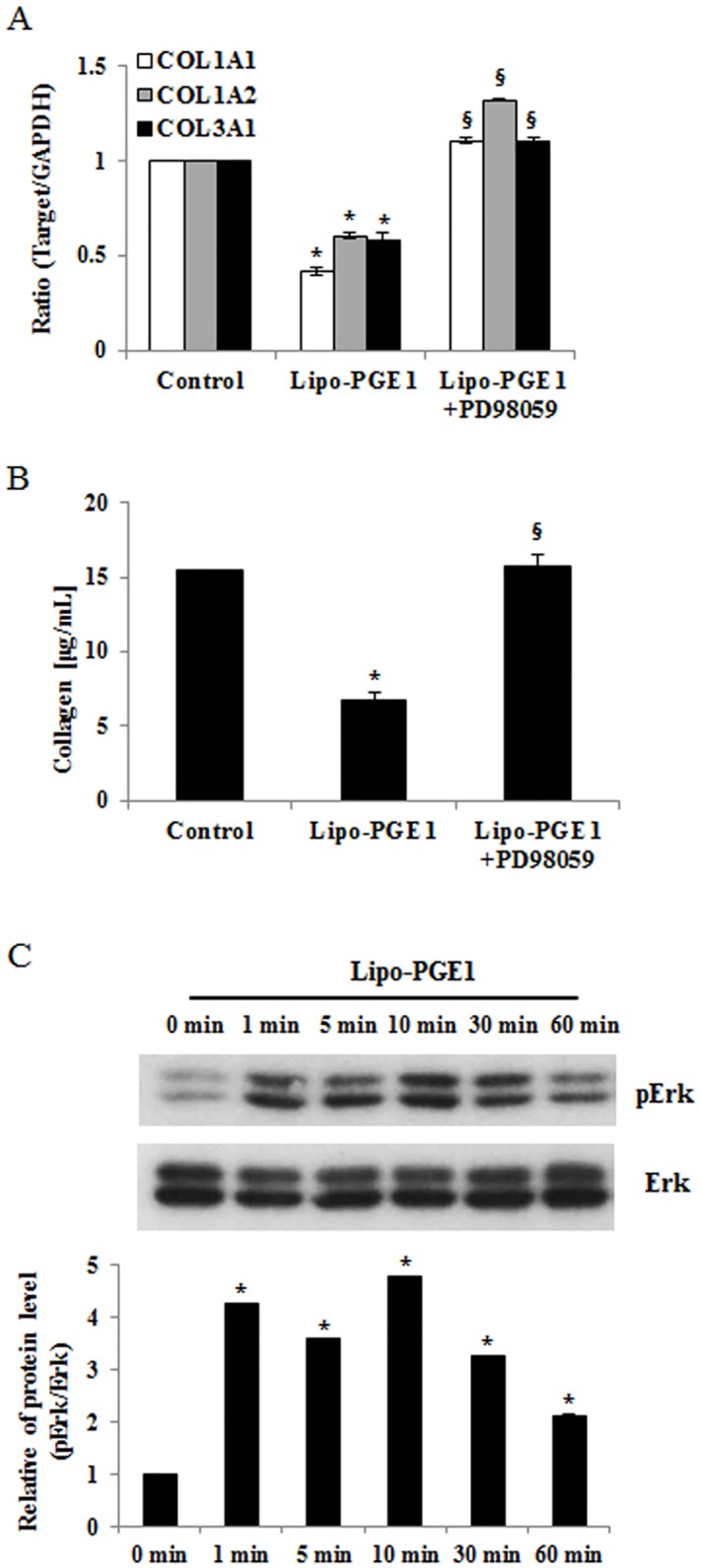
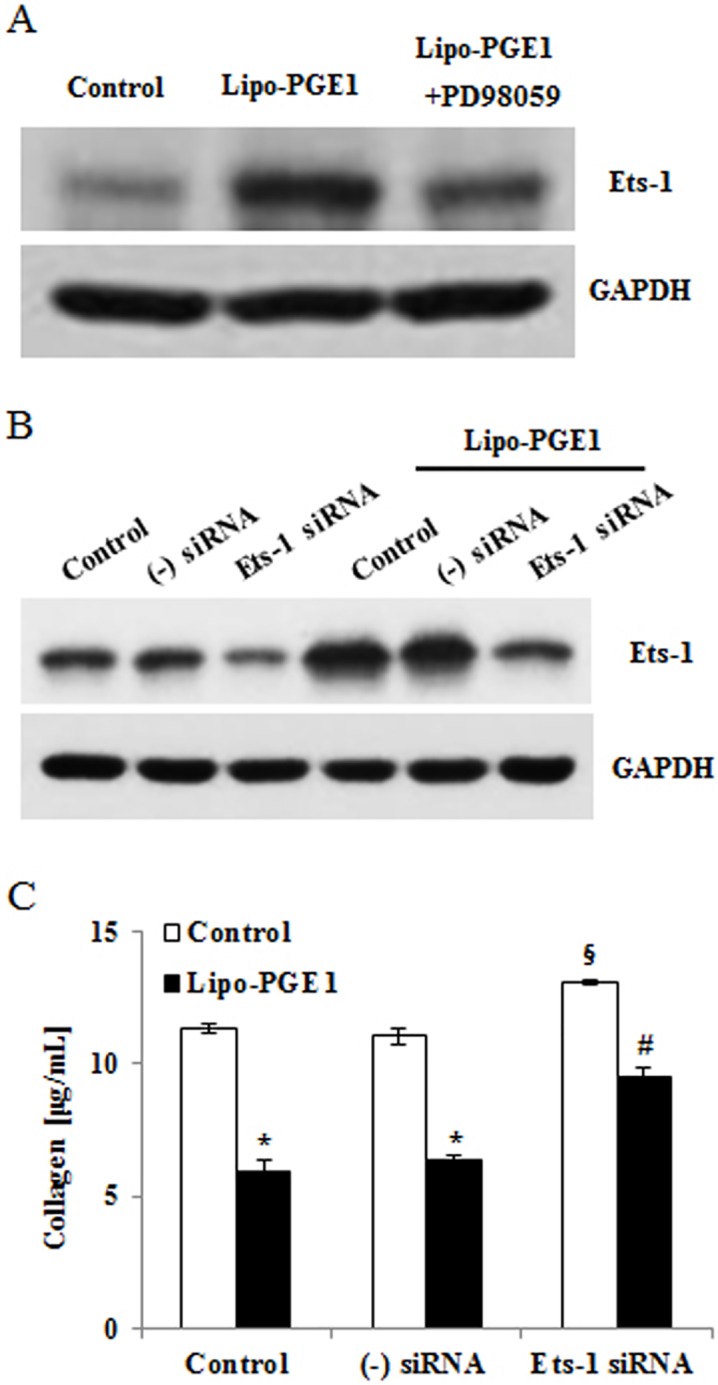
Dysregulation of collagen production contributes to various pathological processes, including tissue fibrosis as well as impaired wound healing. Lipo-prostaglandin E1 (Lipo-PGE1), a lipid microsphere-incorporated prostaglandin E1, is used as a vasodilator for the treatment of peripheral vascular diseases. Lipo-PGE1 was recently shown to enhance human dermal fibroblast (HDF) migration and in vivo wound healing. No published study has characterized the role of Lipo-PGE1 in collagen regulation in HDFs. Here, we investigated the cellular signaling mechanism by which Lipo-PGE1 regulates collagen in HDFs. Collagen production was evaluated by the Sircol collagen assay, Western blot analysis of type I collagen and real time PCR. Unexpectedly, Lipo-PGE1 decreased mRNA expression of collagen 1A1, 1A2, and 3A1. Lipo-PGE1 markedly inhibited type I collagen and total soluble collagen production. In addition, Lipo-PGE1 inhibited transforming growth factor-β-induced collagen expression via Smad2 phosphorylation. To further investigate whether extracellular signal-regulated kinase (ERK)/Ets-1 signaling, a crucial pathway in collagen regulation, is involved in Lipo-PGE1-inhibited collagen production, cells were pretreated with an ERK-specific inhibitor, PD98059, prior to the addition of Lipo-PGE1. Lipo-PGE1-inhibited collagen mRNA expression and total soluble collagen production were recovered by pretreatment with PD98059. Moreover, Lipo-PGE1 directly induced the phosphorylation of ERK. Furthermore, silencing of Ets-1 recovered Lipo-PGE1-inhibited collagen production and PD98059 blocked Lipo-PGE1-enhanced Ets-1 expression. The present study reveals an important role for Lipo-PGE1 as a negative regulator of collagen gene expression and production via ERK/Ets-1 signaling. These results suggest that Lipo-PGE1 could potentially be a therapeutic target in diseases with deregulated collagen turnover.
胶原蛋白生成失调会导致多种病理过程,包括组织纤维化以及伤口愈合受损。脂微球包裹的前列腺素E1(Lipo-PGE1)用作血管扩张剂,用于治疗外周血管疾病。最近研究表明,Lipo-PGE1可促进人皮肤成纤维细胞(HDF)迁移及体内伤口愈合。目前尚无已发表的研究阐述Lipo-PGE1在HDFs胶原蛋白调节中的作用。在此,我们研究了Lipo-PGE1调节HDFs中胶原蛋白的细胞信号传导机制。通过Sircol胶原蛋白测定法、I型胶原蛋白的蛋白质印迹分析及实时PCR评估胶原蛋白生成。出乎意料的是,Lipo-PGE1降低了胶原蛋白1A1、1A2和3A1的mRNA表达。Lipo-PGE1显著抑制I型胶原蛋白和总可溶性胶原蛋白的生成。此外,Lipo-PGE1通过Smad2磷酸化抑制转化生长因子-β诱导的胶原蛋白表达。为进一步研究细胞外信号调节激酶(ERK)/Ets-1信号传导(胶原蛋白调节中的关键途径)是否参与Lipo-PGE1抑制的胶原蛋白生成,在添加Lipo-PGE1之前,先用ERK特异性抑制剂PD98059预处理细胞。用PD98059预处理可恢复Lipo-PGE1抑制的胶原蛋白mRNA表达和总可溶性胶原蛋白生成。此外,Lipo-PGE1直接诱导ERK磷酸化。此外,沉默Ets-1可恢复Lipo-PGE1抑制的胶原蛋白生成,而PD98059可阻断Lipo-PGE1增强的Ets-1表达。本研究揭示了Lipo-PGE1作为通过ERK/Ets-1信号传导的胶原蛋白基因表达和生成的负调节因子的重要作用。这些结果表明,Lipo-PGE1可能是胶原蛋白周转失调疾病的潜在治疗靶点。