Dutta Siddhartha, Cruz Jeffrey A, Imran Saif M, Chen Jin, Kramer David M, Osteryoung Katherine W
Department of Plant Biology, Michigan State University, East Lansing, MI 48824, USA.
MSU-DOE-Plant Research Laboratory, Michigan State University, East Lansing, MI 48824, USA.
J Exp Bot. 2017 Jun 15;68(13):3541-3555. doi: 10.1093/jxb/erx203.
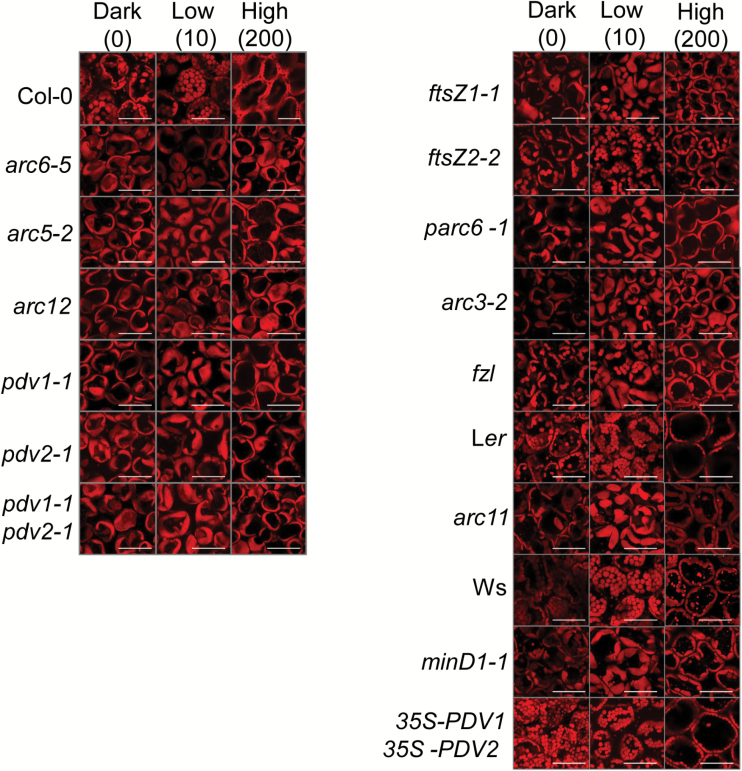
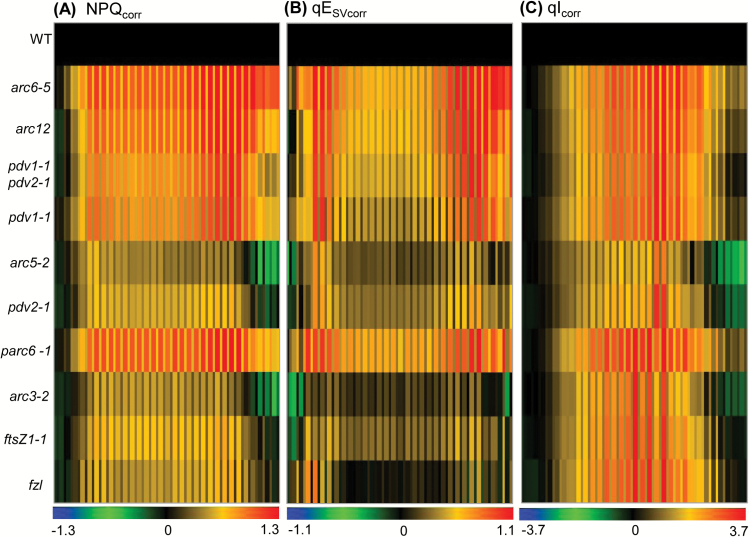
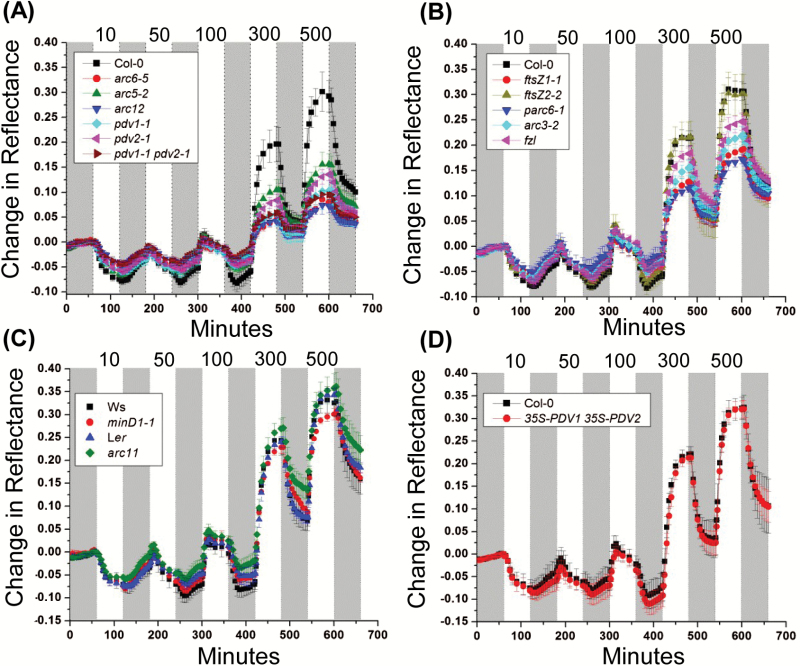
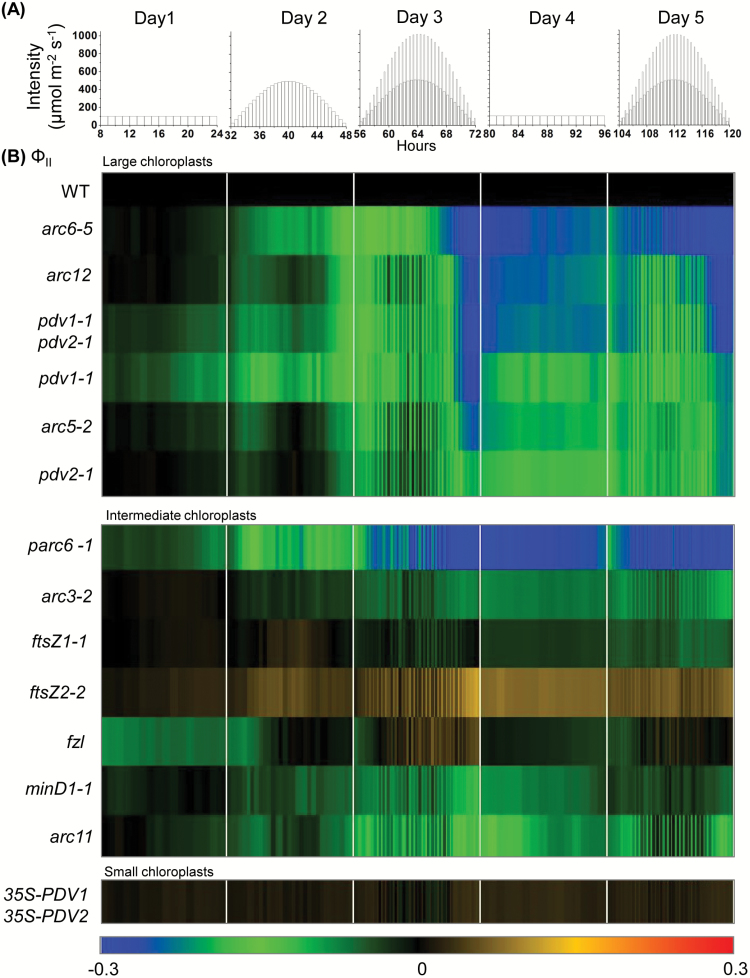
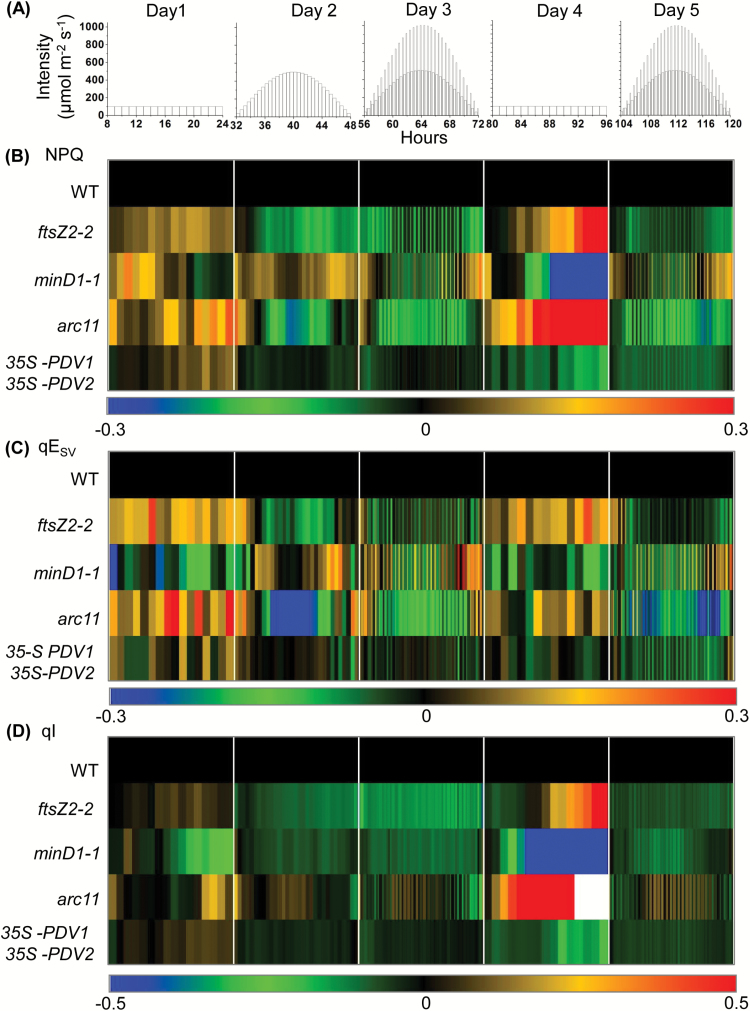
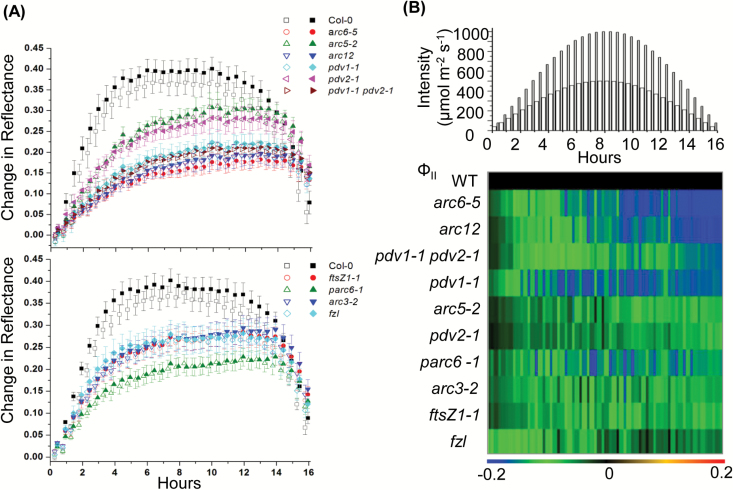
Chloroplasts divide to maintain consistent size, shape, and number in leaf mesophyll cells. Altered expression of chloroplast division proteins in Arabidopsis results in abnormal chloroplast morphology. To better understand the influence of chloroplast morphology on chloroplast movement and photosynthesis, we compared the chloroplast photorelocation and photosynthetic responses of a series of Arabidopsis chloroplast division mutants with a wide variety of chloroplast phenotypes. Chloroplast movement was monitored by red light reflectance imaging of whole plants under increasing intensities of white light. The accumulation and avoidance responses were differentially affected in different mutants and depended on both chloroplast number and morphological heterogeneity. Chlorophyll fluorescence measurements during 5 d light experiments demonstrated that mutants with large-chloroplast phenotypes generally exhibited greater PSII photodamage than those with intermediate phenotypes. No abnormalities in photorelocation efficiency or photosynthetic capacity were observed in plants with small-chloroplast phenotypes. Simultaneous measurement of chloroplast movement and chlorophyll fluorescence indicated that the energy-dependent (qE) and long-lived components of non-photochemical quenching that reflect photoinhibition are affected differentially in different division mutants exposed to high or fluctuating light intensities. We conclude that chloroplast division mutants with abnormal chloroplast morphologies differ markedly from the wild type in their light adaptation capabilities, which may decrease their relative fitness in nature.
叶绿体进行分裂以维持叶片叶肉细胞中大小、形状和数量的一致。拟南芥中叶绿体分裂蛋白表达的改变会导致叶绿体形态异常。为了更好地理解叶绿体形态对叶绿体运动和光合作用的影响,我们比较了一系列具有多种叶绿体表型的拟南芥叶绿体分裂突变体的叶绿体光定位和光合反应。通过在逐渐增强的白光强度下对整株植物进行红光反射成像来监测叶绿体运动。不同突变体中叶绿体的积累和回避反应受到不同程度的影响,并且取决于叶绿体数量和形态异质性。在为期5天的光照实验中进行的叶绿素荧光测量表明,具有大叶绿体表型的突变体通常比具有中等表型的突变体表现出更大的PSII光损伤。在具有小叶绿体表型的植物中未观察到光定位效率或光合能力的异常。同时测量叶绿体运动和叶绿素荧光表明,在暴露于高光或波动光强度的不同分裂突变体中,反映光抑制的能量依赖性(qE)和非光化学猝灭的长寿命成分受到不同程度的影响。我们得出结论,具有异常叶绿体形态的叶绿体分裂突变体在光适应能力方面与野生型有明显差异,这可能会降低它们在自然环境中的相对适应性。