Department of Biochemistry and Food Chemistry, Plant Physiology and Molecular Biology, University of Turku, FI-20014 Turku, Finland.
BMC Plant Biol. 2010 Mar 7;10:43. doi: 10.1186/1471-2229-10-43.
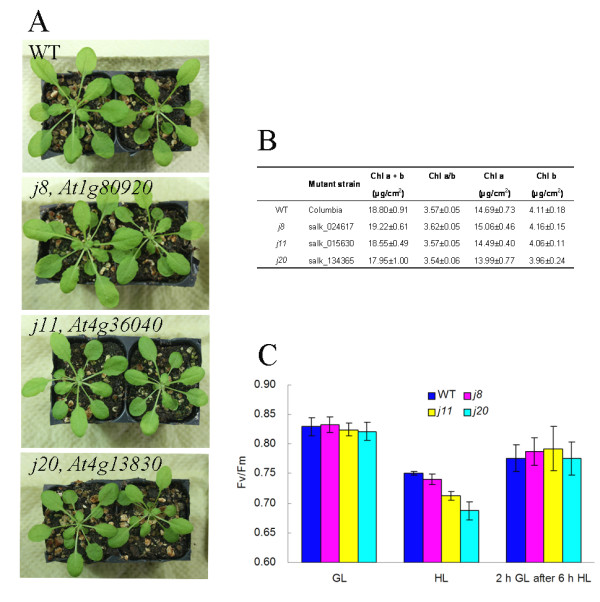
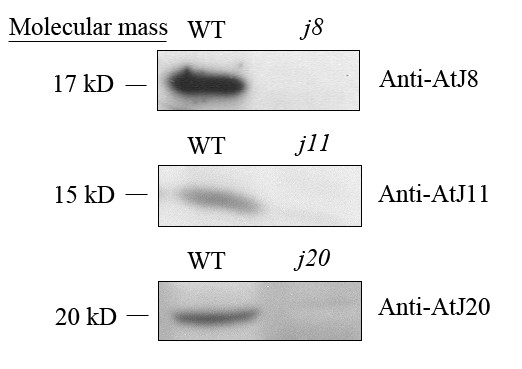
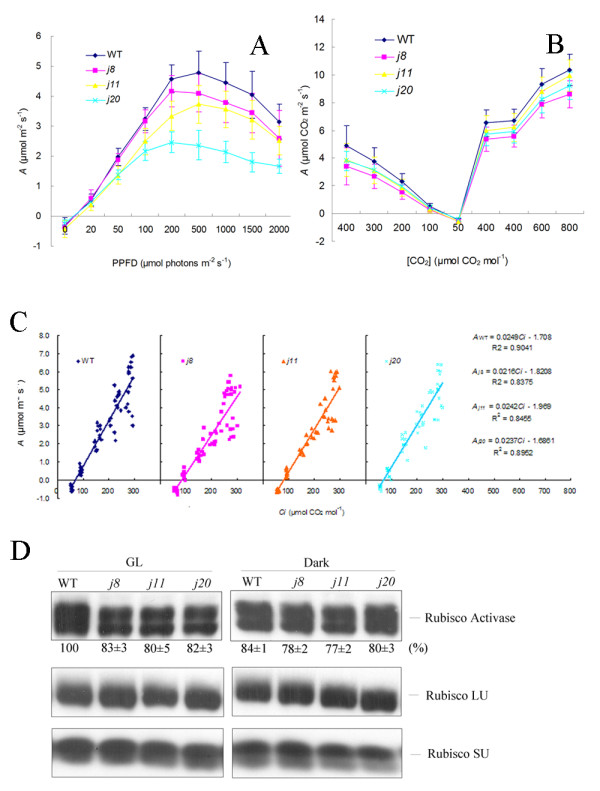
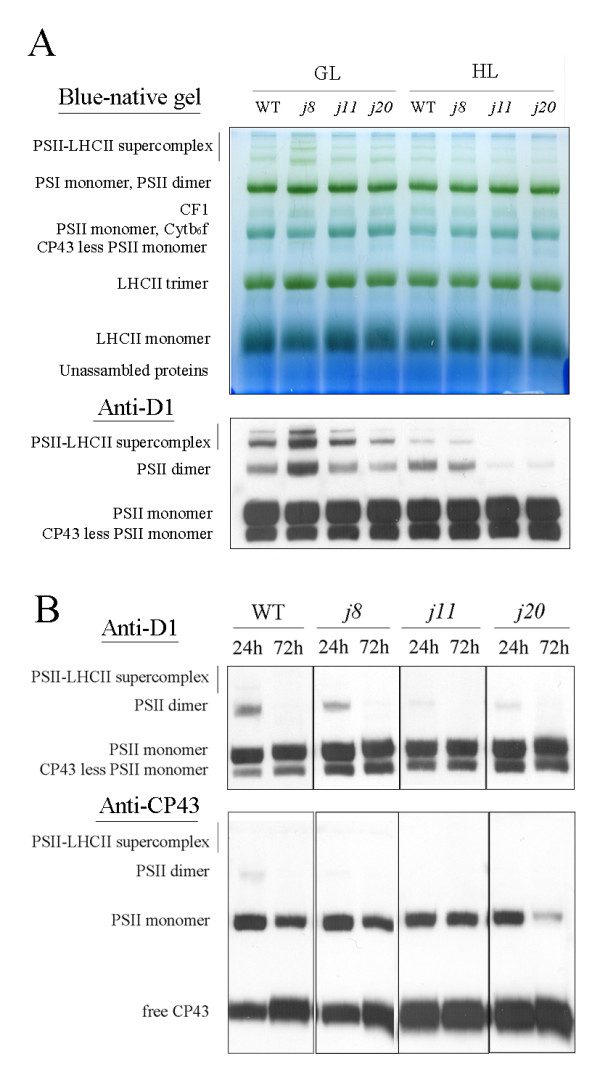
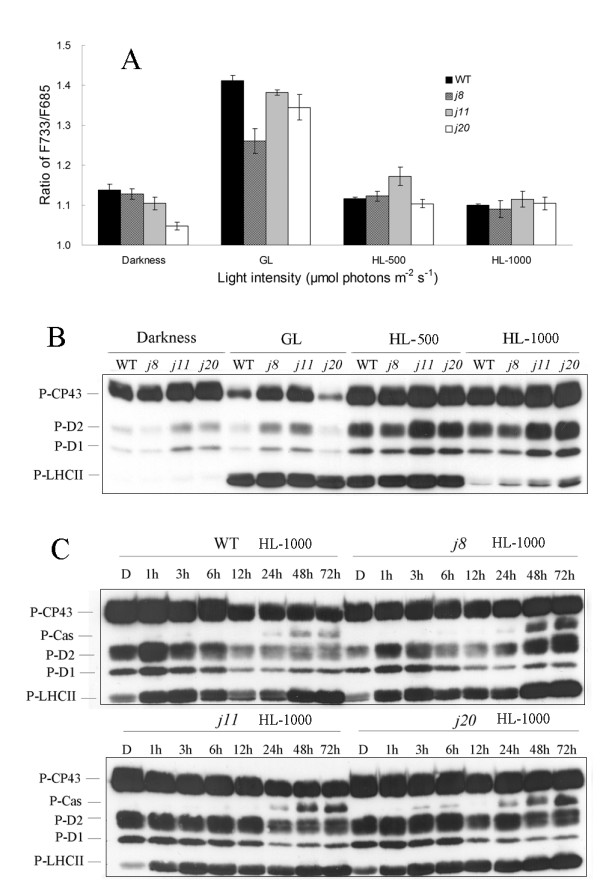
DnaJ proteins participate in many metabolic pathways through dynamic interactions with various components of these processes. The role of three small chloroplast-targeted DnaJ proteins, AtJ8 (At1 g80920), AtJ11 (At4 g36040) and AtJ20 (At4 g13830), was investigated here using knock-out mutants of Arabidopsis thaliana. Photochemical efficiency, capacity of CO2 assimilation, stabilization of Photosystem (PS) II dimers and supercomplexes under high light illumination, energy distribution between PSI and PSII and phosphorylation of PSII-LHCII proteins, global gene expression profiles and oxidative stress responses of these DnaJ mutants were analyzed.
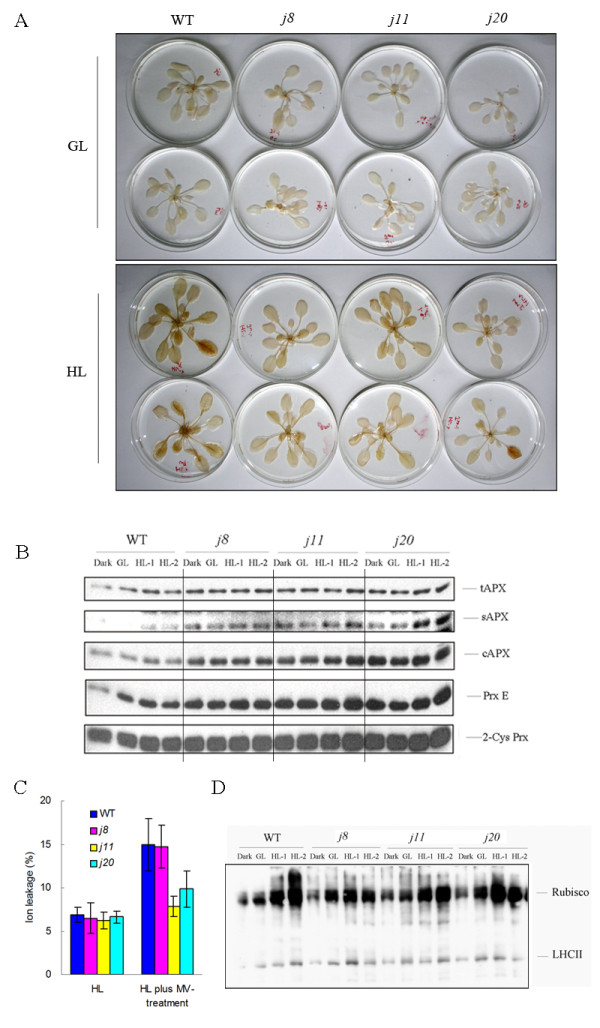
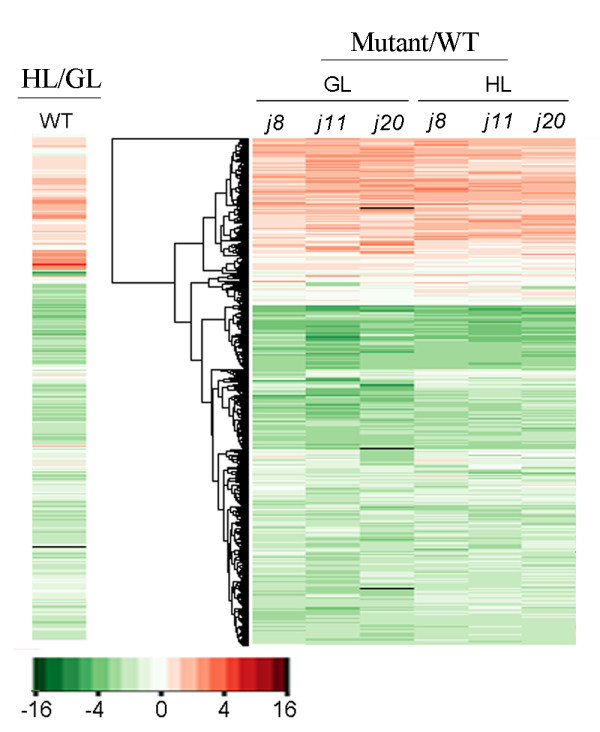
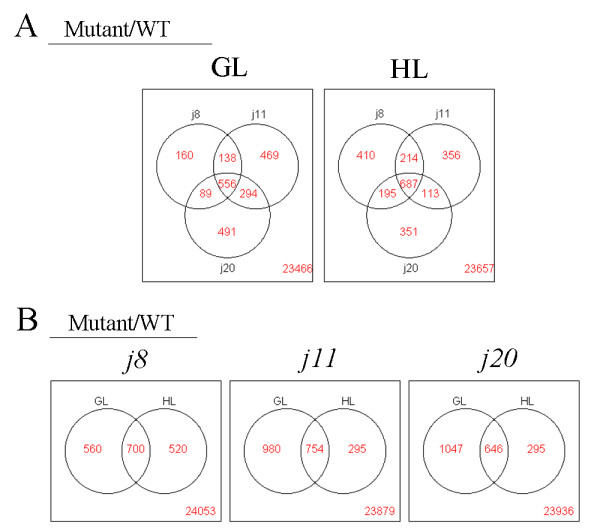
Knockout of one of these proteins caused a series of events including a decrease in photosynthetic efficiency, destabilization of PSII complexes and loss of control for balancing the redox reactions in chloroplasts. Data obtained with DNA microarray analysis demonstrated that the lack of one of these DnaJ proteins triggers a global stress response and therefore confers the plants greater tolerance to oxidative stress induced by high light or methyl viologen treatments. Expression of a set of genes encoding enzymes that detoxify reactive oxygen species (ROS) as well as a number of stress-related transcription factors behaved in the mutants at growth light similarly to that when wild-type (WT) plants were transferred to high light. Also a set of genes related to redox regulation were upregulated in the mutants. On the other hand, although the three DnaJ proteins reside in chloroplasts, the expression of most genes encoding thylakoid membrane proteins was not changed in the mutants.
It is proposed that the tolerance of the DnaJ protein knockout plants to oxidative stress occurs at the expense of the flexibility of photosynthetic reactions. Despite the fact that the effects of the individual protein knockout on the response of plants to high light treatment are quite similar, it is conceivable that both specific- and cross-talk functions exist between the three small chloroplast-targeted DnaJ proteins, AtJ8, AtJ11 and AtJ20.
DnaJ 蛋白通过与这些过程的各种成分的动态相互作用,参与许多代谢途径。本文研究了三种小的质体靶向 DnaJ 蛋白,AtJ8(At1g80920)、AtJ11(At4g36040)和 AtJ20(At4g13830),在拟南芥突变体中的作用。通过对拟南芥突变体的分析,研究了这些 DnaJ 突变体的光化学效率、CO2 同化能力、高光照射下 PSII 二聚体和超复合物的稳定性、PSI 和 PSII 之间的能量分布以及 PSII-LHCII 蛋白的磷酸化、全局基因表达谱和氧化应激反应。
这些蛋白之一的敲除导致一系列事件,包括光合效率下降、PSII 复合物不稳定以及失去对叶绿体中氧化还原反应的控制。DNA 微阵列分析获得的数据表明,这些 DnaJ 蛋白之一的缺失会引发全局应激反应,从而使植物对高光或甲基紫精处理引起的氧化应激具有更高的耐受性。在生长光下,突变体中一组编码解毒活性氧(ROS)的酶的基因以及许多与应激相关的转录因子的表达与野生型(WT)植物转移到高光时光下的表达相似。此外,在突变体中上调了一组与氧化还原调节相关的基因。另一方面,尽管三种 DnaJ 蛋白都位于叶绿体中,但突变体中大多数编码类囊体膜蛋白的基因表达没有改变。
提出 DnaJ 蛋白敲除植物对氧化应激的耐受性是以光合作用反应的灵活性为代价的。尽管单个蛋白敲除对植物高光处理响应的影响非常相似,但可以想象,三种小的质体靶向 DnaJ 蛋白 AtJ8、AtJ11 和 AtJ20 之间存在特异性和交叉对话功能。