Cheng Han, Schafer Adam, Soloveva Veronica, Gharaibeh Dima, Kenny Tara, Retterer Cary, Zamani Rouzbeh, Bavari Sina, Peet Norton P, Rong Lijun
Department of Microbiology and Immunology, College of Medicine, University of Illinois at Chicago, Chicago, IL, 60612, USA.
Department of Microbiology and Immunology, College of Medicine, University of Illinois at Chicago, Chicago, IL, 60612, USA.
Antiviral Res. 2017 Sep;145:24-32. doi: 10.1016/j.antiviral.2017.06.015. Epub 2017 Jun 20.
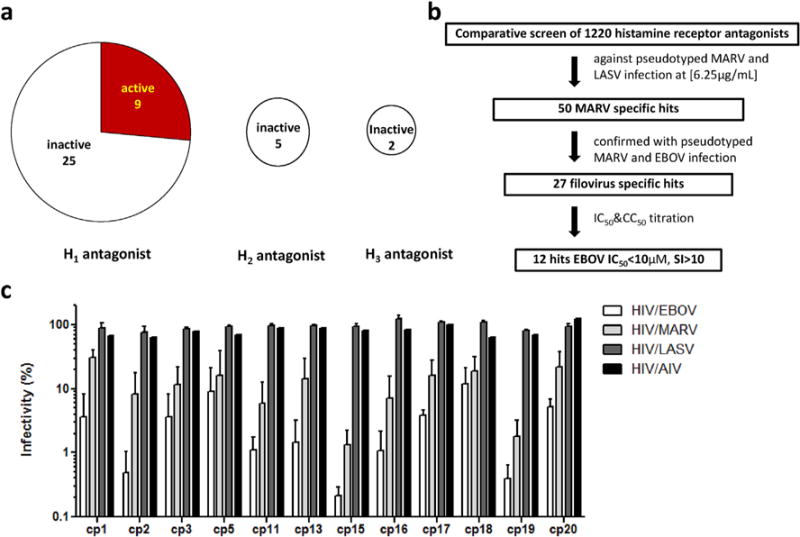
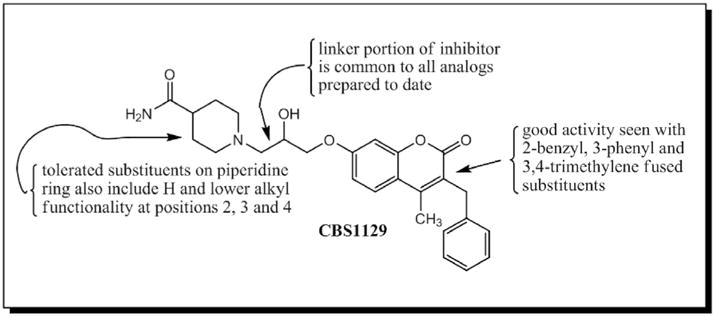
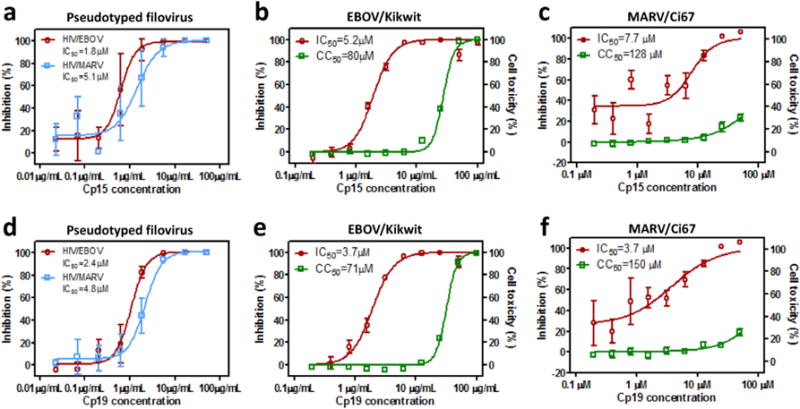
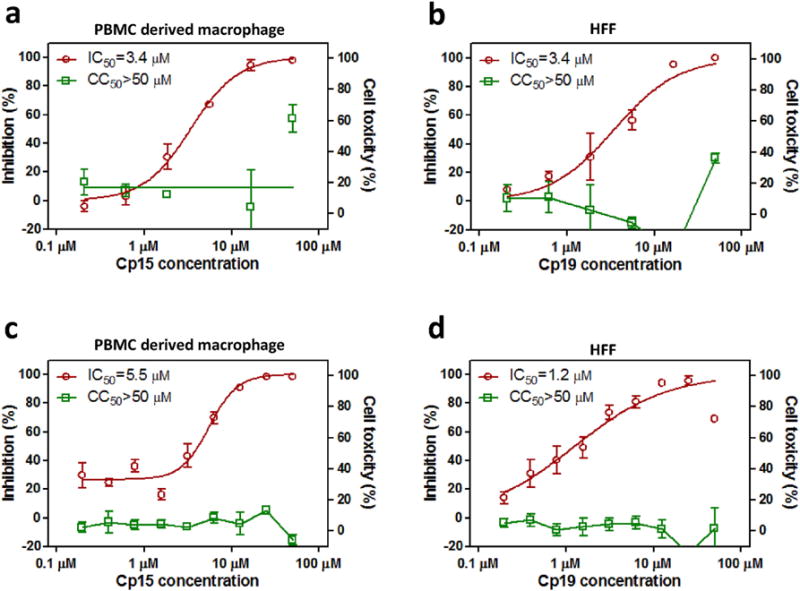
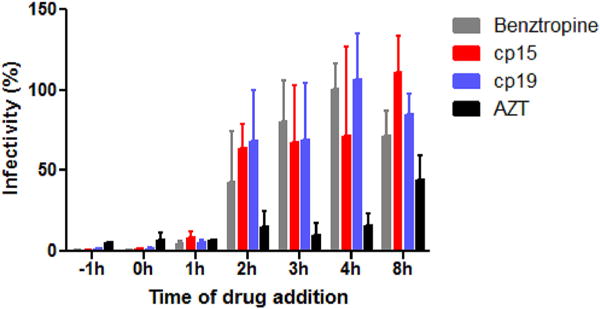
Filoviruses, consisting of Ebola virus, Marburg virus and Cuevavirus, cause severe hemorrhagic fevers in humans with high mortality rates up to 90%. Currently, there is no approved vaccine or therapy available for the prevention and treatment of filovirus infection in humans. The recent 2013-2015 West African Ebola epidemic underscores the urgency to develop antiviral therapeutics against these infectious diseases. Our previous study showed that GPCR antagonists, particularly histamine receptor antagonists (antihistamines) inhibit Ebola and Marburg virus entry. In this study, we screened a library of 1220 small molecules with predicted antihistamine activity, identified multiple compounds with potent inhibitory activity against entry of both Ebola and Marburg viruses in human cancer cell lines, and confirmed their anti-Ebola activity in human primary cells. These small molecules target a late-stage of Ebola virus entry. Further structure-activity relationship studies around one compound (cp19) reveal the importance of the coumarin fused ring structure, especially the hydrophobic substituents at positions 3 and/or 4, for its antiviral activity, and this identified scaffold represents a favorable starting point for the rapid development of anti-filovirus therapeutic agents.
丝状病毒包括埃博拉病毒、马尔堡病毒和库埃瓦病毒,可导致人类严重出血热,死亡率高达90%。目前,尚无经批准的疫苗或疗法可用于预防和治疗人类丝状病毒感染。2013 - 2015年西非埃博拉疫情凸显了开发针对这些传染病的抗病毒疗法的紧迫性。我们之前的研究表明,G蛋白偶联受体拮抗剂,特别是组胺受体拮抗剂(抗组胺药)可抑制埃博拉病毒和马尔堡病毒的进入。在本研究中,我们筛选了一个包含1220种具有预测抗组胺活性的小分子文库,鉴定出多种对人类癌细胞系中埃博拉病毒和马尔堡病毒的进入具有强效抑制活性的化合物,并在人类原代细胞中证实了它们的抗埃博拉活性。这些小分子靶向埃博拉病毒进入的后期阶段。围绕一种化合物(cp19)进行的进一步构效关系研究揭示了香豆素稠环结构的重要性,尤其是3位和/或4位的疏水取代基对其抗病毒活性的重要性,并且这种确定的骨架代表了快速开发抗丝状病毒治疗剂的有利起点。