Nenna Raffaella, Evangelisti Melania, Frassanito Antonella, Scagnolari Carolina, Pierangeli Alessandra, Antonelli Guido, Nicolai Ambra, Arima Serena, Moretti Corrado, Papoff Paola, Villa Maria Pia, Midulla Fabio
Department of Pediatrics and Infantile Neuropsychiatry, "Sapienza" University, Rome, Italy.
Pediatric Sleep Disease Center, Child Neurology, NESMOS Department, "Sapienza" University of Rome, S. Andrea Hospital, Rome, Italy.
Environ Res. 2017 Oct;158:188-193. doi: 10.1016/j.envres.2017.06.014. Epub 2017 Jul 3.
In this study we sought to evaluate the association between viral bronchiolitis, weather conditions, and air pollution in an urban area in Italy.
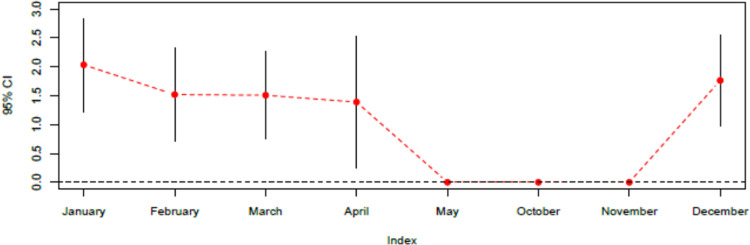
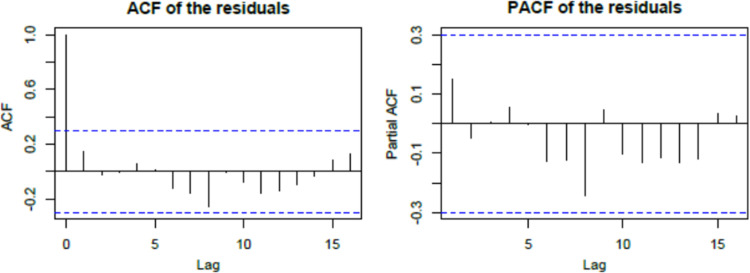
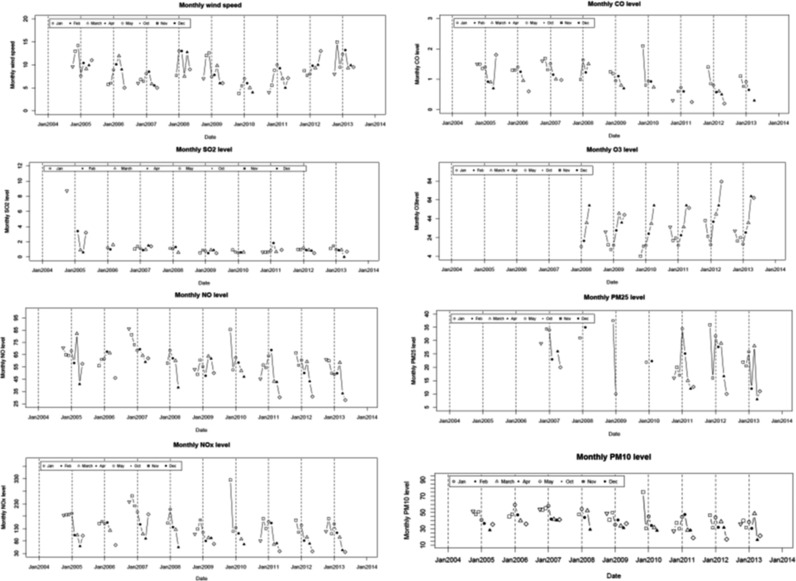
We included infants hospitalized for acute bronchiolitis from 2004 to 2014. All infants underwent a nasal washing for virus detection. A regional agency network collected meteorological data (mean temperature, relative humidity and wind velocity) and the following air pollutants: sulfur dioxide, nitrogen oxide, carbon monoxide, ozone, benzene and suspended particulate matter measuring less than 10µm (PM) and less than 2.5µm (PM) in aerodynamic diameter. We obtained mean weekly concentration data for the day of admission, from the urban background monitoring sites nearest to each child's home address. Overdispersed Poisson regression model was fitted and adjusted for seasonality of the respiratory syncytial virus (RSV) infection, to evaluate the impact of individual characteristics and environmental factors on the probability of a being positive RSV.
Of the 723 nasal washings from the infants enrolled, 266 (68%) contained RSV, 63 (16.1%) rhinovirus, 26 (6.6%) human bocavirus, 20 (5.1%) human metapneumovirus, and 16 (2.2%) other viruses. The number of RSV-positive infants correlated negatively with temperature (p < 0.001), and positively with relative humidity (p < 0.001). Air pollutant concentrations differed significantly during the peak RSV months and the other months. Benzene concentration was independently associated with RSV incidence (p = 0.0124).
Seasonal weather conditions and concentration of air pollutants seem to influence RSV-related bronchiolitis epidemics in an Italian urban area.
在本研究中,我们试图评估意大利一个城市地区病毒性细支气管炎、天气状况和空气污染之间的关联。
我们纳入了2004年至2014年因急性细支气管炎住院的婴儿。所有婴儿均接受了鼻洗液病毒检测。一个区域机构网络收集了气象数据(平均温度、相对湿度和风速)以及以下空气污染物:二氧化硫、氮氧化物、一氧化碳、臭氧、苯和空气动力学直径小于10微米(PM10)和小于2.5微米(PM2.5)的悬浮颗粒物。我们从每个孩子家庭住址最近的城市背景监测点获取入院当天的平均每周浓度数据。采用过度分散泊松回归模型,并针对呼吸道合胞病毒(RSV)感染的季节性进行调整,以评估个体特征和环境因素对RSV阳性概率的影响。
在纳入研究的婴儿的723份鼻洗液中,266份(68%)含有RSV,63份(16.1%)含有鼻病毒,26份(6.6%)含有人类博卡病毒,20份(5.1%)含有人类偏肺病毒,16份(2.2%)含有其他病毒。RSV阳性婴儿的数量与温度呈负相关(p < 0.001),与相对湿度呈正相关(p < 0.001)。RSV高峰月份和其他月份的空气污染物浓度差异显著。苯浓度与RSV发病率独立相关(p = 0.0124)。
季节性天气状况和空气污染物浓度似乎会影响意大利一个城市地区与RSV相关的细支气管炎流行。