Kim Jae Yoon, Do Sang Yoon, Moon Young Hoon, Lee Chul Gab, Kim Yun Sung, Choi Byung Soon, Kim Eun-A, Song Han Soo
Department of Occupational and Environmental Medicine, School of Medicine, Chosun University, 558 Pilmun-daero Dong-gu, Gwangju, 61453 Republic of Korea.
Division of Rheumatology, Department of Internal Medicine, School of Medicine, Chosun University, Gwangju, Republic of Korea.
Ann Occup Environ Med. 2017 Jun 19;29:18. doi: 10.1186/s40557-017-0176-x. eCollection 2017.
Occupational exposure to crystalline silica is a potential risk factor for various systemic autoimmune diseases including systemic sclerosis. The etiology of systemic sclerosis is not conclusively known, but there are epidemiological studies that show the relationship between exposure to crystalline silica and risk of systemic sclerosis. Here we report, for the first time, two cases of crystalline silica-related systemic sclerosis in patients who worked in crystal processing in the jewelry-manufacturing field.
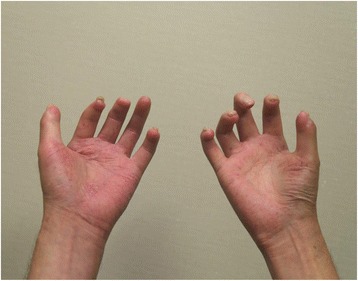
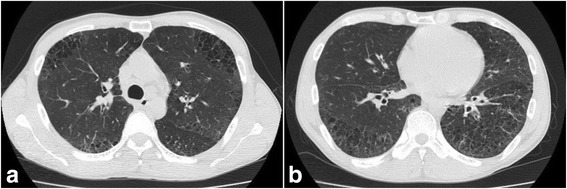
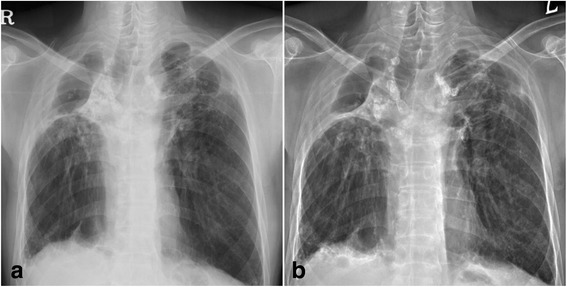
Case 1 is a 57-year-old man who had worked mainly in crystal processing for multiple jewelry-processing companies for 17 years, since the age of 15 years. He contracted tuberculosis at the age of 25 years and showed Raynaud's phenomenon of both the hands and feet at age 32 years. Digital cyanosis and sclerosis developed at approximately age 41 years. The patient was diagnosed with systemic sclerosis at age 48 years. Case 2 is a 52-year-old man who worked in crystal processing for various jewelry-processing companies for 7 years, since the age of 23 years. He first showed signs of cyanosis in the third and fourth digits of both hands at age 32 years, was diagnosed with Raynaud's syndrome at age 37 years, and was diagnosed with systemic sclerosis at age 38 years. Crystal processing is a detailed process that involves slabbing and trimming the selected amethyst and quartz crystals, which requires close proximity of the worker's face with the target area. In the 1980s and 1990s, the working hours were 12 h per day, and the working environment involved 15 workers crowded into a small, 70-m space with poor ventilation.
Two workers who processed crystals with a maximum crystalline silica content of 56.66% developed systemic sclerosis. Considering the epidemiological and experimental evidence, exposure to crystalline silica dust was an important risk factor for systemic sclerosis. An active intervention is necessary to reduce exposure in similar exposure groups in the field of jewelry processing.
职业性接触结晶硅石是包括系统性硬化症在内的各种全身性自身免疫性疾病的潜在危险因素。系统性硬化症的病因尚未完全明确,但有流行病学研究表明接触结晶硅石与系统性硬化症风险之间存在关联。在此,我们首次报告了两例在珠宝制造领域从事水晶加工工作的患者发生的与结晶硅石相关的系统性硬化症病例。
病例1是一名57岁男性,自15岁起主要为多家珠宝加工公司从事水晶加工工作达17年。他25岁时患肺结核,32岁时出现双手和双脚雷诺现象。约41岁时出现手指发绀和硬化。该患者48岁时被诊断为系统性硬化症。病例2是一名52岁男性,自23岁起为多家珠宝加工公司从事水晶加工工作7年。他32岁时双手的第三和第四指首次出现发绀迹象,37岁时被诊断为雷诺综合征,38岁时被诊断为系统性硬化症。水晶加工是一个详细的过程,包括切割和修整选定的紫水晶和石英晶体,这需要工人的面部靠近目标区域。在20世纪80年代和90年代,工作时间为每天12小时,工作环境是15名工人挤在一个70平方米的小空间里,通风不良。
两名加工最高结晶硅石含量为56.66%的水晶的工人患上了系统性硬化症。考虑到流行病学和实验证据,接触结晶硅石粉尘是系统性硬化症的一个重要危险因素。有必要采取积极干预措施,减少珠宝加工领域类似接触人群的接触。