Yun Seung Pil, Han Yong-Seok, Lee Jun Hee, Kim Sang Min, Lee Sang Hun
Neuroregeneration and Stem Cell Programs, Institute for Cell Engineering, Department of Neurology, Johns Hopkins University School of Medicine, Baltimore, MD 21205, USA.
Medical Science Research Institute, Soonchunhyang University Seoul Hospital, Seoul 04401, Republic of Korea.
Biomol Ther (Seoul). 2018 Jul 1;26(4):389-398. doi: 10.4062/biomolther.2017.071.
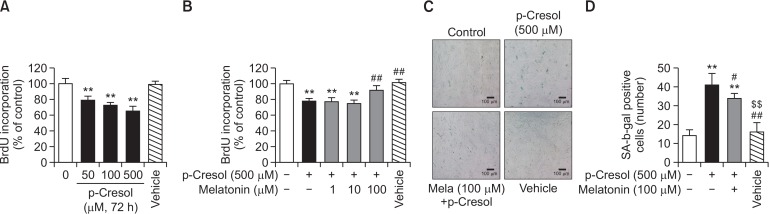
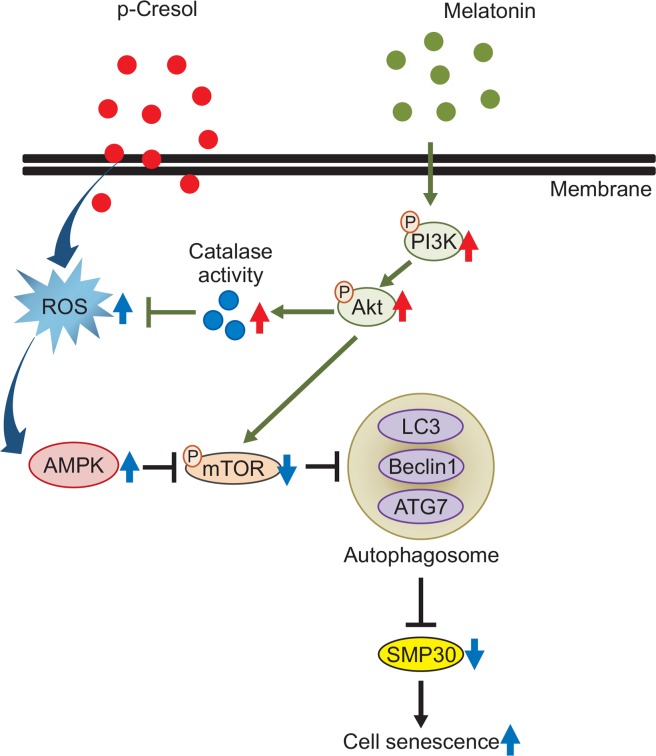
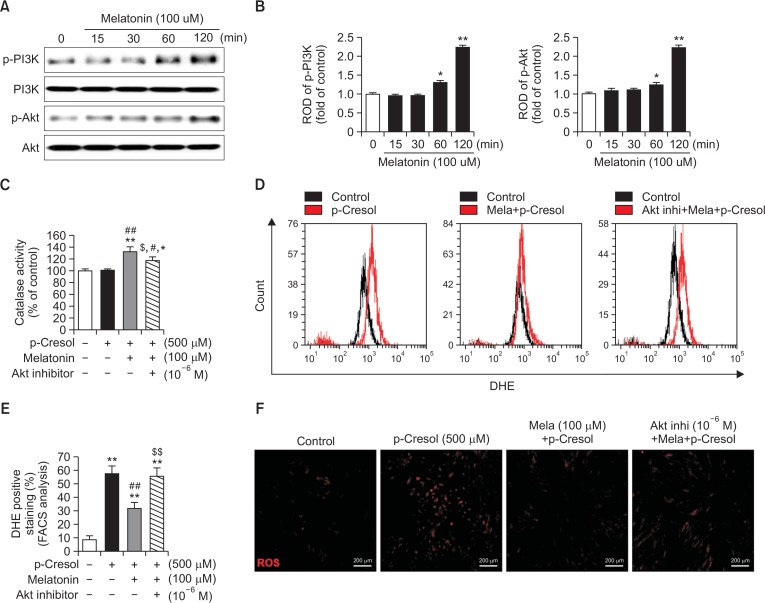
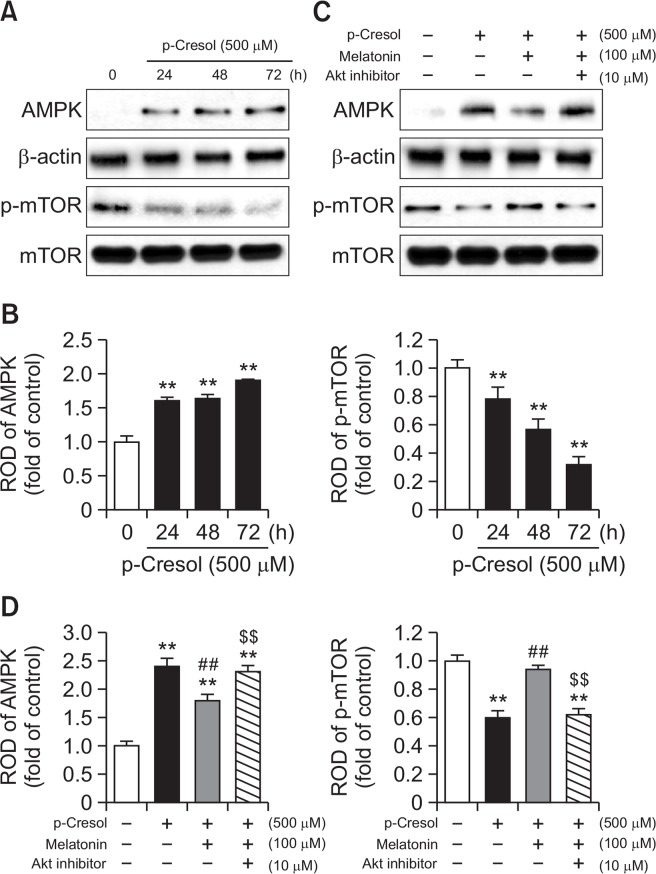
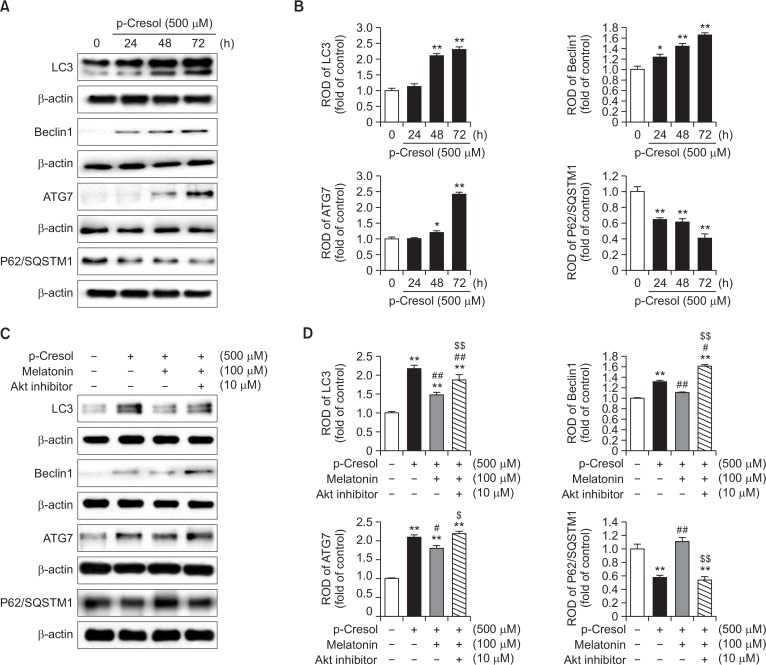
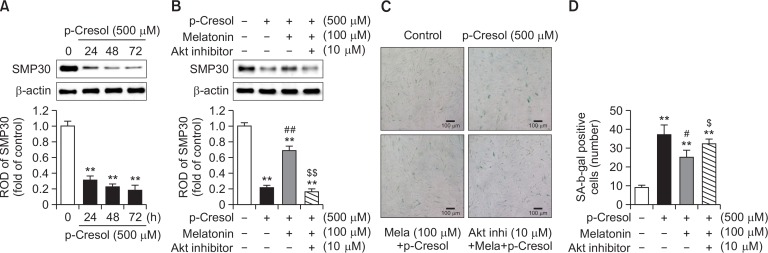
-Cresol, found at high concentrations in the serum of chronic kidney failure patients, is known to cause cell senescence and other complications in different parts of the body. -Cresol is thought to mediate cytotoxic effects through the induction of autophagy response. However, toxic effects of -cresol on mesenchymal stem cells have not been elucidated. Thus, we aimed to investigate whether -cresol induces senescence of mesenchymal stem cells, and whether melatonin can ameliorate abnormal autophagy response caused by -cresol. We found that -cresol concentration-dependently reduced proliferation of mesenchymal stem cells. Pretreatment with melatonin prevented pro-senescence effects of -cresol on mesenchymal stem cells. We found that by inducing phosphorylation of Akt and activating the Akt signaling pathway, melatonin enhanced catalase activity and thereby inhibited the accumulation of reactive oxygen species induced by -cresol in mesenchymal stem cells, ultimately preventing abnormal activation of autophagy. Furthermore, preincubation with melatonin counteracted other pro-senescence changes caused by -cresol, such as the increase in total 5'-AMP-activated protein kinase expression and decrease in the level of phosphorylated mechanistic target of rapamycin. Ultimately, we discovered that melatonin restored the expression of senescence marker protein 30, which is normally suppressed because of the induction of the autophagy pathway in chronic kidney failure patients by -cresol. Our findings suggest that stem cell senescence in patients with chronic kidney failure could be potentially rescued by the administration of melatonin, which grants this hormone a novel therapeutic role.
在慢性肾衰竭患者血清中发现高浓度的间甲酚,已知其会在身体不同部位导致细胞衰老和其他并发症。间甲酚被认为通过诱导自噬反应介导细胞毒性作用。然而,间甲酚对间充质干细胞的毒性作用尚未阐明。因此,我们旨在研究间甲酚是否会诱导间充质干细胞衰老,以及褪黑素是否能改善间甲酚引起的异常自噬反应。我们发现间甲酚浓度依赖性地降低间充质干细胞的增殖。褪黑素预处理可预防间甲酚对间充质干细胞的促衰老作用。我们发现,褪黑素通过诱导Akt磷酸化并激活Akt信号通路,增强过氧化氢酶活性,从而抑制间甲酚在间充质干细胞中诱导的活性氧积累,最终防止自噬的异常激活。此外,褪黑素预孵育可抵消间甲酚引起的其他促衰老变化,如5'-AMP激活蛋白激酶总表达量增加和雷帕霉素作用靶点磷酸化水平降低。最终,我们发现褪黑素恢复了衰老标记蛋白30的表达,该蛋白通常因间甲酚在慢性肾衰竭患者中诱导自噬途径而受到抑制。我们的研究结果表明,给予褪黑素可能会挽救慢性肾衰竭患者的干细胞衰老,这赋予了这种激素一种新的治疗作用。