1 School of Health Sciences, The University of Nottingham, Nottingham, UK.
2 School of Nursing and Midwifery, The University of Sheffield, Sheffield, UK.
Palliat Med. 2018 Feb;32(2):447-465. doi: 10.1177/0269216317711570. Epub 2017 Jun 28.
Patients with palliative care needs do not access specialist palliative care services according to their needs. Clinical Nurse Specialists working across a variety of fields are playing an increasingly important role in the care of such patients, but there is limited knowledge of the extent to which their interventions are cost-effective.
To present results from a systematic review of the international evidence on the costs, resource use and cost-effectiveness of Clinical Nurse Specialist-led interventions for patients with palliative care needs, defined as seriously ill patients and those with advanced disease or frailty who are unlikely to be cured, recover or stabilize.
Systematic review following PRISMA methodology.
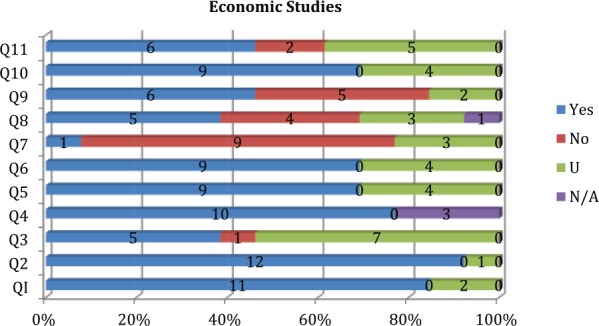
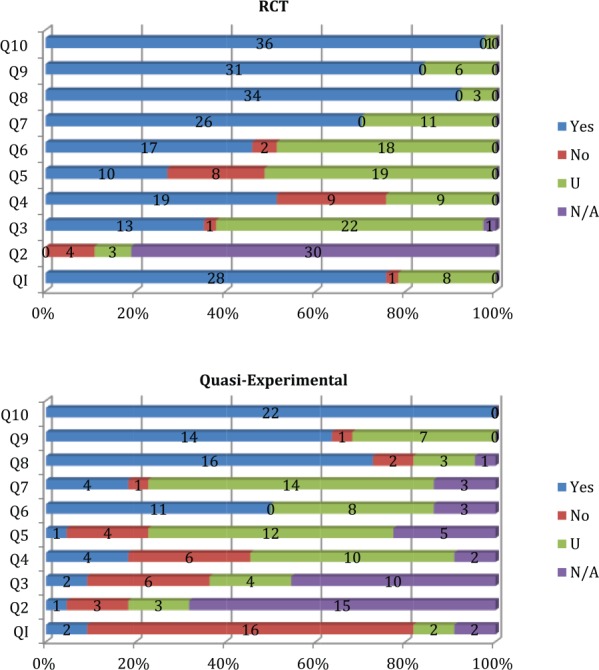
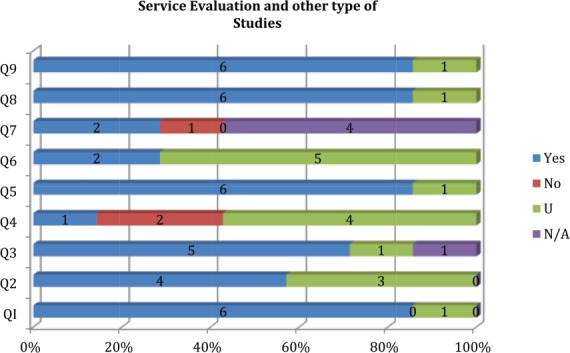
Medline, Embase, CINAHL and Cochrane Library up to 2015. Studies focusing on the outcomes of Clinical Nurse Specialist interventions for patients with palliative care needs, and including at least one economic outcome, were considered. The quality of studies was assessed using tools from the Joanna Briggs Institute.
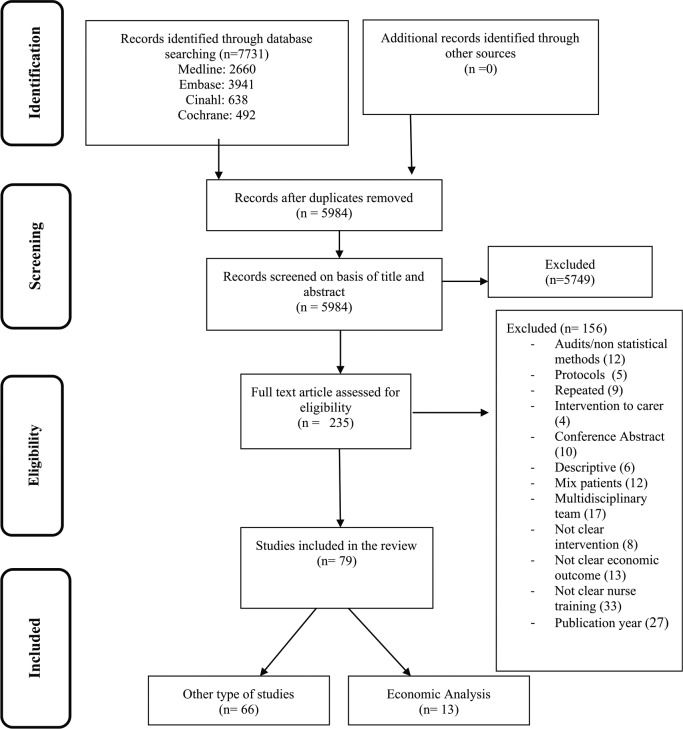
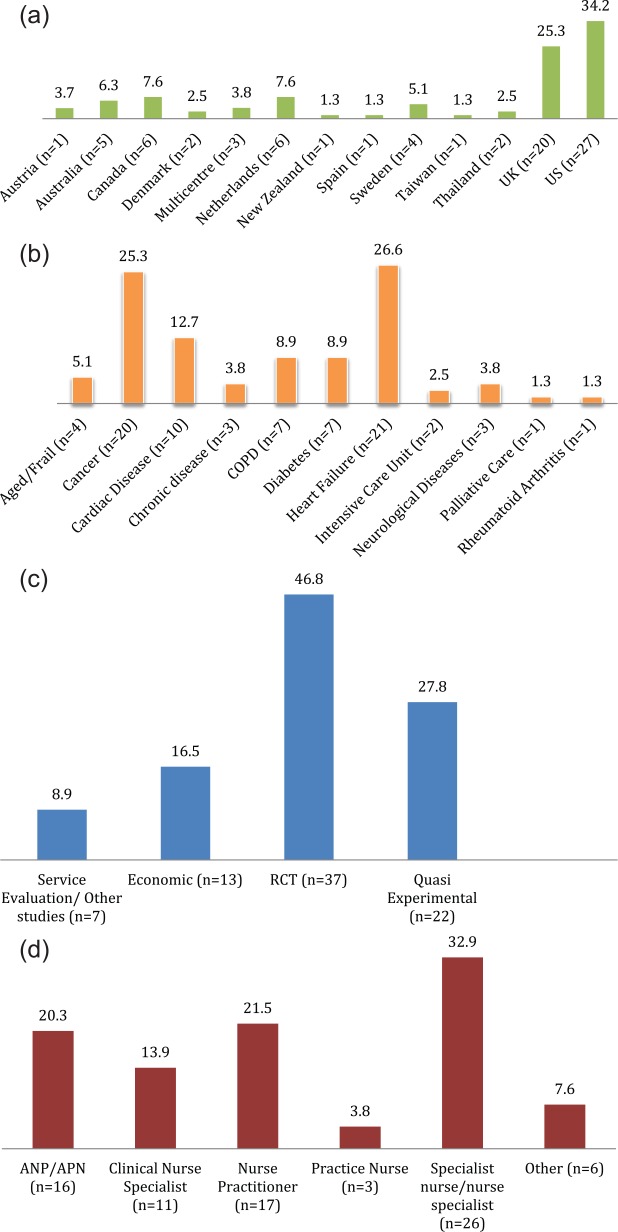
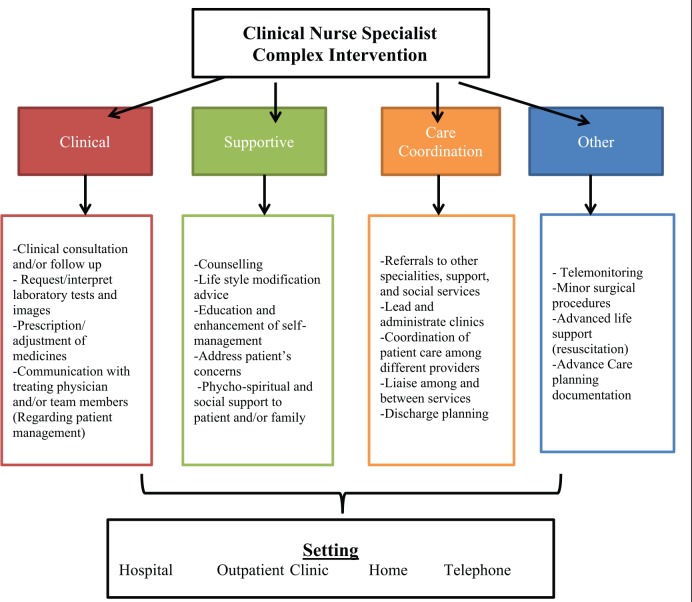
A total of 79 papers were included: 37 randomized controlled trials, 22 quasi-experimental studies, 7 service evaluations and other studies, and 13 economic analyses. The studies included a wide variety of interventions including clinical, support and education, as well as care coordination activities. The quality of the studies varied greatly.
Clinical Nurse Specialist interventions may be effective in reducing specific resource use such as hospitalizations/re-hospitalizations/admissions, length of stay and health care costs. There is mixed evidence regarding their cost-effectiveness. Future studies should ensure that Clinical Nurse Specialists' roles and activities are clearly described and evaluated.
有姑息治疗需求的患者并未根据其需求获得专科姑息治疗服务。在多个领域工作的临床护理专家在照顾此类患者方面发挥着越来越重要的作用,但对于其干预措施的成本效益知之甚少。
介绍一项针对国际姑息治疗需求患者(定义为重病患者和患有晚期疾病或虚弱的患者,这些患者不太可能治愈、恢复或稳定)的临床护理专家主导干预措施的成本、资源使用和成本效益的系统评价的结果。
按照 PRISMA 方法进行系统评价。
2015 年以前的 Medline、Embase、CINAHL 和 Cochrane Library。研究重点关注姑息治疗需求患者的临床护理专家干预措施的结果,并包括至少一个经济结果。使用 Joanna Briggs 研究所的工具评估研究的质量。
共纳入 79 篇论文:37 项随机对照试验、22 项准实验研究、7 项服务评估和其他研究以及 13 项经济分析。这些研究包括各种干预措施,包括临床、支持和教育以及护理协调活动。研究的质量差异很大。
临床护理专家的干预措施可能有效减少特定资源的使用,如住院/再次住院/入院、住院时间和医疗保健成本。关于其成本效益的证据存在分歧。未来的研究应确保明确描述和评估临床护理专家的角色和活动。