Lang Hai-Li, Hu Guo-Wen, Zhang Bo, Kuang Wei, Chen Yong, Wu Lei, Xu Guo-Hai
Department of Anesthesiology, The Second Affiliated Hospital of Nanchang University, Nanchang, Jiangxi 330006, P.R. China.
Department of Neurosurgery, The Second Affiliated Hospital of Nanchang University, Nanchang, Jiangxi 330006, P.R. China.
Oncol Rep. 2017 Aug;38(2):785-798. doi: 10.3892/or.2017.5742. Epub 2017 Jun 22.
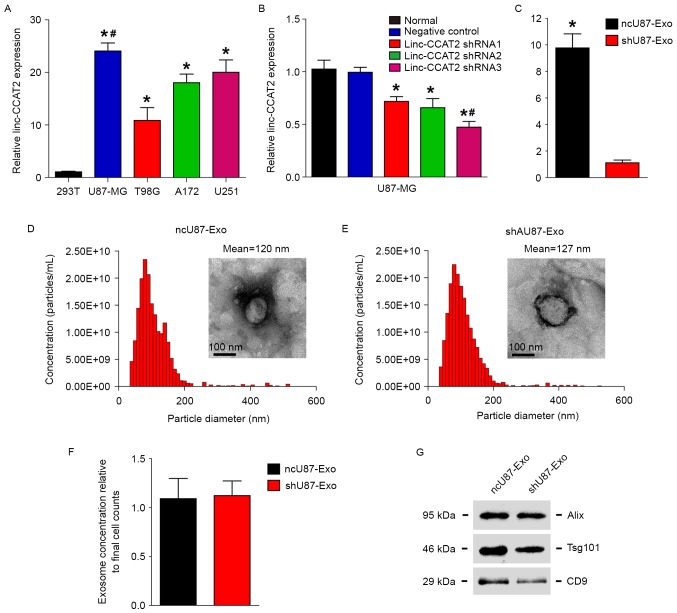
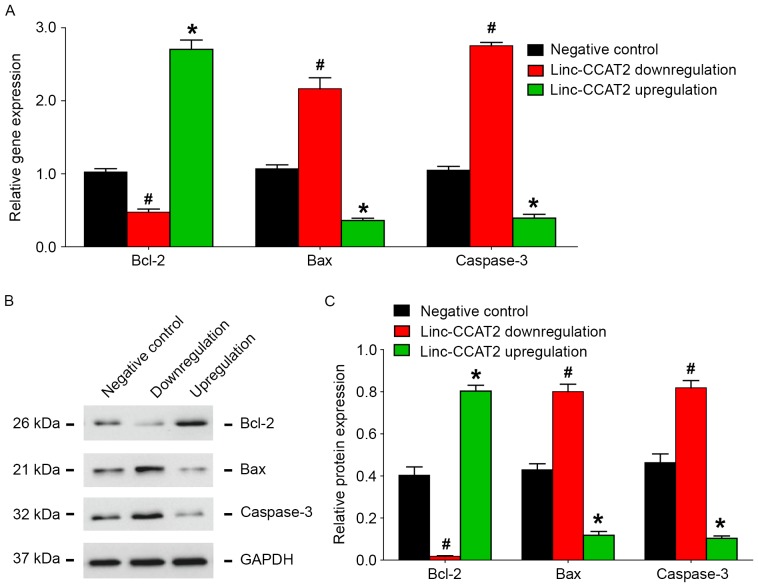
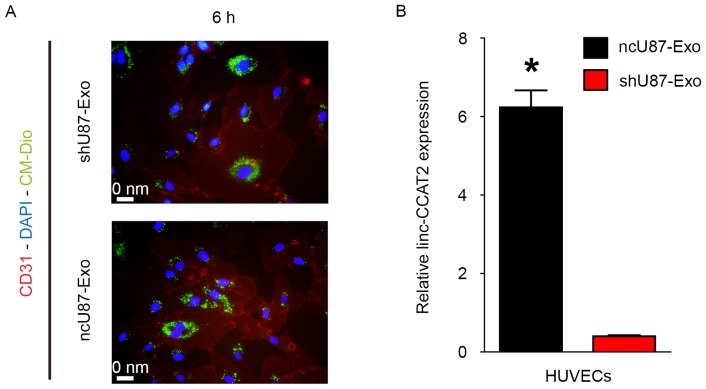
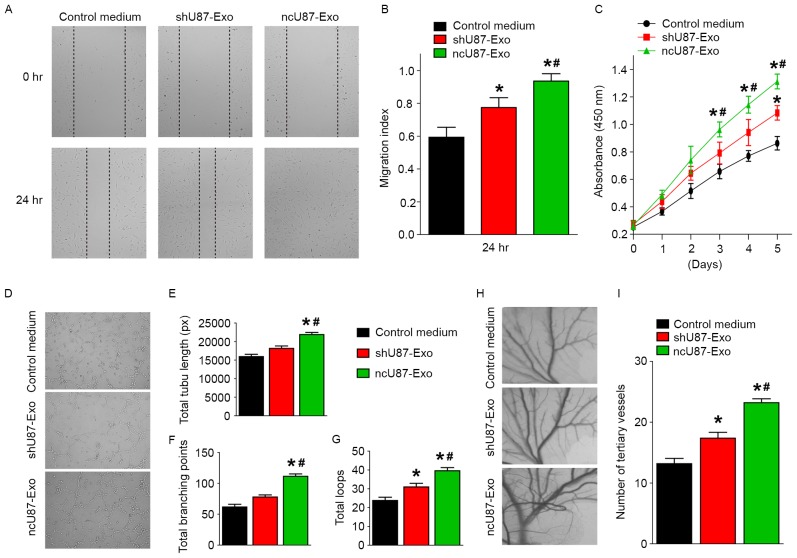
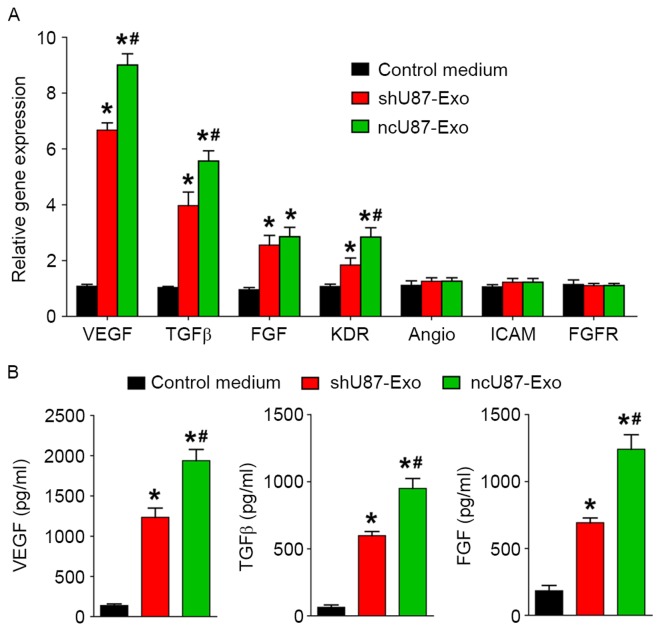
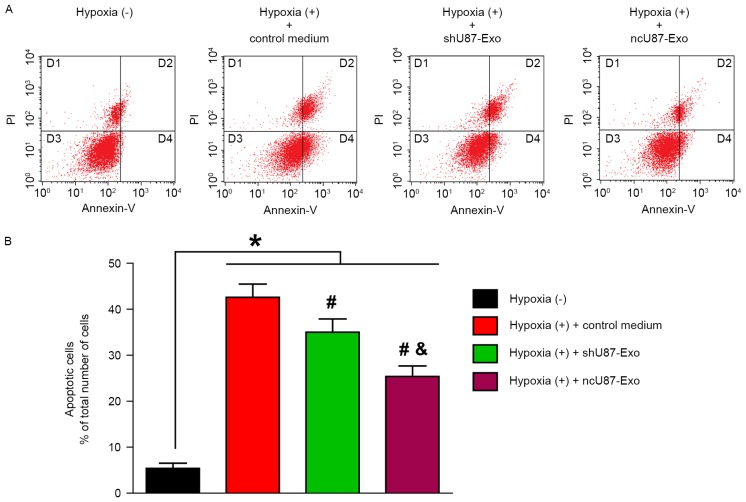
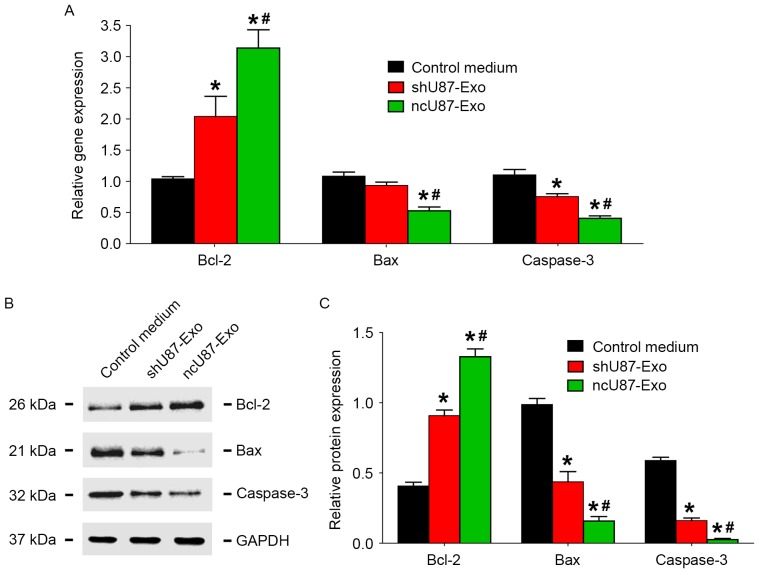
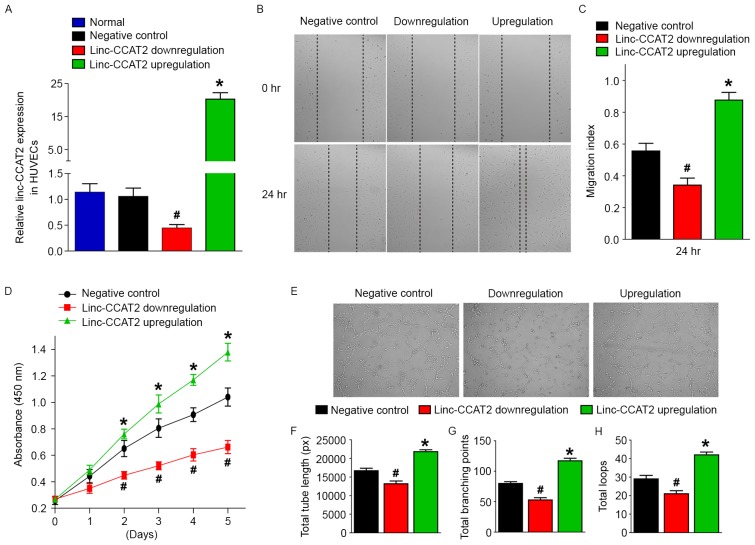
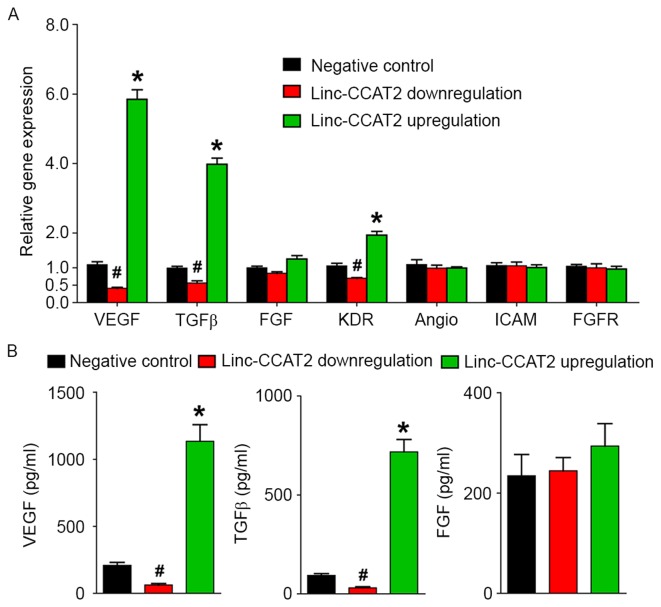
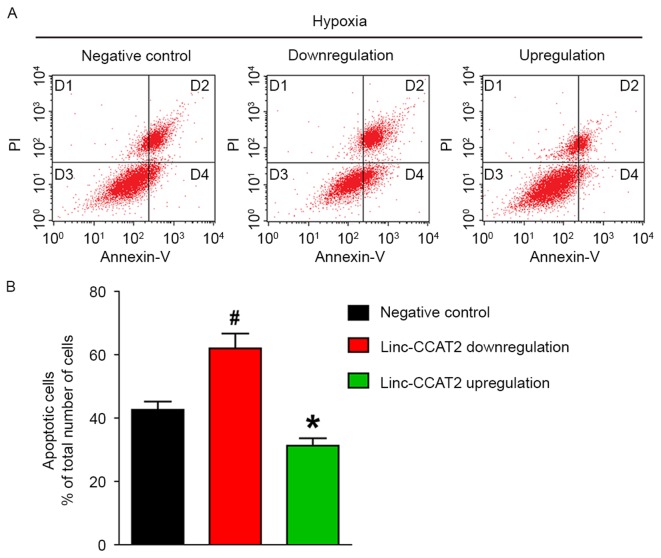
Angiogenesis is a key event in the progression of gliomas. Exosomes, as signaling extracellular organelles, modulate the tumor microenvironment and promote angiogenesis and tumor progression. We previously demonstrated that long intergenic non-coding RNA CCAT2 (linc-CCAT2) was overexpressed in glioma tissues and functioned to promote glioma progression. Therefore, this study aimed to explore an underlying mechanism of glioma cell-affected angiogenesis. First, qRT-PCR was used to determine the expression level of linc-CCAT2 in 4 glioma cell lines and 293T cells, and the results revealed that the U87-MG cells exhibited the highest expression level. Subsequently, the pro-angiogenesis function of exosomes that were derived from negative control shRNA-treated U87-MG cells (ncU87-Exo) and linc-CCAT2 shRNA-treated U87-MG cells (shU87-Exo) was evaluated in vitro and in vivo. We found that ncU87-Exo, which was enriched in linc-CCAT2, could be taken up by HUVECs. ncU87-Exo improved the linc-CCAT2 expression level in HUVECs and more strongly promoted HUVEC migration, proliferation, tubular-like structure formation in vitro and arteriole formation in vivo as well as inhibited HUVEC apoptosis induced by hypoxia. Further mechanistic studies revealed that ncU87-Exo could upregulate VEGFA and TGFβ expression in HUVECs as well as promote Bcl-2 expression and inhibit Bax and caspase-3 expression. Finally, gain-/loss-of-function studies revealed that the overexpression of linc-CCAT2 in HUVECs activated VEGFA and TGFβ, promoted angiogenesis, promoted Bcl-2 expression and inhibited Bax and caspase-3 expression, thus decreasing apoptosis. Downregulation of linc-CCAT2 revealed the opposite effect. Thus, our results revealed a new exosome‑mediated mechanism by which glioma cells could promote angiogenesis through the transfer of linc-CCAT2 by exosomes to endothelial cells. Moreover, we suggest that exosomes and linc-CCAT2 are putative therapeutic targets in glioma.
血管生成是胶质瘤进展中的关键事件。外泌体作为信号细胞外细胞器,可调节肿瘤微环境并促进血管生成和肿瘤进展。我们之前证明长链基因间非编码RNA CCAT2(linc-CCAT2)在胶质瘤组织中过表达,并具有促进胶质瘤进展的作用。因此,本研究旨在探索胶质瘤细胞影响血管生成的潜在机制。首先,采用qRT-PCR检测4种胶质瘤细胞系和293T细胞中linc-CCAT2的表达水平,结果显示U87-MG细胞表达水平最高。随后,对源自阴性对照shRNA处理的U87-MG细胞(ncU87-Exo)和linc-CCAT2 shRNA处理的U87-MG细胞(shU87-Exo)的外泌体的促血管生成功能进行了体外和体内评估。我们发现富含linc-CCAT2的ncU87-Exo可被人脐静脉内皮细胞(HUVECs)摄取。ncU87-Exo提高了HUVECs中linc-CCAT2的表达水平,并更强烈地促进HUVECs体外迁移、增殖、管状结构形成及体内小动脉形成,同时抑制缺氧诱导的HUVECs凋亡。进一步的机制研究表明,ncU87-Exo可上调HUVECs中VEGFA和TGFβ的表达,促进Bcl-2表达,抑制Bax和caspase-3表达。最后,功能获得/丧失研究表明,HUVECs中linc-CCAT2的过表达激活了VEGFA和TGFβ,促进血管生成,促进Bcl-2表达,抑制Bax和caspase-3表达,从而减少凋亡。linc-CCAT2的下调则产生相反的效果。因此,我们的结果揭示了一种新的外泌体介导的机制,即胶质瘤细胞可通过外泌体将linc-CCAT2转移至内皮细胞来促进血管生成。此外,我们认为外泌体和linc-CCAT2是胶质瘤潜在的治疗靶点。