Haworth Matthew, Catola Stefano, Marino Giovanni, Brunetti Cecilia, Michelozzi Marco, Riggi Ezio, Avola Giovanni, Cosentino Salvatore L, Loreto Francesco, Centritto Mauro
Tree and Timber Institute, National Research CouncilSesto Fiorentino, Italy.
Department of Agrifood Production and Environmental Sciences, University of FlorenceSesto Fiorentino, Italy.
Front Plant Sci. 2017 Jun 13;8:1016. doi: 10.3389/fpls.2017.01016. eCollection 2017.
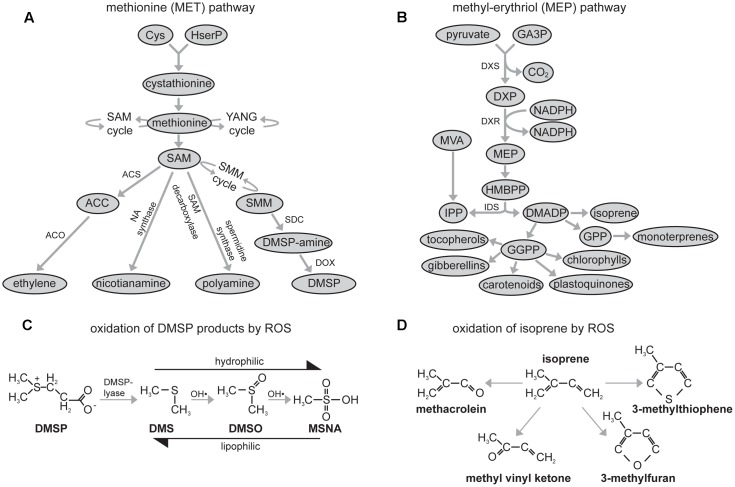
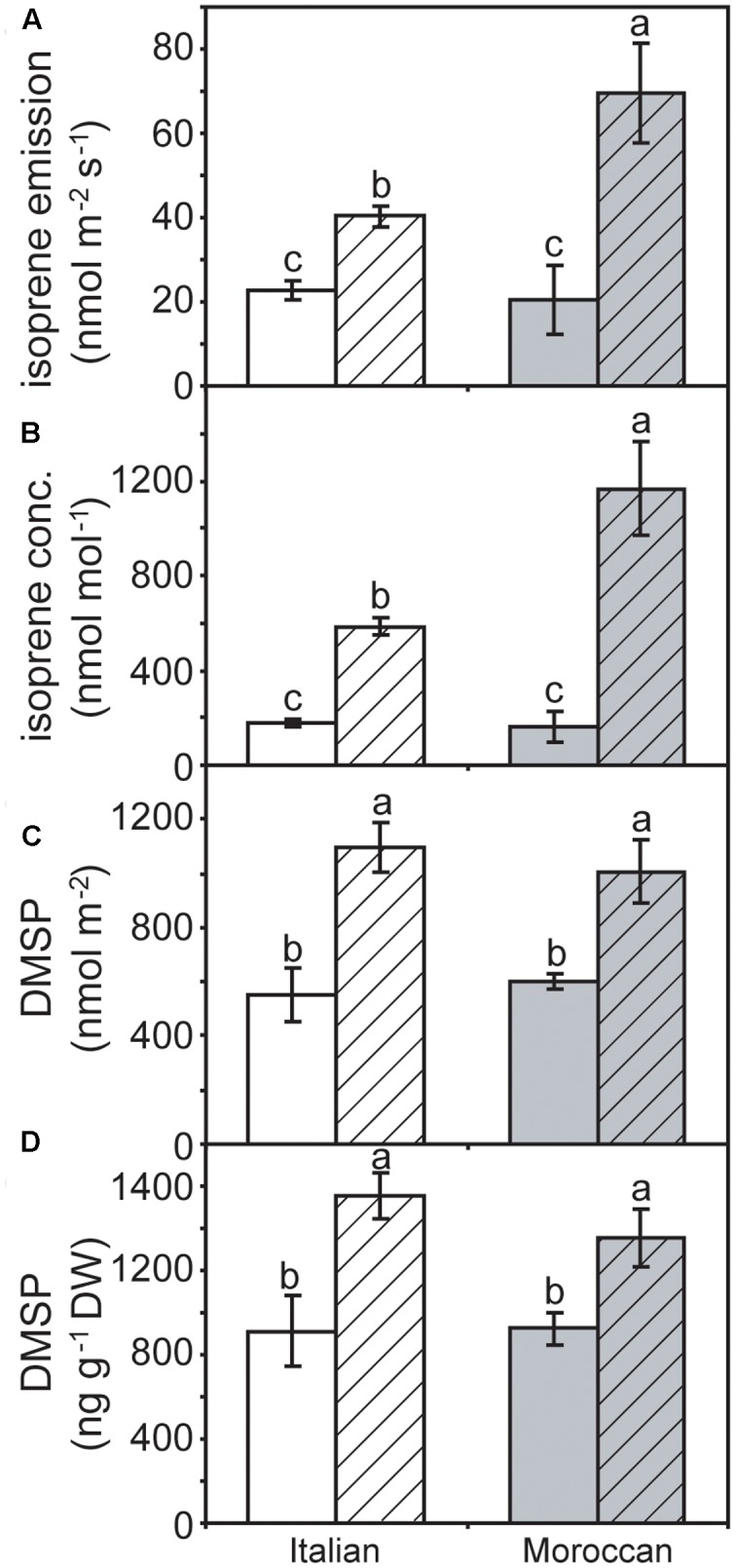
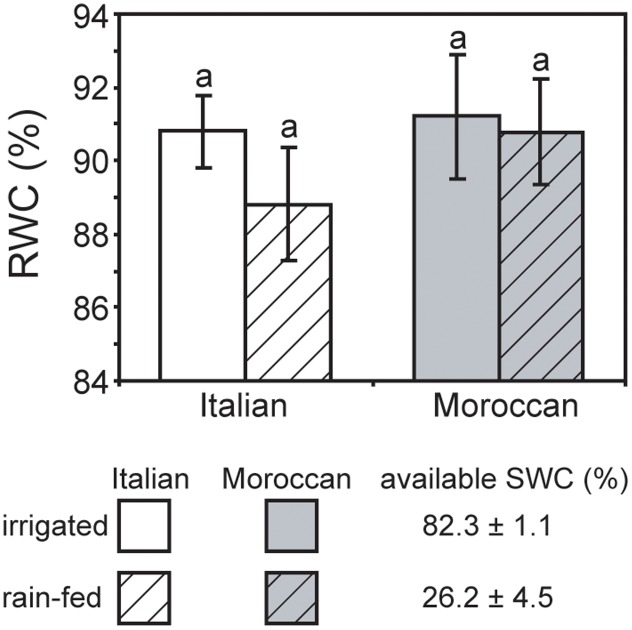
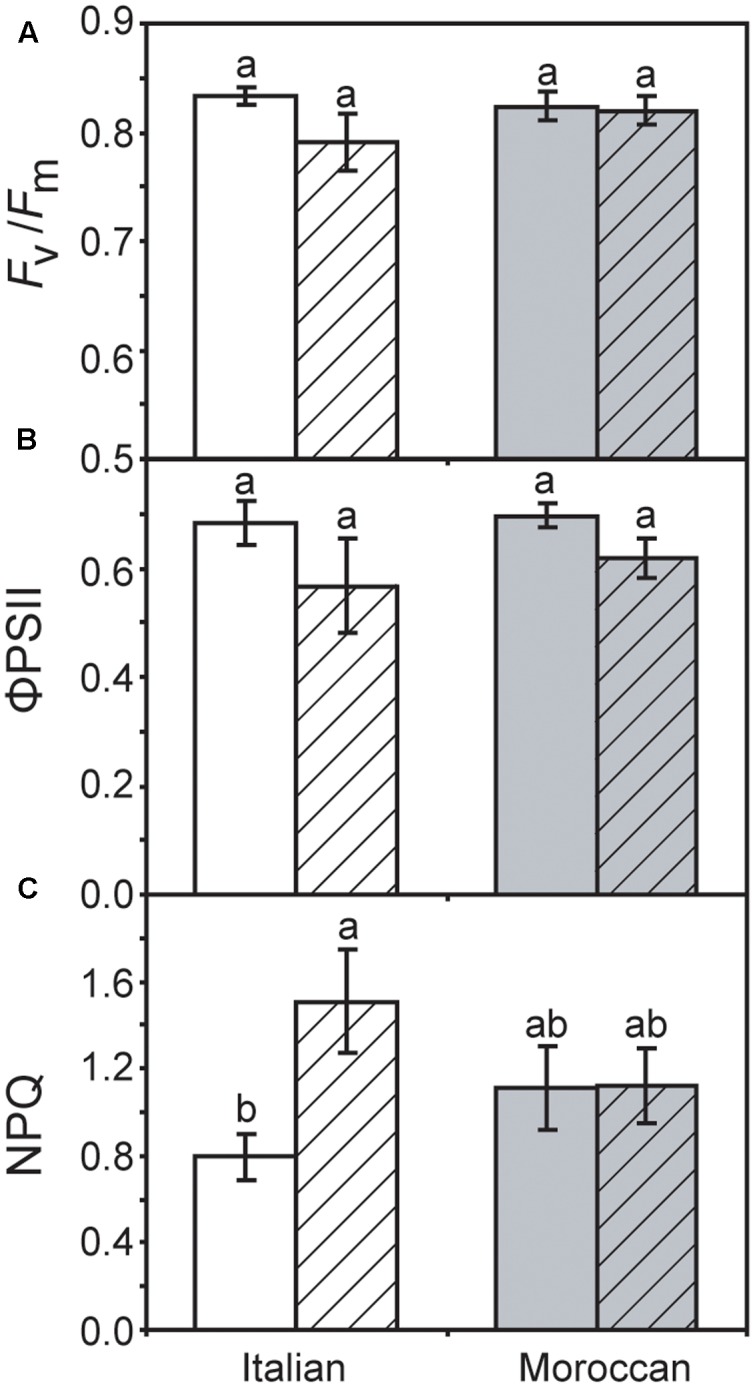
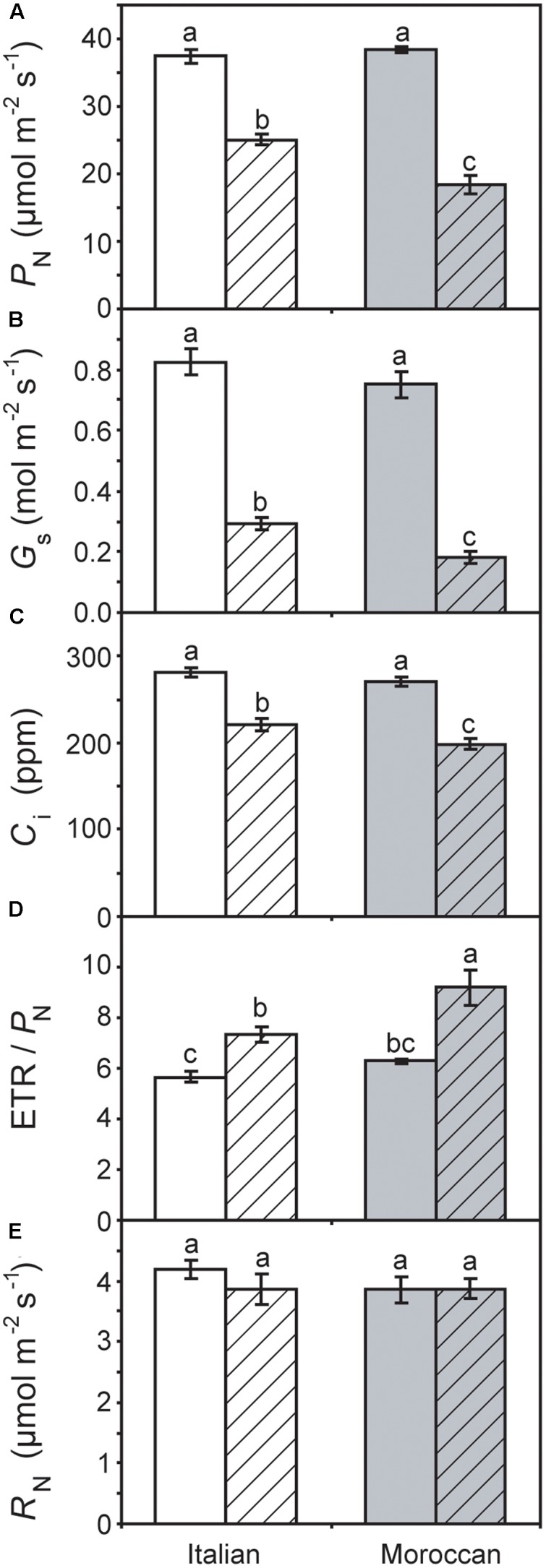
The function of dimethylsulphoniopropionate (DMSP) in plants is unclear. It has been proposed as an antioxidant, osmolyte and overflow for excess energy under stress conditions. The formation of DMSP is part of the methionine (MET) pathway that is involved in plant stress responses. We used a new analytical approach to accurately quantify the changes in DMSP concentration that occurred in two ecotypes of the biomass crop subject to moderate drought stress under field conditions. The ecotypes of were from a hot semi-arid habitat in Morocco and a warm-humid environment in Central Italy. The Moroccan ecotype showed more pronounced reductions in photosynthesis, stomatal conductance and photochemical electron transport than the Italian ecotype. An increase in isoprene emission occurred in both ecotypes alongside enhanced foliar concentrations of DMSP, indicative of a protective function of these two metabolites in the amelioration of the deleterious effects of excess energy and oxidative stress. This is consistent with the modification of carbon within the methyl-erythritol and MET pathways responsible for increased synthesis of isoprene and DMSP under moderate drought. The results of this study indicate that DMSP is an important adaptive component of the stress response regulated via the MET pathway in . DMSP is likely a multifunctional molecule playing a number of roles in the response of to reduced water availability.
二甲基巯基丙酸内盐(DMSP)在植物中的功能尚不清楚。它被认为是一种抗氧化剂、渗透剂,在胁迫条件下可作为过剩能量的溢流物质。DMSP的形成是甲硫氨酸(MET)途径的一部分,该途径参与植物应激反应。我们采用了一种新的分析方法,准确量化了两种生物质作物生态型在田间条件下遭受中度干旱胁迫时DMSP浓度的变化。这两种生态型分别来自摩洛哥炎热的半干旱栖息地和意大利中部温暖湿润的环境。摩洛哥生态型在光合作用、气孔导度和光化学电子传递方面的降低比意大利生态型更为明显。两种生态型的异戊二烯排放均增加,同时叶片中DMSP浓度升高,这表明这两种代谢产物在减轻过剩能量和氧化应激的有害影响方面具有保护作用。这与甲基赤藓糖醇和MET途径中碳的修饰一致,该修饰负责在中度干旱条件下增加异戊二烯和DMSP的合成。本研究结果表明,DMSP是通过MET途径调控的应激反应的重要适应性组成部分。DMSP可能是一种多功能分子,在应对水分可利用性降低时发挥多种作用。