Liu Jianfeng, Ming Yuetong, Cheng Yunqing, Zhang Yuchu, Xing Jiyang, Sun Yuqi
Jilin Provincial Key Laboratory of Plant Resource Science and Green Production, Jilin Normal UniversitySiping, China.
Front Plant Sci. 2017 Jun 13;8:1036. doi: 10.3389/fpls.2017.01036. eCollection 2017.
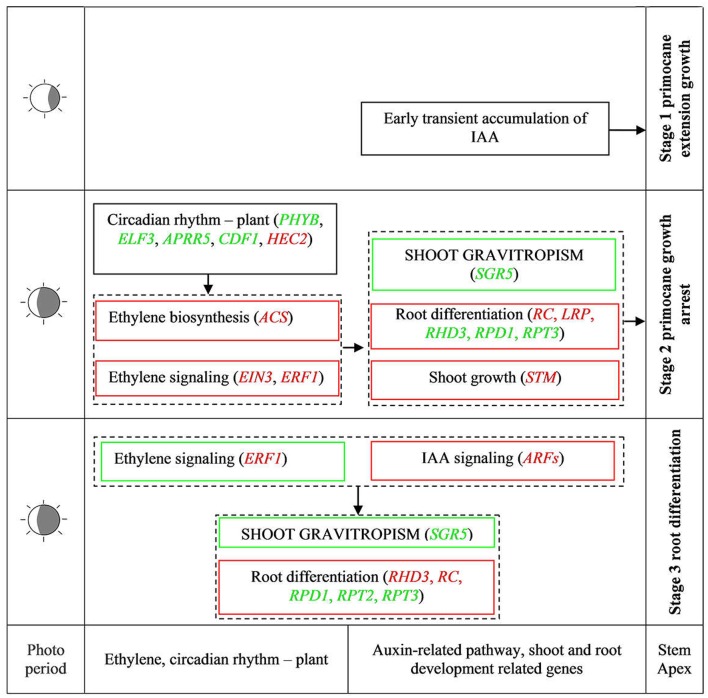
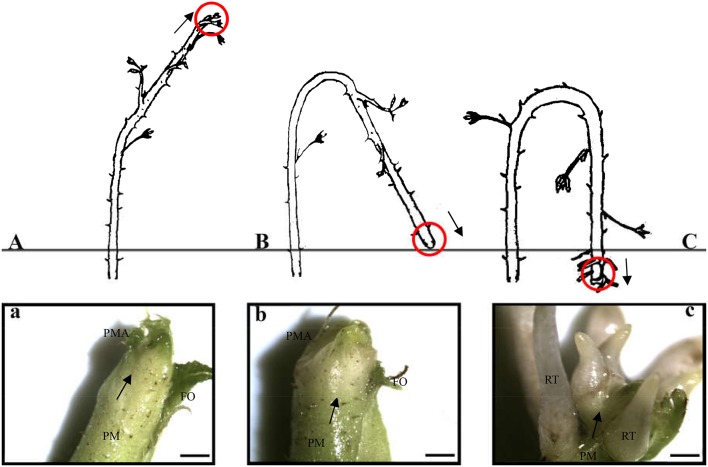
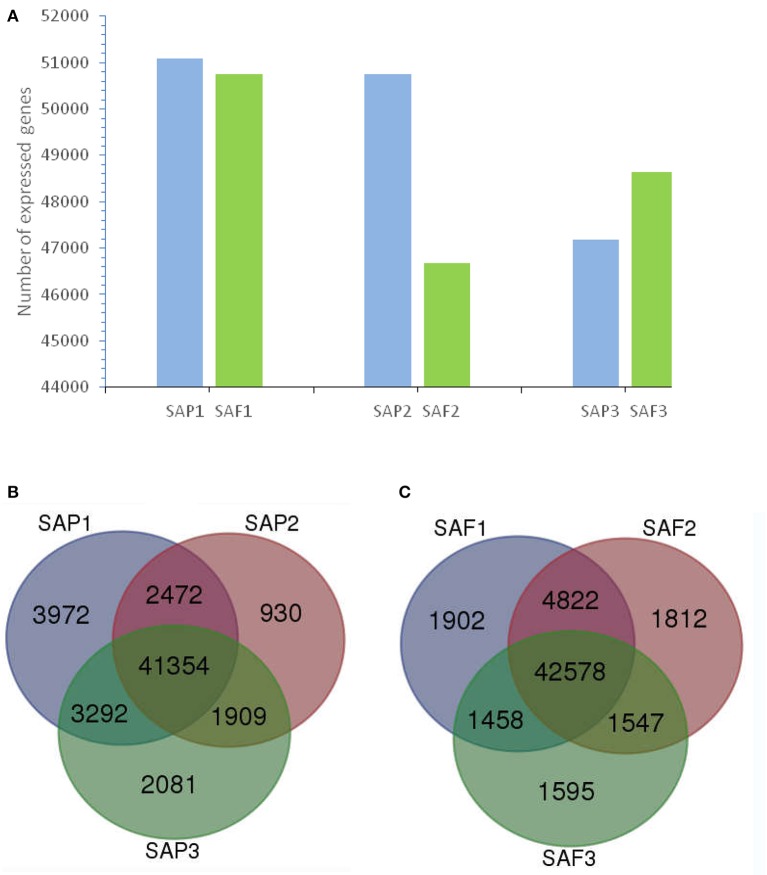
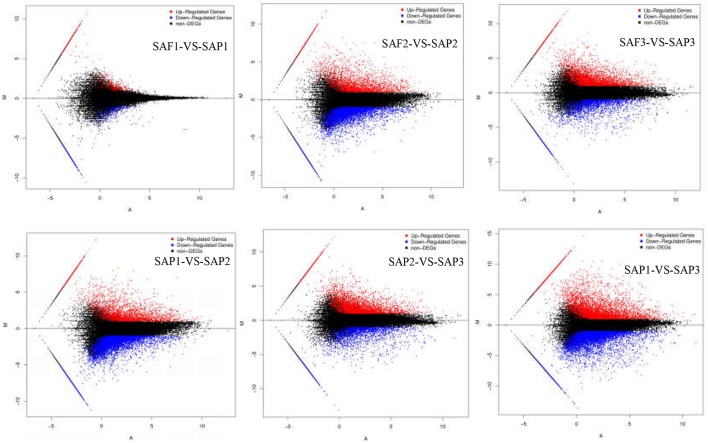
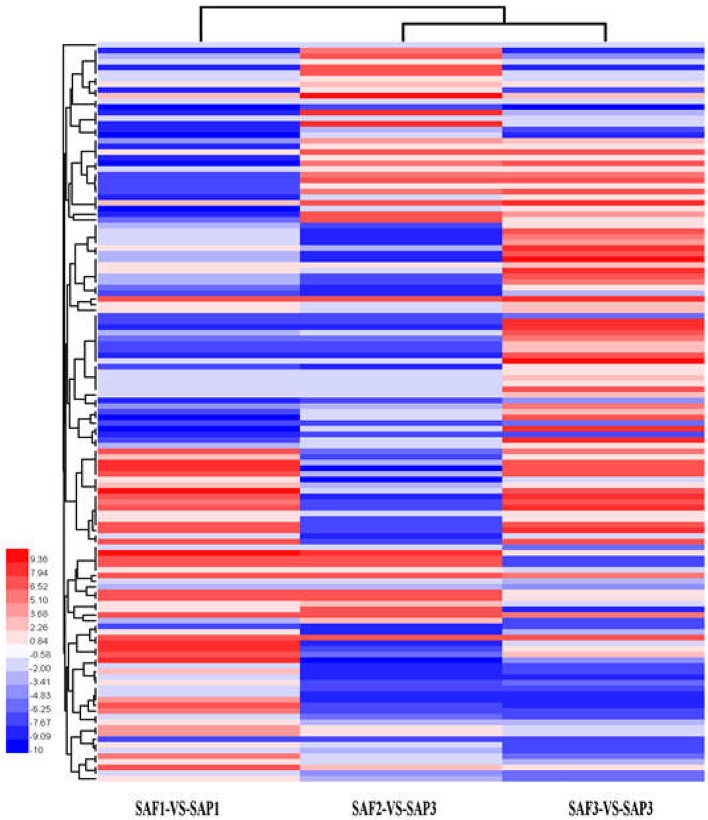
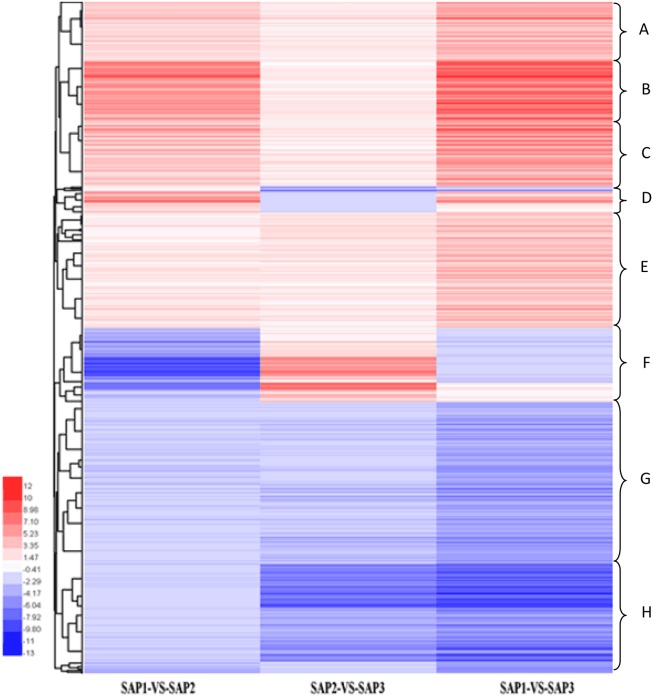
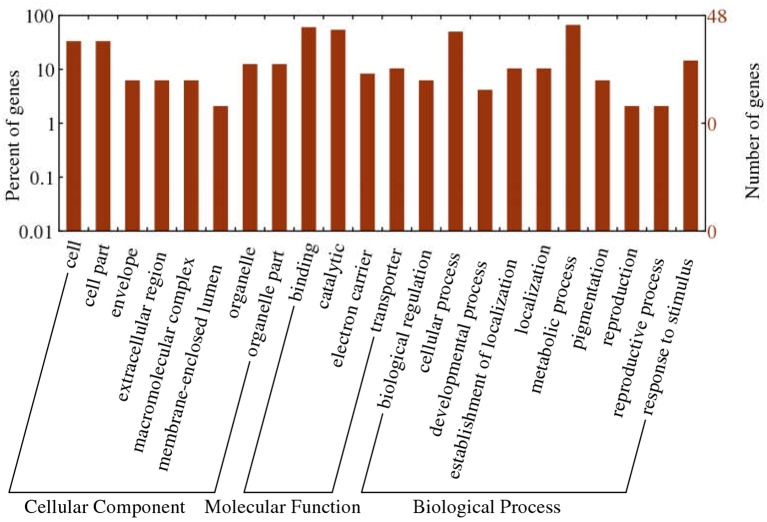
Raspberries ( spp.) exhibit a unique rooting process that is initiated from the stem apex of primocane, conferring an unusual asexual mode of reproduction to this plant. However, the full complement of genes involved in this process has not been identified. To this end, the present study analyzed the transcriptomes of the primocane and floricane stem apex at three developmental stages by Digital Gene Expression profiling to identify genes that regulate rooting. Sequencing and de novo assembly yielded 26.82 Gb of nucleotides and 59,173 unigenes; 498, 7,346, 4,110, 7,900, 9,397, and 4,776 differently expressed genes were identified in paired comparisons of SAF1 (floricane at developmental stage 1) vs. SAP1 (primocane at developmental stage 1), SAF2 vs. SAP2, SAF3 vs. SAP3, SAP1 vs. SAP2, SAP1 vs. SAP3, and SAP2 vs. SAP3, respectively. SAP1 maintains an extension growth pattern; SAP2 then exhibits growth arrest and vertical (downward) gravitropic deflection; and finally, short roots begin to form on the apex of SAP3. The Kyoto Encyclopedia of Genes and Genomes enrichment analysis of SAP1 vs. SAP2 revealed 12 pathways that were activated in response to shoot growth arrest and root differentiation, including circadian rhythm-plant (ko04712) and plant hormone signal transduction (ko04075). Our results indicate that genes related to circadian rhythm, ethylene and auxin signaling, shoot growth, and root development are potentially involved in the regulation of primocane apex rooting in . These findings provide a basis for elucidating the molecular mechanisms of primocane apex rooting in this economically valuable crop.
树莓(蔷薇科悬钩子属)展现出一种独特的生根过程,该过程从当年生茎的茎尖开始,赋予了这种植物一种不同寻常的无性繁殖方式。然而,参与这一过程的完整基因集尚未确定。为此,本研究通过数字基因表达谱分析了当年生茎和二年生茎茎尖在三个发育阶段的转录组,以鉴定调控生根的基因。测序和从头组装产生了26.82Gb的核苷酸和59,173个单基因;在SAF1(发育阶段1的二年生茎)与SAP1(发育阶段1的当年生茎)、SAF2与SAP2、SAF3与SAP3、SAP1与SAP2、SAP1与SAP3以及SAP2与SAP3的配对比较中,分别鉴定出498、7,346、4,110、7,900、9,397和4,776个差异表达基因。SAP1保持延伸生长模式;SAP2随后表现出生长停滞和垂直(向下)重力性偏斜;最后,短根开始在SAP3的顶端形成。对SAP1与SAP2进行的京都基因与基因组百科全书富集分析揭示了12条响应枝条生长停滞和根分化而被激活的途径,包括昼夜节律-植物(ko04712)和植物激素信号转导(ko04075)。我们的结果表明,与昼夜节律、乙烯和生长素信号传导、枝条生长以及根发育相关的基因可能参与了树莓当年生茎茎尖生根的调控。这些发现为阐明这种经济价值作物当年生茎茎尖生根的分子机制提供了基础。