Guo Jian, Cao Ke, Li Yong, Yao Jia-Long, Deng Cecilia, Wang Qi, Zhu Gengrui, Fang Weichao, Chen Changwen, Wang Xinwei, Guan Liping, Ding Tiyu, Wang Lirong
The Key Laboratory of Biology and Genetic Improvement of Horticultural Crops (Fruit Tree Breeding Technology), Ministry of Agriculture, Zhengzhou Fruit Research Institute, Chinese Academy of Agricultural Sciences, Zhengzhou, China.
The New Zealand Institute for Plant & Food Research Limited, Auckland, New Zealand.
Front Plant Sci. 2018 Jan 4;8:2215. doi: 10.3389/fpls.2017.02215. eCollection 2017.
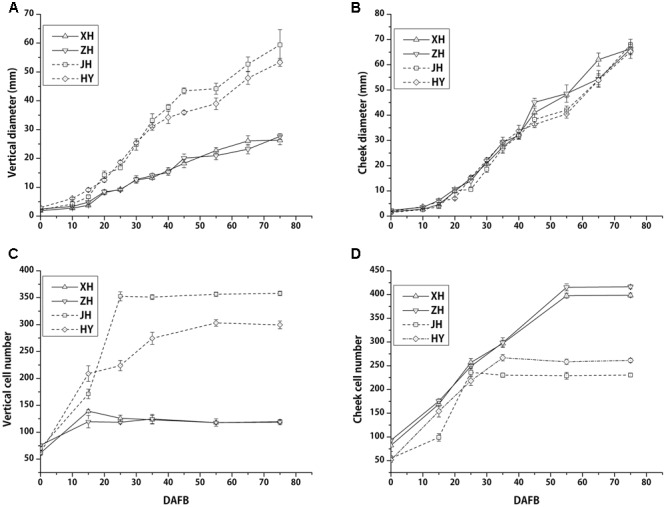
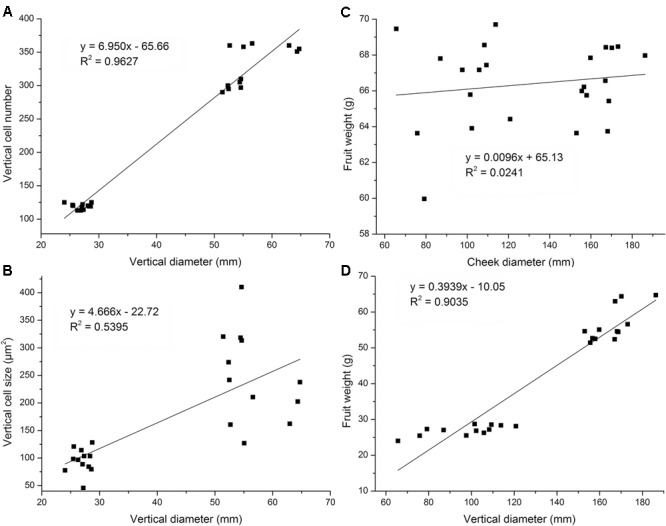
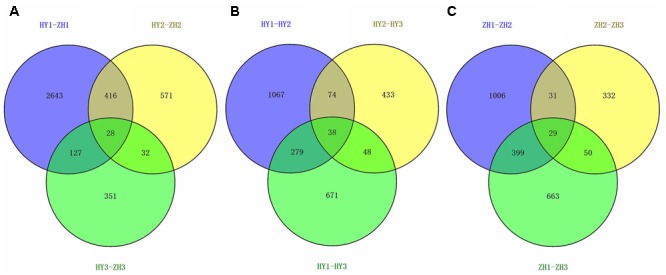
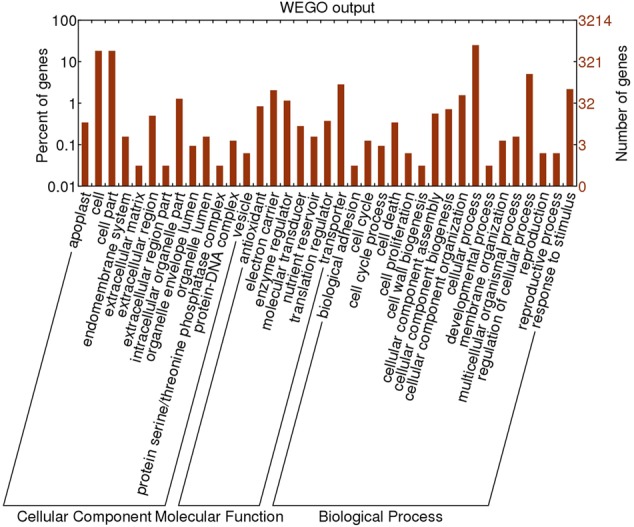
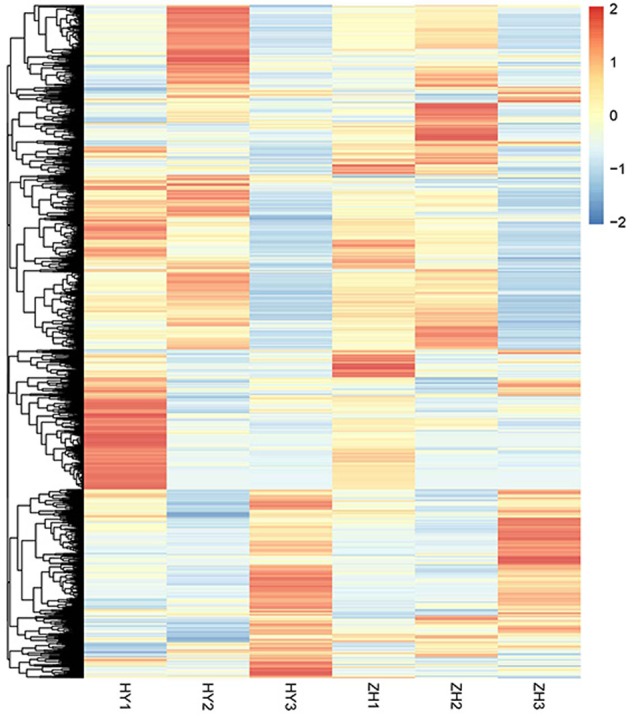
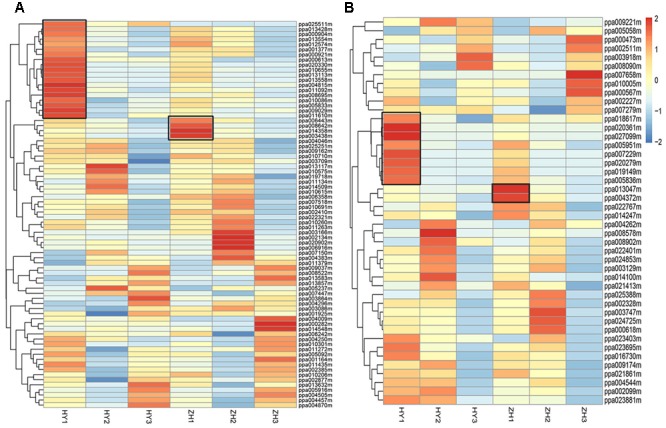
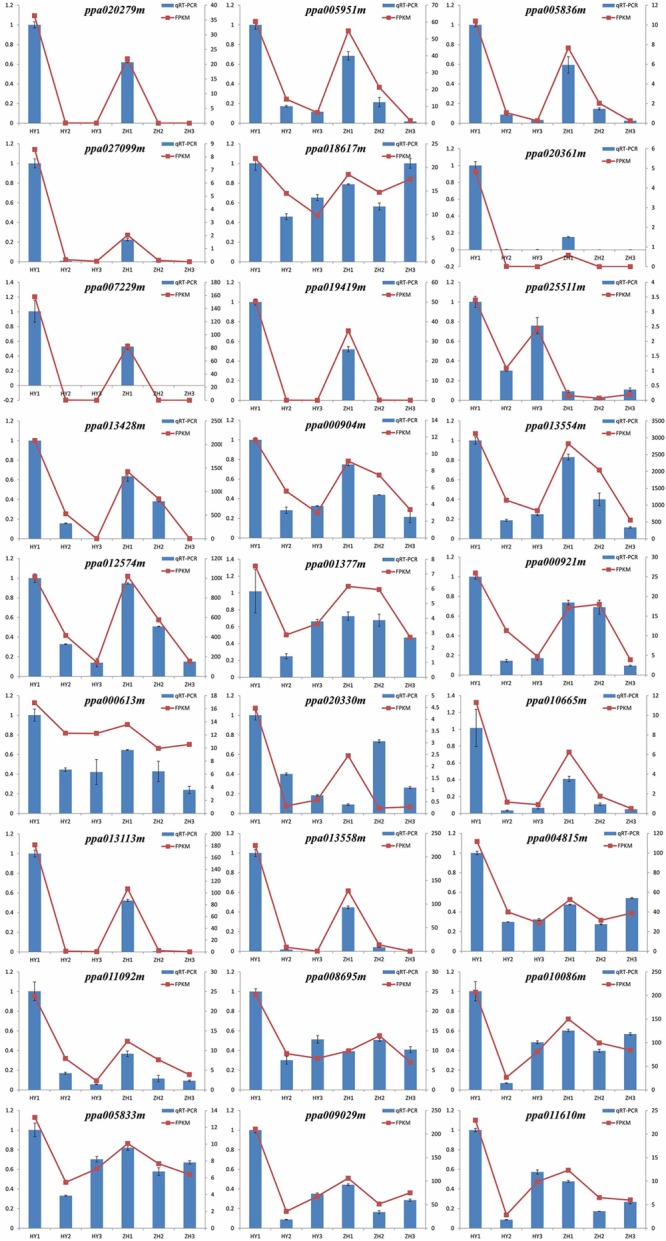
Fruit shape is an important external characteristic that consumers use to select preferred fruit cultivars. In peach, the flat fruit cultivars have become more and more popular worldwide. Genetic markers closely linking to the flat fruit trait have been identified and are useful for marker-assisted breeding. However, the cellular and genetic mechanisms underpinning flat fruit formation are still poorly understood. In this study, we have revealed the differences in fruit cell number, cell size, and in gene expression pattern between the traditional round fruit and modern flat fruit cultivars. Flat peach cultivars possessed significantly lower number of cells in the vertical axis because cell division in the vertical direction stopped early in the flat fruit cultivars at 15 DAFB (day after full bloom) than in round fruit cultivars at 35 DAFB. This resulted in the reduction in vertical development in the flat fruit. Significant linear relationship was observed between fruit vertical diameter and cell number in vertical axis for the four examined peach cultivars ( = 0.9964) at maturation stage, and was also observed between fruit vertical diameter and fruit weight ( = 0.9605), which indicated that cell number in vertical direction contributed to the flat shape formation. Furthermore, in RNA-seq analysis, 4165 differentially expressed genes (DEGs) were detected by comparing RNA-seq data between flat and round peach cultivars at different fruit development stages. In contrast to previous studies, we discovered 28 candidate genes potentially responsible for the flat shape formation, including 19 located in the mapping site and 9 downstream genes. Our study indicates that flat and round fruit shape in peach is primarily determined by the regulation of cell production in the vertical direction during early fruit development.
果实形状是消费者用来选择偏好的水果品种的重要外在特征。在桃子中,扁形果实品种在全球越来越受欢迎。已鉴定出与扁形果实性状紧密连锁的遗传标记,这些标记可用于分子标记辅助育种。然而,扁形果实形成的细胞和遗传机制仍知之甚少。在本研究中,我们揭示了传统圆形果实和现代扁形果实品种在果实细胞数量、细胞大小和基因表达模式上的差异。蟠桃品种在垂直轴上的细胞数量显著减少,因为扁形果实品种在盛花后15天(DAFB)时垂直方向的细胞分裂就早早停止了,而圆形果实品种在盛花后35天才停止。这导致了扁形果实垂直发育的减少。在成熟阶段,所检测的四个桃子品种的果实垂直直径与垂直轴上的细胞数量之间观察到显著的线性关系(r = 0.9964),并且在果实垂直直径与果实重量之间也观察到显著线性关系(r = 0.9605),这表明垂直方向的细胞数量有助于扁形的形成。此外,在RNA测序分析中,通过比较不同果实发育阶段扁形和圆形桃子品种的RNA测序数据,检测到4165个差异表达基因(DEG)。与之前的研究不同,我们发现了28个可能负责扁形形成的候选基因,其中19个位于定位位点,9个为下游基因。我们的研究表明,桃子的扁形和圆形果实形状主要由果实发育早期垂直方向的细胞产生调控决定。