Department of Oncology and Metabolism, Room EU38, E Floor, School of Medicine and Biomedical Sciences, University of Sheffield, Beech Hill Road, Sheffield, S10 2RX, UK.
Diabetologia. 2018 Apr;61(4):751-760. doi: 10.1007/s00125-017-4334-z. Epub 2017 Jun 28.
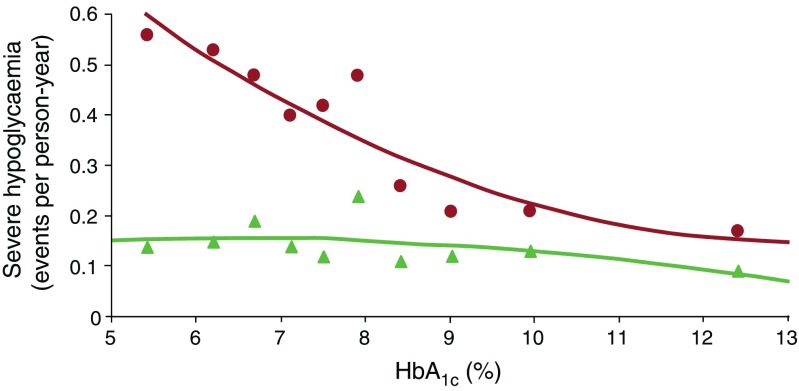
The role of intensive glycaemic control in preventing microvascular disease in diabetes is well established. Iatrogenic hypoglycaemia is, however, a major barrier to effective treatment. Hypoglycaemia is associated with a significant level of morbidity and, despite pharmacological and technological therapeutic advances, reported rates of severe hypoglycaemia in clinical practice have not fallen over the last 20 years. This suggests that human factors are of major relevance and that ensuring the effective self-management of diabetes is an important strategy for the reduction of hypoglycaemic risk. Most of the evidence for the impact of this strategy on hypoglycaemia risk is confined to adults with type 1 diabetes although, in this review, we also cite studies that have specifically addressed this in type 2 diabetes. There are relatively few adequately powered RCTs that have rigorously evaluated the effectiveness of structured education and training programmes on hypoglycaemia; however, the available data suggest a subsequent reduction in severe hypoglycaemia rates of around 50%, a rate reduction that is comparable with that observed following technological interventions. Furthermore, longitudinal observational cohorts support these data, showing similar reductions in rates of hypoglycaemia following structured education. Those who continue to experience recurrent hypoglycaemia and impaired awareness of hypoglycaemia despite education and training in diabetes self-management may benefit from technological interventions and/or interventions that specifically address psychological factors that contribute to hypoglycaemia risk; however, there is urgent need for further research in this area. In the meantime, structured education for effective self-management of diabetes should be part of routine therapy for all those with type 1 diabetes.
强化血糖控制在预防糖尿病微血管疾病方面的作用已得到充分证实。然而,医源性低血糖是有效治疗的主要障碍。低血糖与显著的发病率相关,尽管在药理学和技术治疗方面取得了进展,但过去 20 年来,临床实践中严重低血糖的报告率并未下降。这表明人为因素非常重要,确保有效的糖尿病自我管理是降低低血糖风险的重要策略。尽管在这篇综述中,我们还引用了专门针对 2 型糖尿病的研究,但大多数关于该策略对低血糖风险影响的证据仅限于 1 型糖尿病的成年人。只有少数经过严格评估结构化教育和培训计划对低血糖有效性的充分随机对照试验;然而,现有数据表明严重低血糖发生率降低了约 50%,这一降低率与技术干预观察到的降低率相当。此外,纵向观察队列支持这些数据,表明在接受结构化教育后,低血糖发生率也有类似的降低。那些尽管接受了糖尿病自我管理方面的教育和培训,但仍反复发生低血糖和低血糖感知受损的人可能受益于技术干预和/或专门针对导致低血糖风险的心理因素的干预;然而,这方面迫切需要进一步的研究。同时,有效的糖尿病自我管理结构化教育应该成为所有 1 型糖尿病患者常规治疗的一部分。