Mun Bong-Gyu, Lee Sang-Uk, Park Eung-Jun, Kim Hyun-Ho, Hussain Adil, Imran Qari Muhammad, Lee In-Jung, Yun Byung-Wook
School of Applied Biosciences, Kyungpook National University, Daegu, 41566, Republic of Korea.
Division of Forest Biotechnology, Korea Forest Research Institute, Suwon, 16631, Republic of Korea.
3 Biotech. 2017 Jul;7(3):209. doi: 10.1007/s13205-017-0858-7. Epub 2017 Jun 30.
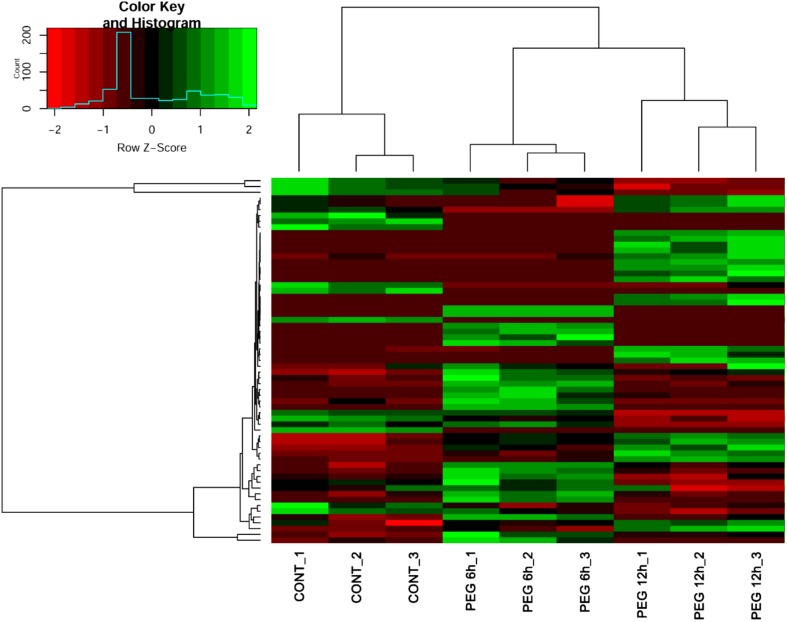
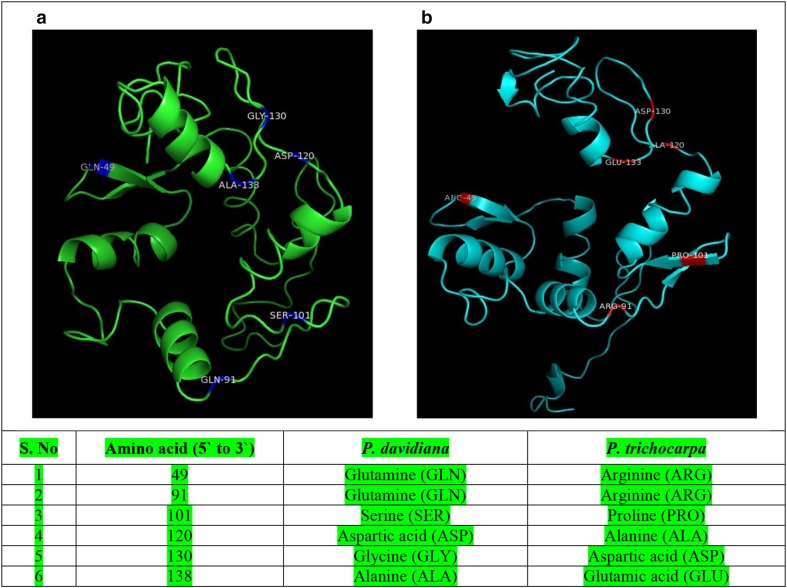
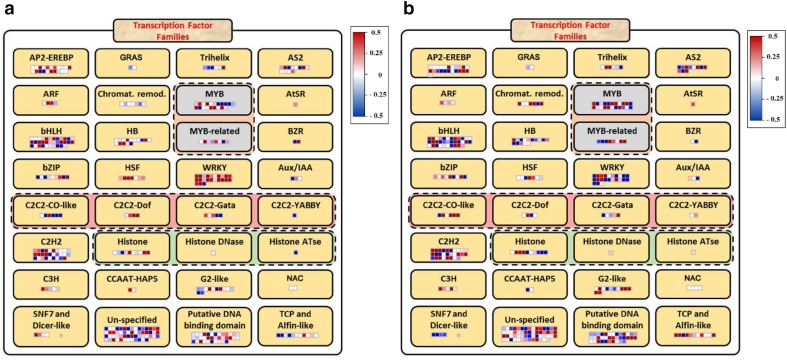
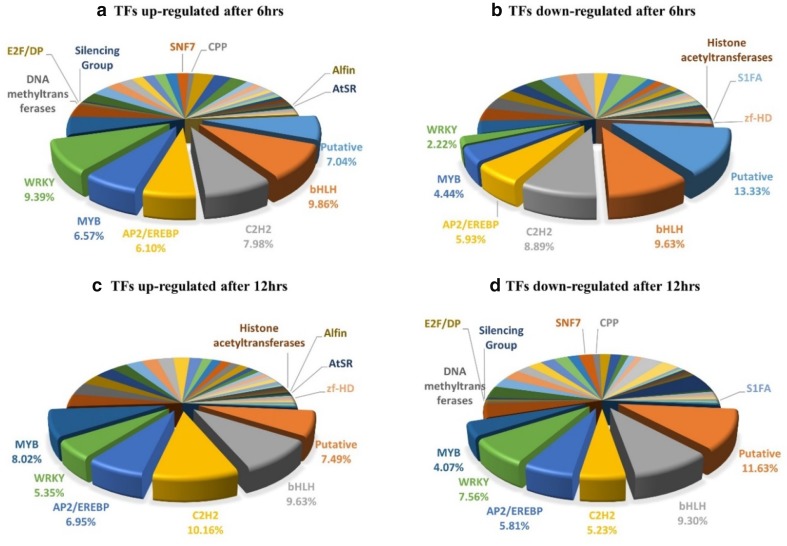
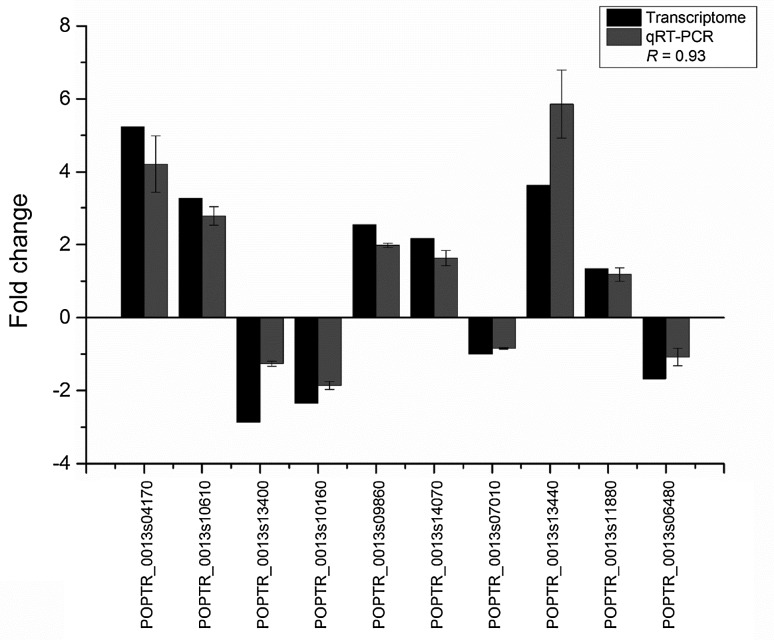
Populus davidiana is native to the Korean Peninsula and is one of the most dominant and abundantly growing forest trees in eastern Asia. Compared to other Populus species such as P. trichocarpa, P. euphratica, and P. tremula, relatively little is known about P. davidiana. Here, we performed transcriptomic analysis of P. davidiana under drought stress induced by 10% polyethylene glycol. A total of 12,403 and 12,414 differentially expressed genes (DEGs) were successfully annotated with the P. trichocarpa reference genome after 6 and 12 h of treatment, respectively. Of these, a total of 404 genes (238 up-regulated and 166 down-regulated) after 6 h and 359 genes (187 up-regulated and 172 down-regulated) after 12 h of treatment were identified as transcription factors. Transcription factors known to be key genes for drought stress response, such as AP2-EREB, WRKY, C2H2, and NAC, were identified. This results suggesting that early induction of these genes affected initiation of transcriptional regulation in response to drought stress. Quantitative real-time PCR results of selected genes showed highly significant (R = 0.93) correlation with RNA-Seq data. Interestingly, the expression pattern of some transcription factors was P. davidiana specific. The sequence of P. davidiana ortholog of P. trichocarpa gene POPTR_0018s10230, which plays an important role in plant response to drought, was further analyzed as our RNA-Seq results showed highly significant changes in the expression of this gene following the stress treatment. Sequence of the gene was compared to P. trichocarpa gene sequence using cloning-based sequencing. Additionally, we generated a predicted 3D protein structure for the gene product. Results indicated that the amino acid sequence of P. davidiana-specific POPTR_0018s10230 is different at six different positions compared to P. trichocarpa, resulting in a significantly different structure of the protein. Identifying the transcription factors expressed in P. davidiana under drought stress will not only offer clues for understanding the underlying mechanisms involved in drought stress physiology but also serve as a basis for future molecular studies on this species.
山杨原产于朝鲜半岛,是东亚地区最具优势且生长繁茂的林木之一。与其他杨树品种如毛果杨、胡杨和欧洲山杨相比,人们对山杨的了解相对较少。在此,我们对经10%聚乙二醇诱导干旱胁迫处理的山杨进行了转录组分析。处理6小时和12小时后,分别有12403个和12414个差异表达基因(DEGs)成功与毛果杨参考基因组进行了注释。其中,处理6小时后共有404个基因(238个上调和166个下调)以及处理12小时后359个基因(187个上调和172个下调)被鉴定为转录因子。鉴定出了已知为干旱胁迫响应关键基因的转录因子,如AP2-EREB、WRKY、C2H2和NAC。这一结果表明这些基因的早期诱导影响了对干旱胁迫响应的转录调控的启动。所选基因的定量实时PCR结果与RNA-Seq数据显示出高度显著(R = 0.93)的相关性。有趣的是,一些转录因子的表达模式具有山杨特异性。由于我们的RNA-Seq结果显示该基因在胁迫处理后表达发生了高度显著变化,因此对毛果杨基因POPTR_0018s10230的山杨直系同源基因序列进行了进一步分析,该基因在植物对干旱的响应中起重要作用。使用基于克隆的测序方法将该基因的序列与毛果杨基因序列进行了比较。此外,我们还生成了该基因产物的预测三维蛋白质结构。结果表明,与毛果杨相比,山杨特异性POPTR_0018s...