Dehne Eva-Maria, Hasenberg Tobias, Marx Uwe
TissUse GmbH, Oudenarder Straße 16, 13347 Berlin, Germany.
Future Sci OA. 2017 Mar 31;3(2):FSO185. doi: 10.4155/fsoa-2017-0002. eCollection 2017 Jun.
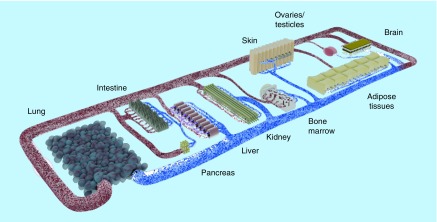
The development of drugs is a process obstructed with manifold security and efficacy concerns. Although animal models are still widely used to meet the diligence required, they are regarded as outdated tools with limited predictability. Novel microphysiological systems intend to create systemic models of human biology. Their ability to host 3D organoid constructs in a controlled microenvironment with mechanical and electrophysiological stimuli enables them to create and maintain homeostasis. These platforms are, thus, envisioned to be superior tools for testing and developing substances such as drugs, cosmetics and chemicals. We will present reasons why microphysiological systems are required for the emerging demands, highlight current technological and regulatory obstacles, and depict possible solutions from state-of-the-art platforms from major contributors.
药物研发是一个充满诸多安全性和有效性问题的过程。尽管动物模型仍被广泛用于满足所需的严谨性,但它们被视为预测性有限的过时工具。新型微生理系统旨在创建人类生物学的系统模型。它们能够在具有机械和电生理刺激的可控微环境中培养三维类器官构建体,从而能够创建并维持体内平衡。因此,这些平台被视为测试和开发药物、化妆品及化学品等物质的卓越工具。我们将阐述为何新兴需求需要微生理系统,突出当前的技术和监管障碍,并描述主要贡献者的前沿平台可能提供的解决方案。