Yamashiro Sawako, Watanabe Naoki
Laboratory of Single-Molecule Cell Biology, Kyoto University Graduate School of Biostudies, Kyoto 606-8501, Japan.
Department of Pharmacology, Kyoto University Graduate School of Medicine, Kyoto 606-8501, Japan.
Sensors (Basel). 2017 Jul 1;17(7):1545. doi: 10.3390/s17071545.
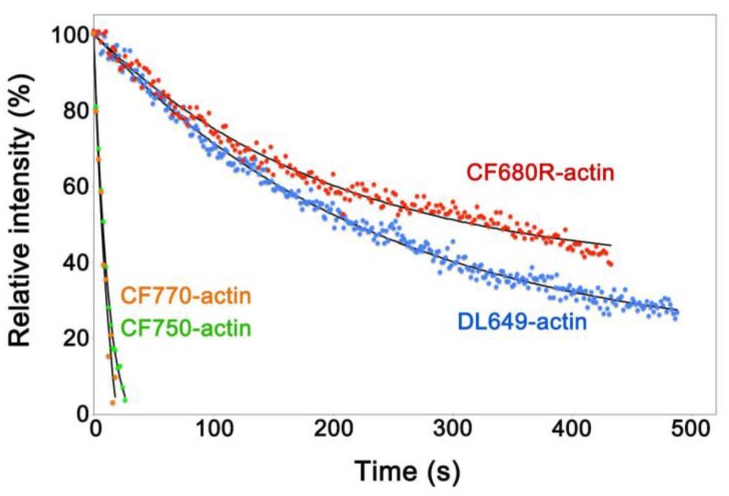
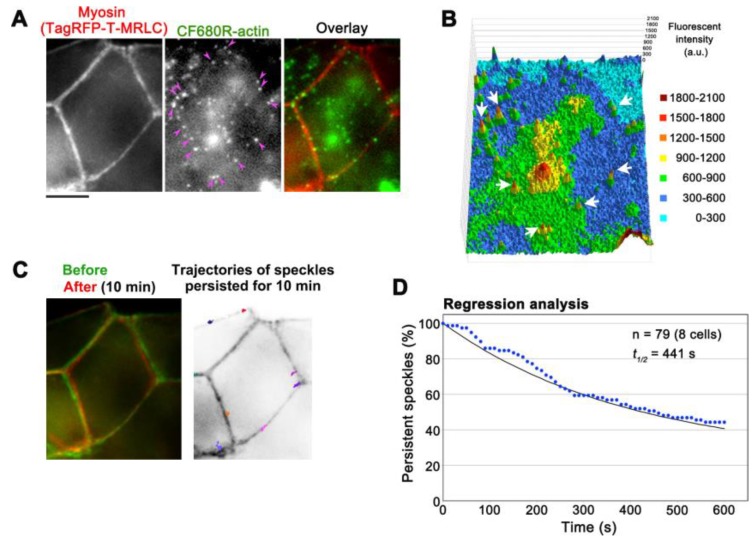
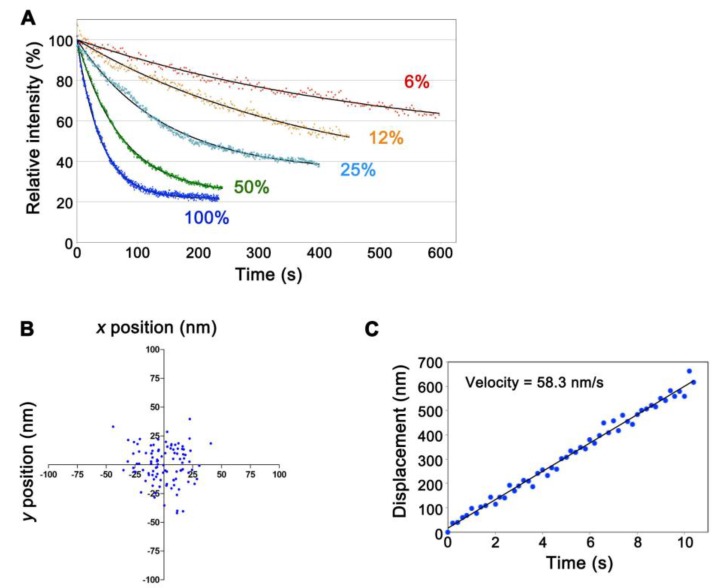
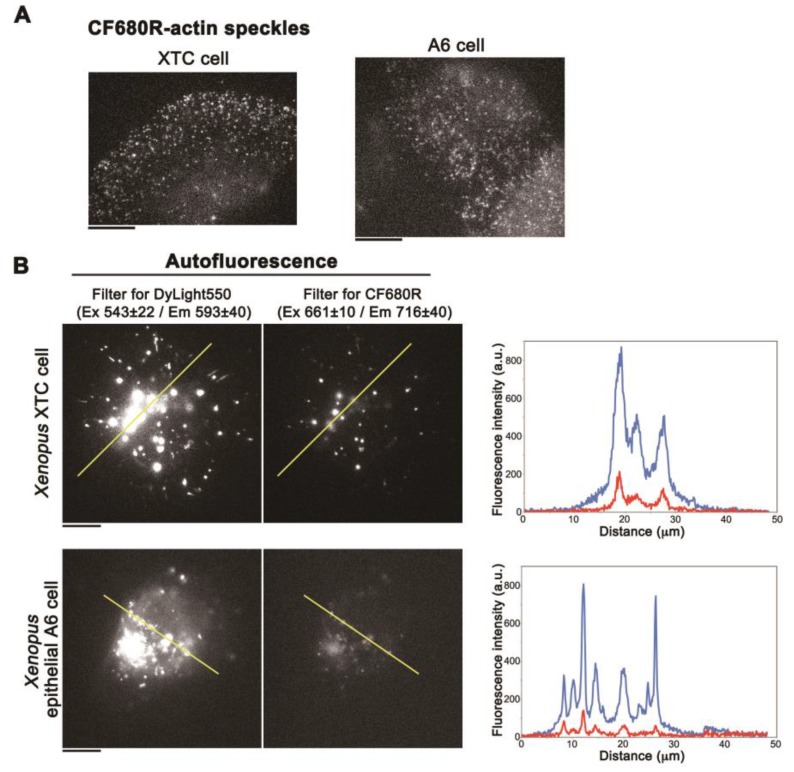
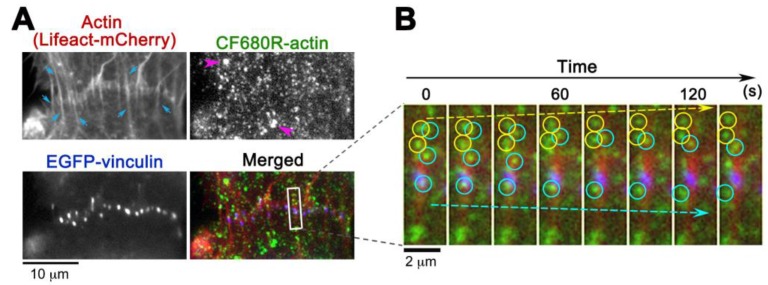
Single-molecule speckle (SiMS) microscopy is a powerful method to directly elucidate biochemical reactions in live cells. However, since the signal from an individual fluorophore is extremely faint, the observation area by epi-fluorescence microscopy is restricted to the thin cell periphery to reduce autofluorescence, or only molecules near the plasma membrane are visualized by total internal reflection fluorescence (TIRF) microscopy. Here, we introduce a new actin probe labeled with near infrared (NIR) emissive CF680R dye for easy-to-use, electroporation-based SiMS microscopy (eSiMS) for deep-cell observation. CF680R-labeled actin (CF680R-actin) incorporated into actin structures and showed excellent brightness and photostability suitable for single-molecule imaging. Importantly, the intensity of autofluorescence with respect to SiMS brightness was reduced to approximately 13% compared to DyLight 550-labeled actin (DL550-actin). CF680R-actin enabled the monitoring of actin SiMS in actomyosin bundles associated with adherens junctions (AJs) located at 3.5-4 µm above the basal surfaces of epithelial monolayers. These favorable properties of CF680R-actin extend the application of eSiMS to actin turnover and flow analyses in deep cellular structures.
单分子散斑(SiMS)显微镜技术是一种直接阐明活细胞中生化反应的强大方法。然而,由于单个荧光团发出的信号极其微弱,落射荧光显微镜的观察区域被限制在细胞周边较薄的区域以减少自发荧光,或者全内反射荧光(TIRF)显微镜仅能观察到质膜附近的分子。在此,我们引入一种新的肌动蛋白探针,其标记有近红外(NIR)发射的CF680R染料,用于基于电穿孔的易于使用的SiMS显微镜技术(eSiMS)以进行细胞深部观察。CF680R标记的肌动蛋白(CF680R-肌动蛋白)整合到肌动蛋白结构中,并表现出适用于单分子成像的出色亮度和光稳定性。重要的是,与DyLight 550标记的肌动蛋白(DL550-肌动蛋白)相比,相对于SiMS亮度的自发荧光强度降低至约13%。CF680R-肌动蛋白能够监测位于上皮单层基底表面上方3.5 - 4 µm处的与黏着连接(AJs)相关的肌动球蛋白束中的肌动蛋白SiMS。CF680R-肌动蛋白的这些有利特性将eSiMS的应用扩展到深部细胞结构中的肌动蛋白周转和流动分析。