Lefer David J, Marbán Eduardo
From Cardiovascular Center of Excellence and Department of Pharmacology, Louisiana State University Health Sciences Center, New Orleans (D.J.L.); and Cedars-Sinai Heart Institute, Los Angeles, CA (E.M.).
Circulation. 2017 Jul 4;136(1):98-109. doi: 10.1161/CIRCULATIONAHA.116.027039.
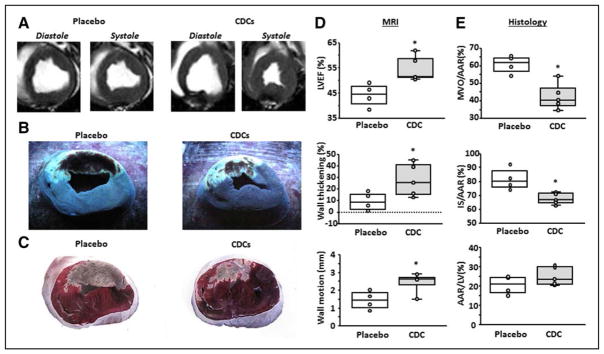
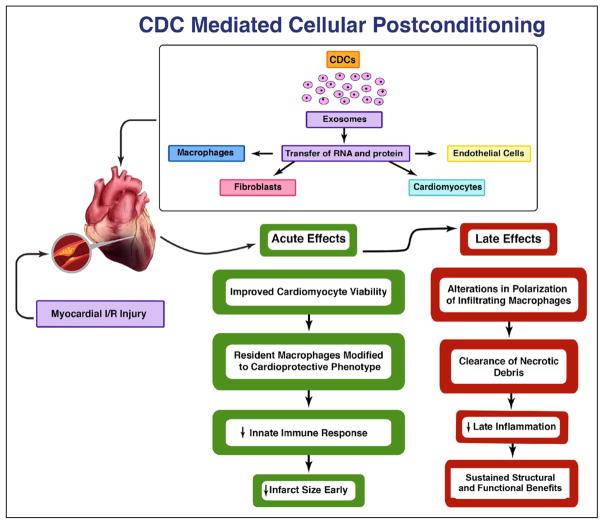
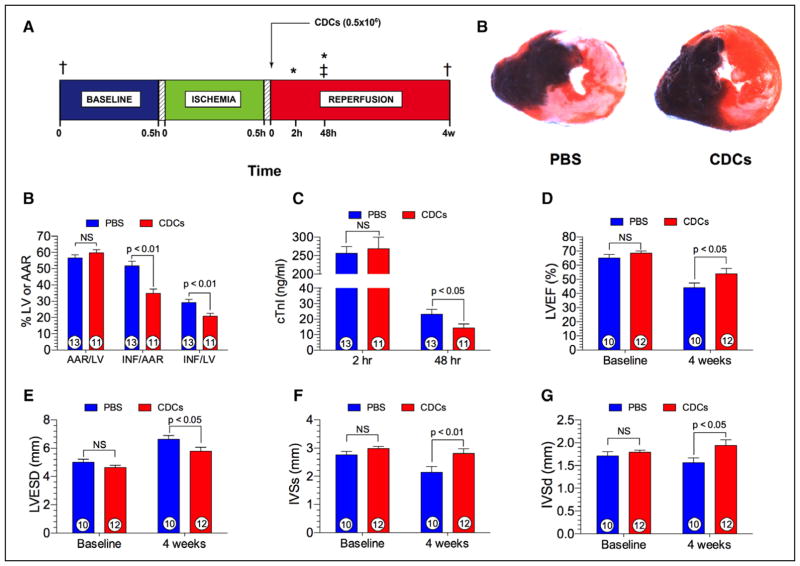
For >4 decades, the holy grail in the treatment of acute myocardial infarction has been the mitigation of lethal injury. Despite promising initial results and decades of investigation by the cardiology research community, the only treatment with proven efficacy is early reperfusion of the occluded coronary artery. The remarkable record of failure has led us and others to wonder if cardioprotection is dead. The path to translation, like the ascent to Everest, is certainly littered with corpses. We do, however, highlight a therapeutic principle that provides a glimmer of hope: cellular postconditioning. Administration of cardiosphere-derived cells after reperfusion limits infarct size measured acutely, while providing long-term structural and functional benefits. The recognition that cell therapy may be cardioprotective, and not just regenerative, merits further exploration before we abandon the pursuit entirely.
四十多年来,治疗急性心肌梗死的圣杯一直是减轻致命损伤。尽管初期结果令人鼓舞,且心脏病研究界进行了数十年的研究,但唯一经证实有效的治疗方法是早期开通闭塞的冠状动脉。显著的失败记录让我们和其他人不禁怀疑心脏保护是否已无可能。如同攀登珠穆朗玛峰一样,转化医学的道路上确实尸横遍野。然而,我们确实强调了一条带来一线希望的治疗原则:细胞后适应。再灌注后给予心脏球衍生细胞可限制急性测量的梗死面积,同时提供长期的结构和功能益处。在我们完全放弃这一追求之前,认识到细胞治疗可能具有心脏保护作用而非仅仅是再生作用,值得进一步探索。