Wu Wenli, Zhang Qiang, Ervin Erik H, Yang Zhiping, Zhang Xunzhong
Institute of Agricultural Environment and Resources, Shanxi Academy of Agricultural SciencesTaiyuan, Shanxi, China.
Department of Crop and Soil Environmental Sciences, Virginia Polytechnic Institute and State UniversityBlacksburg, VA, United States.
Front Plant Sci. 2017 Jun 19;8:1017. doi: 10.3389/fpls.2017.01017. eCollection 2017.
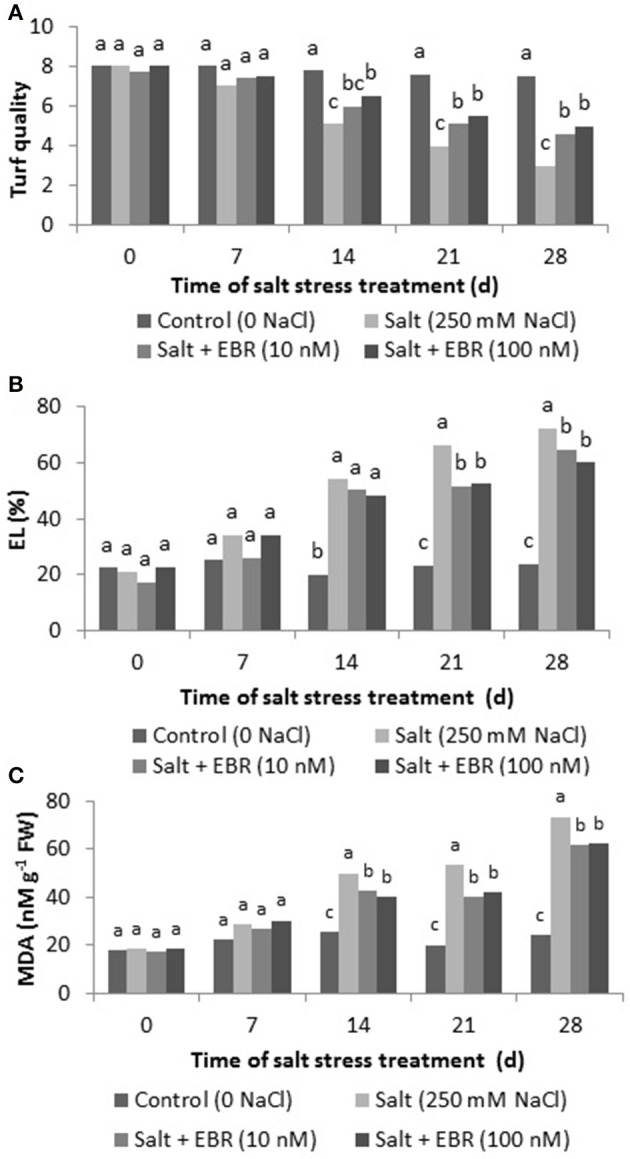
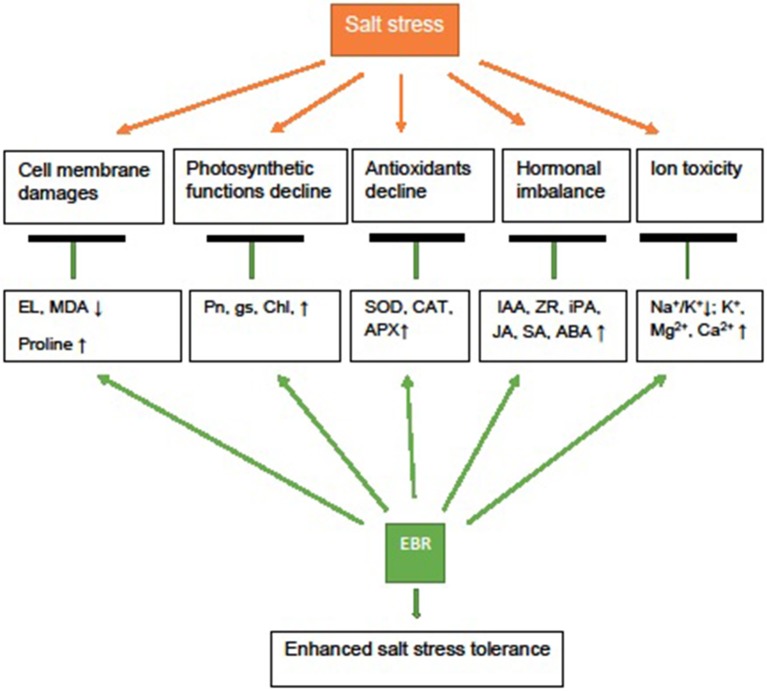
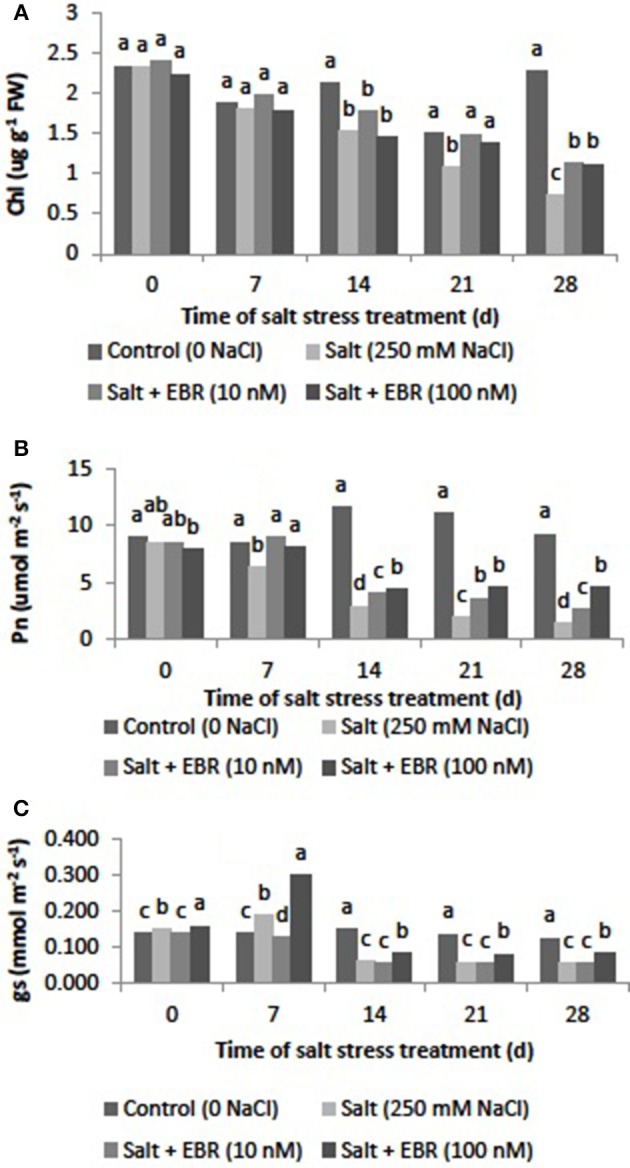
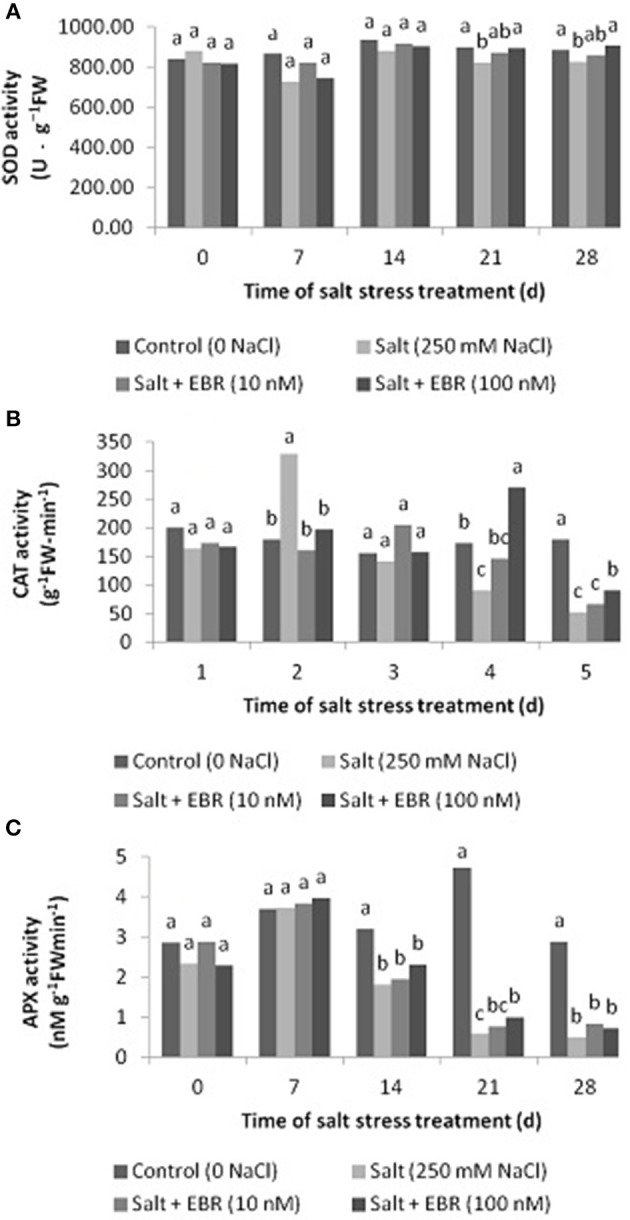
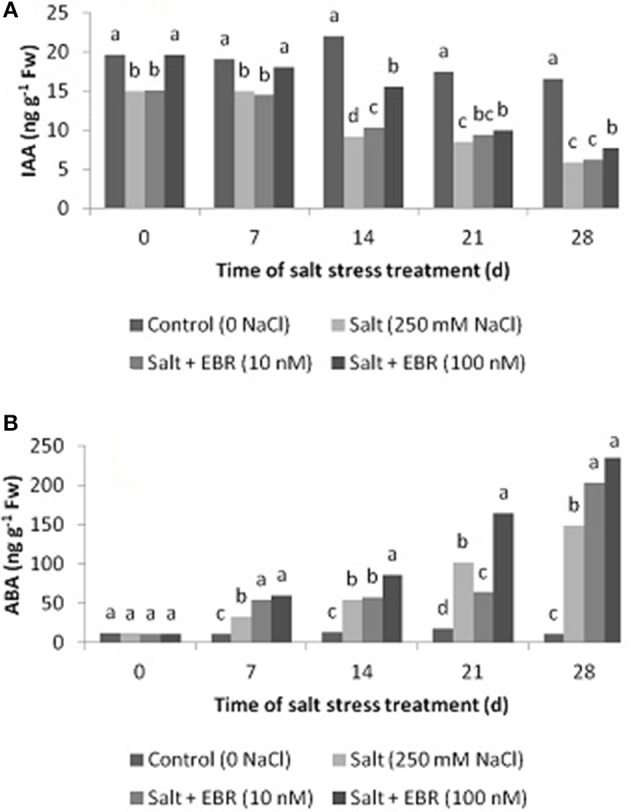
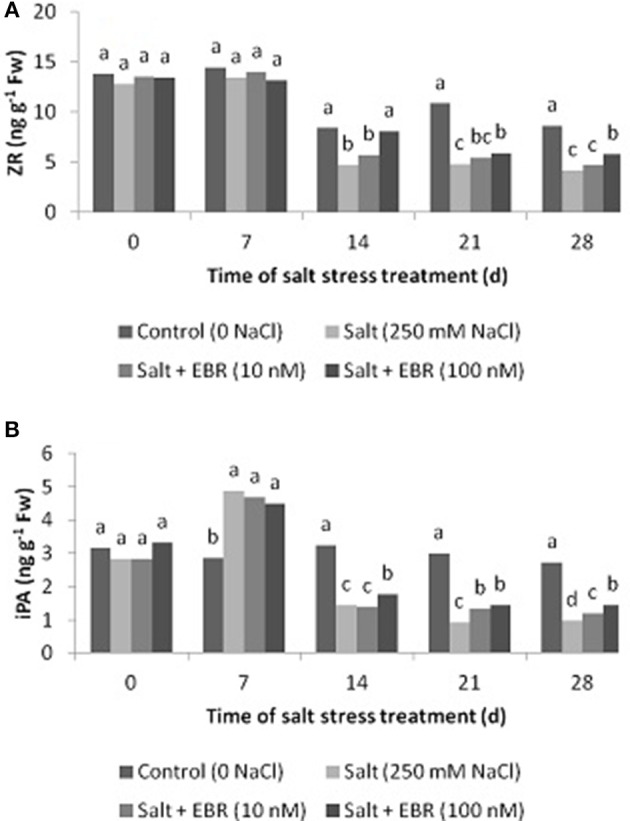
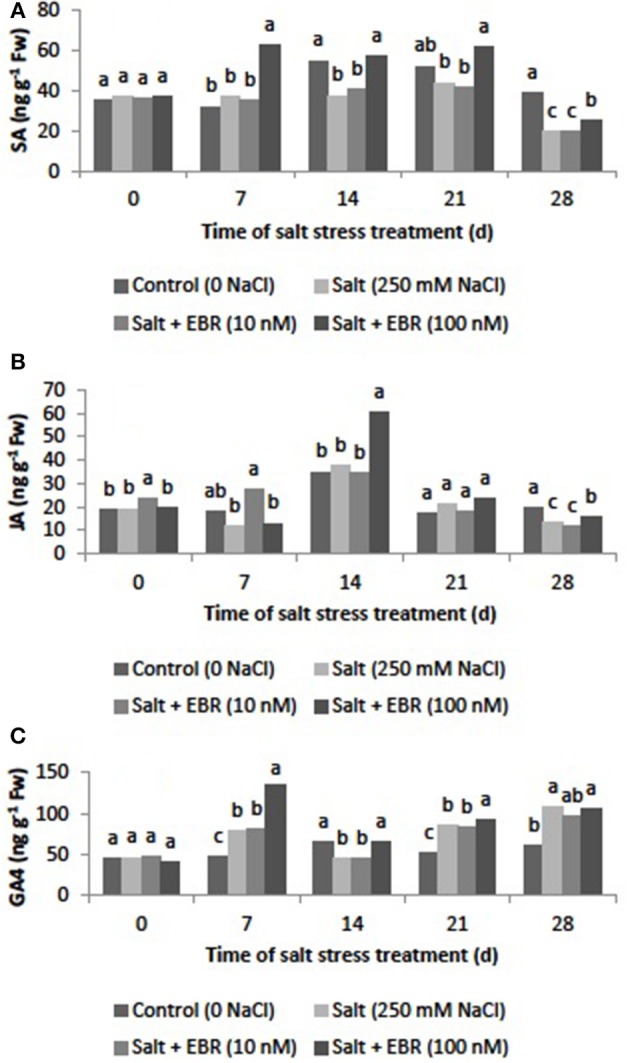
Brassinosteroids (BR) regulate plant tolerance to salt stress but the mechanisms underlying are not fully understood. This study was to investigate physiological mechanisms of 24-epibrassinolide (EBR)'s impact on salt stress tolerance in perennial ryegrass ( L.) The grass seedlings were treated with EBR at 0, 10, and 100 nM, and subjected to salt stress (250 mM NaCl). The grass irrigated with regular water without EBR served as the control. Salt stress increased leaf electrolyte leakage (EL), malondialdehyde (MDA), and reduced photosynthetic rate (Pn). Exogenous EBR reduced EL and MDA, increased Pn, chlorophyll content, and stomatal conductance (gs). The EBR applications also alleviated decline of superoxide dismutase (SOD) and catalase (CAT) and ascorbate peroxidase (APX) activity when compared to salt treatment alone. Salt stress increased leaf abscisic acid (ABA) and gibberellin A4 (GA4) content but reduced indole-3-acetic acid (IAA), zeatin riboside (ZR), isopentenyl adenosine (iPA), and salicylic acid (SA). Exogenous EBR at 10 nm and 100 nM increased ABA, and iPA content under salt stress. The EBR treatment at 100 nM also increased leaf IAA, ZR, JA, and SA. In addition, EBR treatments increased leaf proline and ions (K, Mg, and Ca) content, and reduced Na/K in leaf tissues. The results of this study suggest that EBR treatment may improve salt stress tolerance by increasing the level of selected hormones and antioxidant enzyme (SOD and CAT) activity, promoting accumulation of proline and ions (K, Ca, and Mg) in perennial ryegrass.
油菜素类固醇(BR)调节植物对盐胁迫的耐受性,但其潜在机制尚未完全明确。本研究旨在探究24-表油菜素内酯(EBR)对多年生黑麦草耐盐胁迫影响的生理机制。将草幼苗分别用0、10和100 nM的EBR处理,并施加盐胁迫(250 mM NaCl)。用不含EBR的常规水灌溉的草作为对照。盐胁迫增加了叶片电解质渗漏(EL)、丙二醛(MDA),并降低了光合速率(Pn)。外源EBR降低了EL和MDA,提高了Pn、叶绿素含量和气孔导度(gs)。与单独盐处理相比,EBR处理还缓解了超氧化物歧化酶(SOD)、过氧化氢酶(CAT)和抗坏血酸过氧化物酶(APX)活性的下降。盐胁迫增加了叶片脱落酸(ABA)和赤霉素A4(GA4)含量,但降低了吲哚-3-乙酸(IAA)、玉米素核苷(ZR)、异戊烯基腺苷(iPA)和水杨酸(SA)。10 nM和100 nM的外源EBR增加了盐胁迫下的ABA和iPA含量。100 nM的EBR处理还增加了叶片IAA、ZR、茉莉酸(JA)和SA。此外,EBR处理增加了叶片脯氨酸和离子(K、Mg和Ca)含量,并降低了叶片组织中的Na/K。本研究结果表明,EBR处理可能通过提高所选激素水平和抗氧化酶(SOD和CAT)活性,促进多年生黑麦草中脯氨酸和离子(K、Ca和Mg)的积累来提高耐盐胁迫能力。