Li Hongge, Zhang Liping, Hu Jihong, Zhang Fugui, Chen Biyun, Xu Kun, Gao Guizhen, Li Hao, Zhang Tianyao, Li Zaiyun, Wu Xiaoming
Oil Crops Research Institute of the Chinese Academy of Agricultural Sciences, Key Laboratory of Biology and Genetic Improvement of Oil Crops, Ministry of AgricultureWuhan, China.
National Key Lab of Crop Genetic Improvement, National Center of Crop molecular Breeding, National Center of Oil Crop Improvement, College of Plant Science and Technology, Huazhong Agricultural UniversityWuhan, China.
Front Plant Sci. 2017 Jun 19;8:1054. doi: 10.3389/fpls.2017.01054. eCollection 2017.
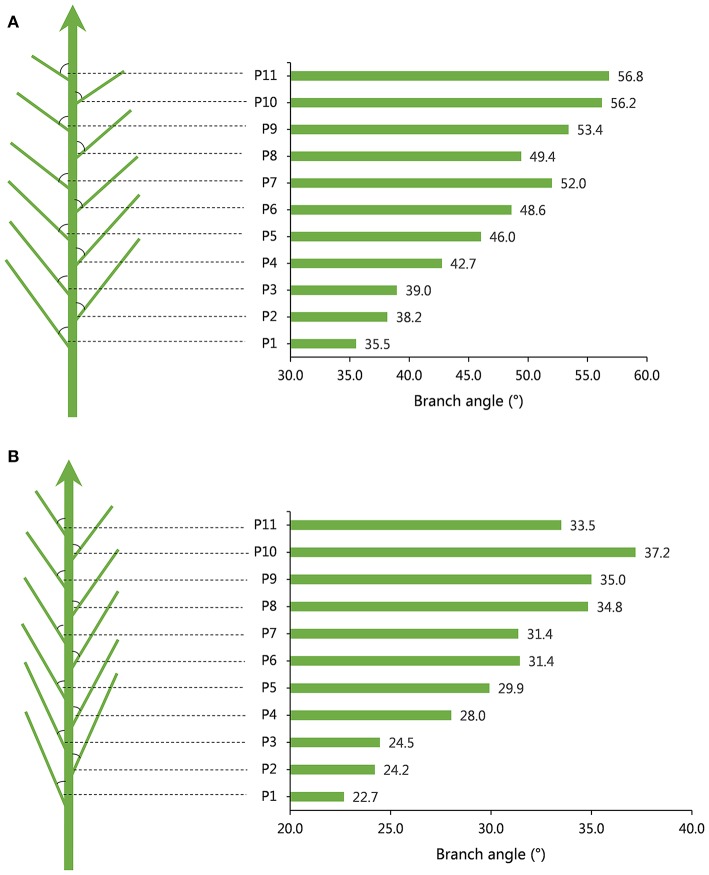
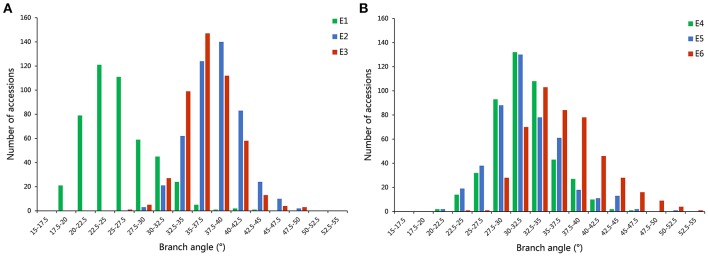
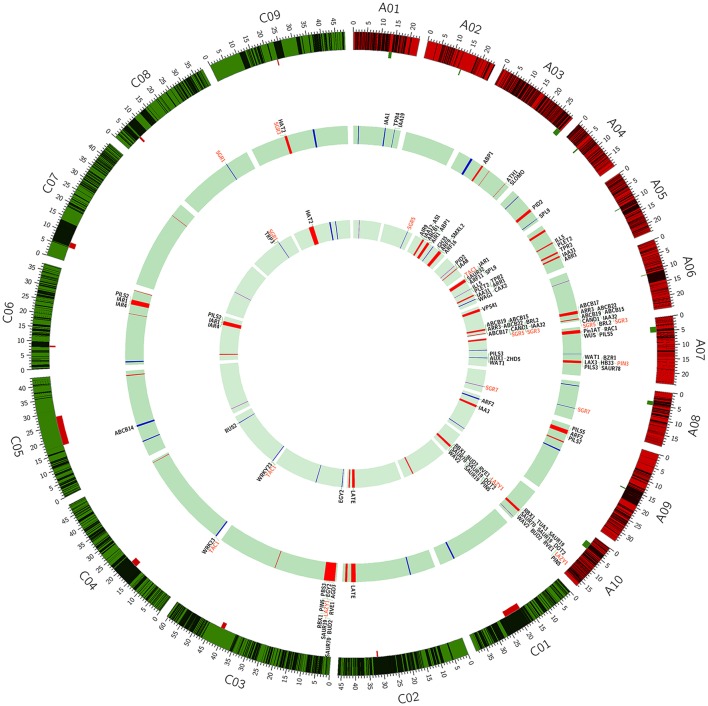
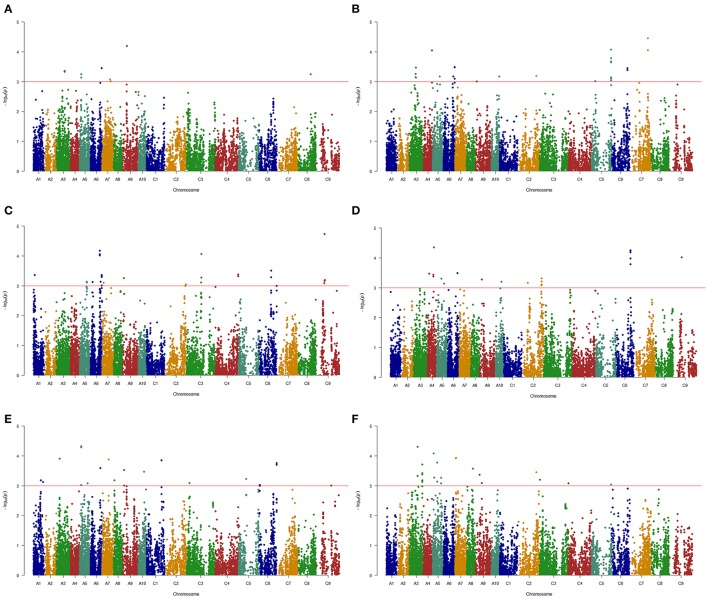
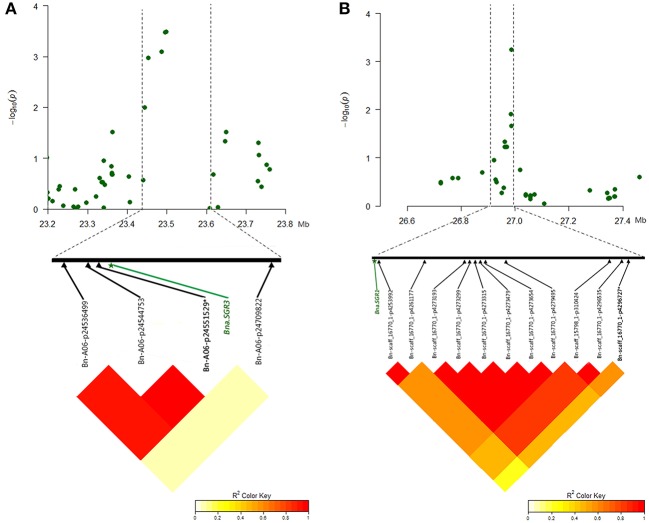
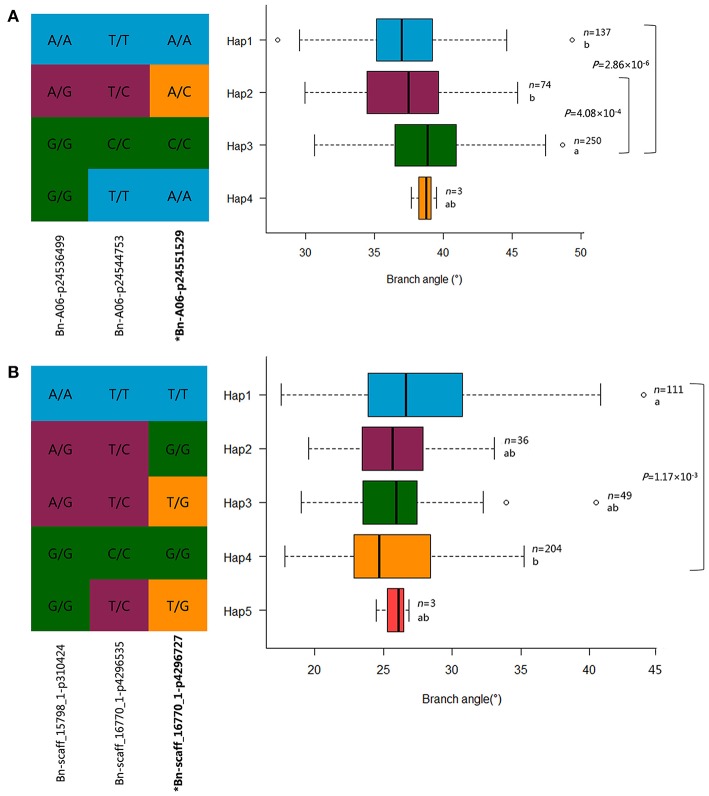
Plant architecture is vital not only for crop yield, but also for field management, such as mechanical harvesting. The branch angle is one of the key factors determining plant architecture. With the aim of revealing the genetic control underlying branch angle in rapeseed ( L.), the positional variation of branch angles on individual plants was evaluated, and the branch angle increased with the elevation of branch position. Furthermore, three middle branches of individual plants were selected to measure the branch angle because they exhibited the most representative phenotypic values. An association panel with 472 diverse accessions was estimated for branch angle trait in six environments and genotyped with a 60K Infinium® SNP array. As a result of association mapping, 46 and 38 significantly-associated loci were detected using a mixed linear model (MLM) and a multi-locus random-SNP-effect mixed linear model (MRMLM), which explained up to 62.2 and 66.2% of the cumulative phenotypic variation, respectively. Numerous highly-promising candidate genes were identified by annotating against homologous, including some first found in rapeseed, such as , and . These findings reveal the genetic control underlying branch angle and provide insight into genetic improvements that are possible in the plant architecture of rapeseed.
植株结构不仅对作物产量至关重要,而且对田间管理(如机械收获)也很重要。分枝角度是决定植株结构的关键因素之一。为了揭示油菜分枝角度的遗传控制机制,对单株上分枝角度的位置变化进行了评估,结果表明分枝角度随分枝位置的升高而增大。此外,选择单株的三个中部枝条来测量分枝角度,因为它们表现出最具代表性的表型值。利用60K Infinium® SNP芯片对包含472份不同材料的关联群体在六个环境下的分枝角度性状进行了评估和基因分型。通过关联分析,使用混合线性模型(MLM)和多位点随机SNP效应混合线性模型(MRMLM)分别检测到46个和38个显著关联位点,它们分别解释了高达62.2%和66.2%的累积表型变异。通过与同源基因比对鉴定出许多极具潜力的候选基因,包括一些首次在油菜中发现的基因,如 、 和 。这些发现揭示了分枝角度的遗传控制机制,并为油菜植株结构的遗传改良提供了思路。